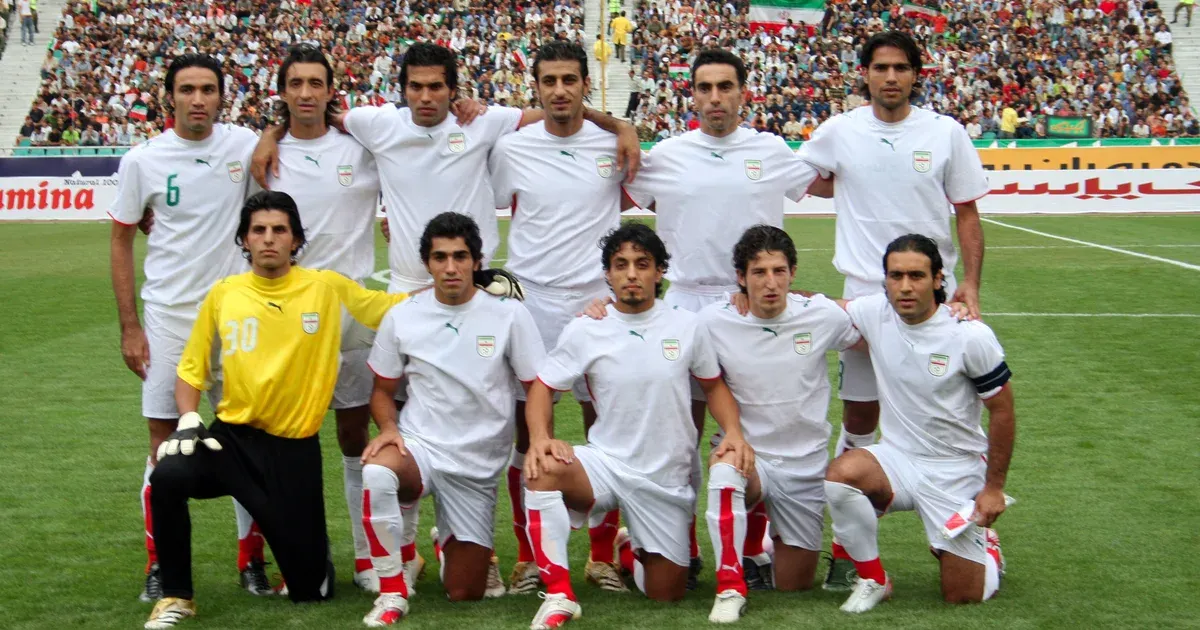
Iran's decision to abandon its World Cup plans exposed how far the cost of war has moved into sports diplomacy. The withdrawal landed on March 11, 2026.
Iran Leaves Group G in Chaos
Tehran officially severed ties with the 2026 World Cup on Wednesday, effectively ending months of speculation regarding its participation in the tournament. Minister of Sports and Youth Ahmad Donyamali confirmed the decision during a press briefing, citing the recent surge in military hostilities between the United States and Iran. Military action initiated by Washington two weeks ago provided the final catalyst for this withdrawal, leaving FIFA officials scrambled for a contingency plan. Donyamali pointed to the assassination of Ayatollah Ali Khamenei as the primary grievance that makes any Iranian presence on American soil impossible. He described the current American administration as a corrupt government that has forced two separate wars upon the Iranian people within a nine month window.
Such conditions, according to the minister, eliminate any possibility of a safe or respectful environment for the national team. Football has finally collided with the hard reality of cruise missiles. This decision creates a significant hole in Group G, where Iran was scheduled to face Belgium, Egypt, and New Zealand. The Iranian squad had originally planned to establish a training base in Tucson, Arizona, before moving to high-profile matches at SoFi Stadium in Inglewood and Lumen Field in Seattle. Donyamali asserted that Iranian players, whom he referred to as the nation's children, would face grave security risks if they traveled to the host nation.
He emphasized that thousands of Iranian citizens have been killed or martyred since the recent conflict began, making a celebratory sports appearance seem grotesque to the leadership in Tehran. News of the withdrawal reached the international community just as FIFA President Gianni Infantino attempted to bridge the gap through direct diplomacy with the White House. Gianni Infantino met with President Donald Trump on Tuesday to discuss the logistics of the tournament, specifically addressing the Iranian qualification. Trump reportedly assured the FIFA president that the Iranian team would be allowed entry into the United States despite the ongoing military campaign.
Infantino Cannot Bridge a Shooting War
The standoff turned a tournament logistics problem into a diplomatic rupture, leaving FIFA with no easy way to separate scheduling from the broader conflict.
Infantino later shared details of this discussion on social media, claiming that Trump reiterated a welcome for all qualified teams. However, the American president offered a far more blunt assessment when questioned by reporters last week. Trump stated that he simply did not care whether the Iranian team showed up, a comment that likely hardened the resolve of sports officials in Tehran. The juxtaposition of Infantino's diplomatic optimism and Trump's characteristic indifference has left the global football community in a state of confusion. Gianni Infantino now faces the first major structural failure of his expanded 48-team vision.
The logistical preparation for Iran's arrival had already reached an advanced stage in several American cities. Tucson officials had been working on specific security protocols for the team's training camp, while stadium managers in Seattle and Los Angeles were preparing for the influx of the Iranian diaspora. Because the United States began airstrikes on Iranian targets only fourteen days ago, the sudden shift from athletic competition to active warfare caught many organizers off guard. While Bloomberg reports that FIFA may look to the Asian Football Confederation to name a replacement, Reuters indicates that the governing body might instead consider a team based on global rankings.
The vacancy in Group G must be filled quickly to avoid a schedule collapse that would affect broadcasting rights and ticket sales across the West Coast. Historical parallels between the two nations on the pitch are often cited as high points of sports diplomacy, yet those eras seem firmly in the past. The 1998 World Cup match in Lyon, France, saw players from both sides exchange white roses in a gesture of peace. Even as recently as the 2022 tournament in Qatar, the two teams met in a highly charged but ultimately professional environment. This withdrawal marks a departure from the idea that sport can transcend the acrimony of the battlefield.
Security Planning Falls Apart
Donyamali's rhetoric suggests that the Iranian government no longer views the football pitch as a neutral ground but as another theater of political and military conflict. The loss of Khamenei has seemingly removed any appetite for the symbolic gestures that characterized previous encounters. Security experts in the United States had expressed concerns about the Tucson training base long before the formal withdrawal. Arizona's proximity to the border and the potential for domestic protests made the site a high-risk location for a team representing a nation in an active shooting war with the Pentagon. Once the news of the withdrawal broke, local organizers in Tucson began the process of canceling hotel contracts and training pitch leases.
Similar cancellations are expected in Inglewood, where the Iranian team was expected to draw massive crowds. These cancellations represent a logistical headache for the World Cup Organizing Committee, which must now find a way to reallocate thousands of tickets and adjust travel schedules for the remaining Group G participants. Financial implications for the tournament are equally concerning for FIFA's top brass. Iran's matches were projected to be among the most-watched games in the group stage, particularly the opening match against Belgium. New Zealand and Egypt now find themselves in a state of limbo as they await word on their new opponent.
If a replacement team is selected from the AFC, they will have less than three months to prepare for a tournament that usually requires years of logistical planning. Such a short turnaround time threatens the quality of play and the integrity of the group stage.
Why Sport Cannot Hide From Missiles
Why do we keep pretending that soccer exists in a vacuum? FIFA's expectation that Iran could remain a willing participant while American missiles were actively striking Iranian targets now looks like institutional delusion. Gianni Infantino has spent years selling the expansion of the World Cup as a victory for global inclusivity, but his brand of inclusivity requires a world that stays polite enough to ignore the stench of gunpowder. Donald Trump's dismissive admission that he does not care about the Iranian team's presence is perhaps the only honest statement in this entire debacle.
The naive insistence by FIFA that the 2026 World Cup could proceed with Iran as a willing participant while American missiles were actively striking Iranian targets is the height of institutional delusion.
It reflects a reality that the sports world is loath to admit: some conflicts are too deep for a game to bridge. The withdrawal of Iran is not just a scheduling conflict; it is a declaration that the era of sports as a diplomatic tool is dead. We should stop mourning the loss of a match and start acknowledging the failure of the international system to protect the very neutrality it claims to cherish. If a tournament cannot guarantee the basic safety of its participants because of the host nation's foreign policy, then the tournament has already lost its soul. The empty seats in Seattle and Inglewood will serve as monuments to this collective failure.