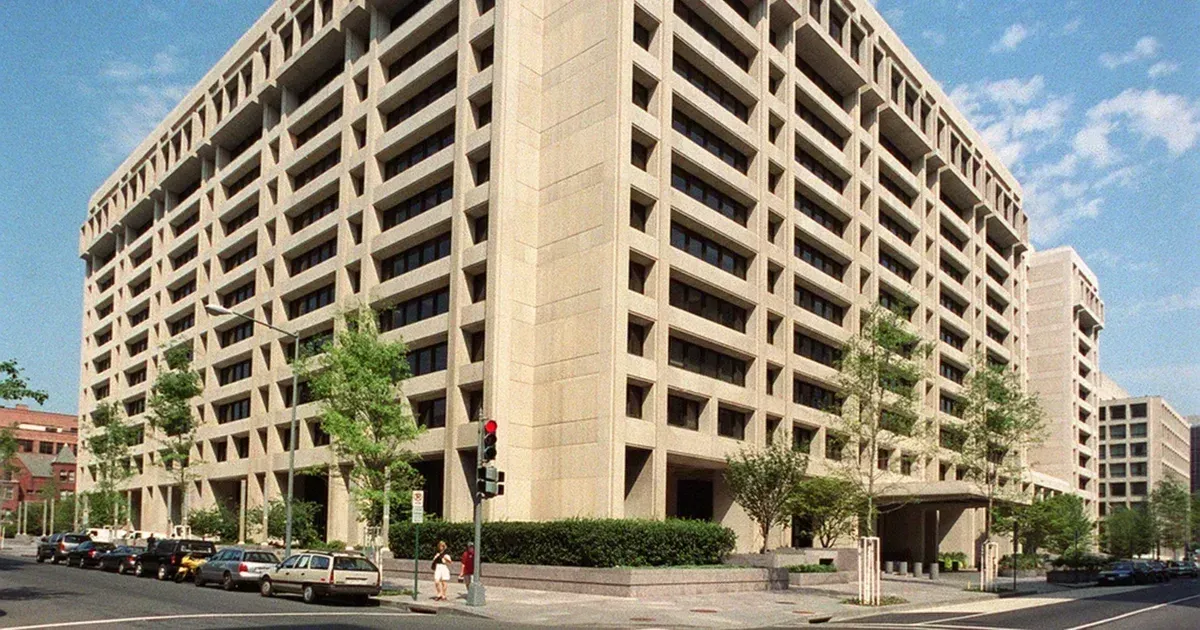
The Iran conflict has pushed energy security from market planning into national-defense strategy. The shift matters because governments no longer assume that Gulf routes will remain reliable. On April 18, 2026, financial leaders at the International Monetary Fund spring meetings in Washington admitted that the war in Iran has permanently fractured the global energy supply chain. Delegates gathered in the capital to confront a reality where traditional trade routes no longer guarantee national security. Many countries now face the immediate necessity of abandoning long-standing dependencies on Middle Eastern crude. These discussions highlighted a growing rift between nations prioritizing rapid decarbonization and those doubling down on fossil fuel production to ensure short-term survival.
Fatih Birol, executive director of the International Energy Agency, delivered a blunt assessment to delegates on Tuesday regarding the volatility of the current market. He asserted that the global community will not return to the previous status quo. Military strikes involving the United States and Israel against Iranian infrastructure triggered a cascading series of supply shocks that has reached every corner of the planet. Maritime security in the Persian Gulf has dissolved, effectively ending the era of predictable energy costs.
Hormuz Disruption Reshapes Supply Lines
Supply lines through the Strait of Hormuz now face indefinite disruption, leaving one-fifth of the world’s oil supply stranded. This maritime chokepoint also enables the movement of one-third of the global fertilizer trade. Rising food prices are expected to follow energy spikes as agricultural sectors in Europe and Asia lose access to essential chemicals. Economic forecasts from the IMF predict a period of low growth coupled with persistent inflation, regardless of how quickly the physical combat ends.
Disagreement persists among major powers regarding the appropriate path forward. Scott Bessent, the United States Treasury secretary, championed a strategy of expanded domestic oil and gas production during his address. Bessent advocated for a reduction in climate-related regulations to allow American producers to fill the void left by sanctioned or blockaded Iranian exports. His stance suggests a retreat from previous international environmental commitments in favor of absolute energy dominance. Washington continues to prioritize the extraction of shale gas as a primary tool of geopolitical leverage.
Energy security has become synonymous with national defense.
European officials expressed skepticism toward the American approach, preferring to accelerate the transition to wind, solar, and green hydrogen. These nations view the war as a definitive signal that reliance on any foreign combustible fuel is a strategic liability. Germany and France have reportedly begun discussions on the rapid reactivation of decommissioned nuclear reactors to provide a stable baseload of electricity. Smaller nations with limited natural resources are exploring aggressive coal expansion to prevent total grid collapse during the winter months.
“History shows us that a crisis of this magnitude is also a catalyst,” Masato Kanda, president of the Asian Development Bank, told a gathering at the Council on Foreign Relations on Wednesday.
Renewable Investment Becomes Security Policy
Asian economies remain particularly vulnerable to the closure of the Hormuz passage. Japan and South Korea rely on this single corridor for nearly the entirety of their liquefied natural gas imports. Analysts at the meeting suggested that these countries may be forced to seek much more expensive contracts from suppliers in Australia and the United States. Such a shift would require a major reconfiguration of global shipping lanes and port infrastructure. Maritime insurance premiums for vessels entering the region have already increased tenfold since the start of hostilities.
Investment in renewable infrastructure is no longer an environmental choice. Instead, it has transformed into a survival mechanism for states lacking domestic oil reserves. Private equity firms in Washington noted a significant shift of capital away from traditional emerging market funds toward secure energy technology. This movement of money reflects a broad lack of confidence in the stability of the Middle East for the foreseeable future. Direct government subsidies for battery storage and long-duration energy projects have reached record levels in the last month.
Political alliances are shifting as quickly as the energy markets. Historically, the United States provided a security umbrella for the Persian Gulf to ensure the free flow of oil to the West. The current conflict indicates a move toward a more transactional and isolationist American policy. Smaller European and Asian states are now realizing they must provide for their own energy defense. Military spending on naval escorts for tankers has become a mandatory budget item for any nation dependent on seaborne energy imports.
Stability is no longer the baseline for global commerce.
Crude prices remained above $120 per barrel throughout the week as traders weighed the possibility of a prolonged blockade. Refineries in Southeast Asia have already begun cutting production due to a lack of feedstock. High energy costs are siphoning capital away from manufacturing and consumer spending, which threatens to trigger a global recession by the end of the year. IMF officials noted that the most impoverished nations will suffer the most severe losses as they are priced out of the spot market for both fuel and fertilizer.
Alternative shipping routes are being explored, though few offer the volume necessary to replace the Persian Gulf. Pipelines across the Arabian Peninsula are operating at maximum capacity but cannot accommodate the total volume of daily global demand. Some logistical firms are investigating the feasibility of the Northern Sea Route, though the harsh conditions of the Arctic present different risks. Every potential solution involves much higher costs and longer transit times for the end consumer. Diversification is a slow and expensive process that offers no immediate relief to current price pressures.
Technological innovation may eventually bridge the gap created by the war. Researchers are focusing on enhancing the efficiency of carbon capture and the production of synthetic fuels. However, these technologies are years away from the scale required to replace Iranian production. Governments are currently focused on the immediate task of securing enough heating oil and electricity for the coming year. The era of cheap, globalized energy has reached its terminal point.
Energy Security Becomes National Defense
Can any superpower truly claim energy independence while its allies remain tethered to the volatility of the Persian Gulf? The current posture of the United States Treasury suggests a dangerous delusion. Secretary Bessent is betting that American shale can insulate the domestic economy from a global firestorm. History suggests that energy prices are a global contagion that ignores national borders. If the rest of the G7 collapses under the weight of $150 oil, the American consumer will not be spared. This pivot toward fossil fuel deregulation is a reactionary spasm, not a strategy.
Washington is effectively abandoning the climate consensus in a desperate bid for security. The move signals to the world that green initiatives are a luxury of peacetime, easily discarded when the shooting starts. Such hypocrisy will decimate American moral authority in future environmental negotiations. Europe will likely respond by hardening its own trade barriers, creating a fractured Western alliance. The result is a period when energy is used as a blunt instrument of coercion, and the United States appears ready to play that game regardless of the long-term ecological cost.
Isolationism is the new energy policy. The global grid is dead.