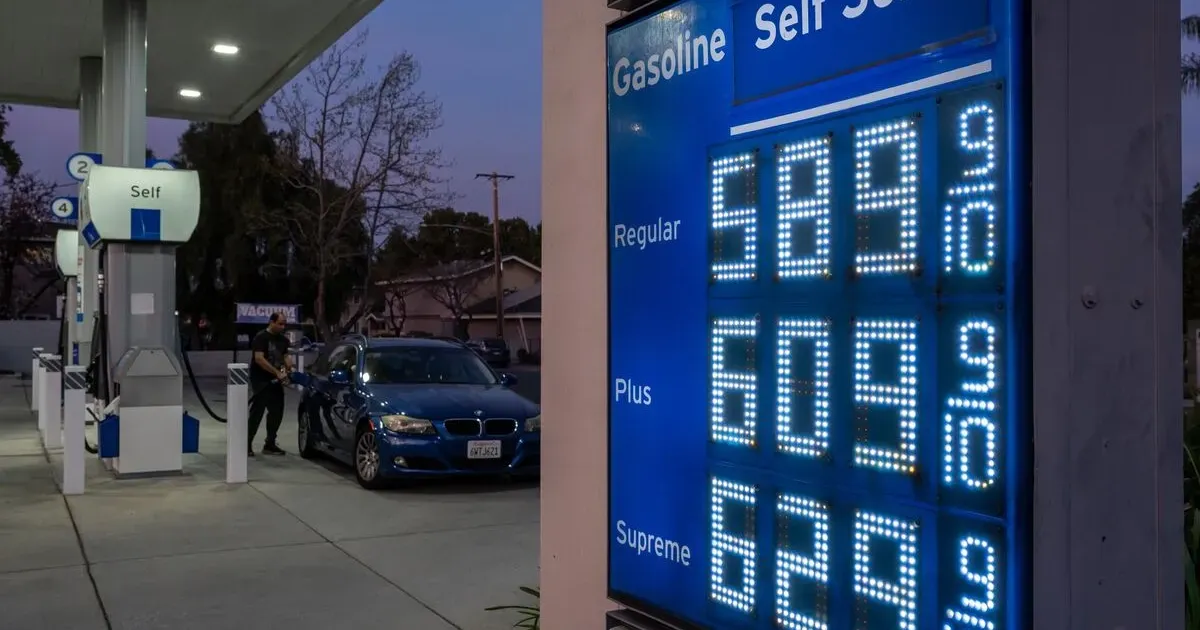
The oil market is facing more than higher prices as the Iran war pushes crude into a new volatility regime with no clear direction. The volatility deepened on March 11, 2026.
Crude Starts Trading Like a Shock Asset
Singapore trading desks hummed with an anxious energy on Wednesday morning when the Strait of Hormuz remained a ghost town for commercial tankers. Brent crude futures jumped 4% before retreating, a pattern that has become the standard since the first missiles flew in the Middle East. This erratic movement has disconnected the paper market from the physical reality of oil production, leaving professional analysts struggling to find a stable floor for pricing. Many veteran traders suggest the current environment feels less like a commodities cycle and more like a speculative frenzy. Retail investors are flooding the market, treating oil barrels like speculative tech stocks.
Data from several online brokerages shows a surge in call options, as small-time players bet on prices reaching levels not seen in decades. This fervor mirrors the behavior of popular internet equities from the early 2020s, where momentum often overrode fundamental logic. MarketWatch recently noted that crude oil is trading like a meme stock, characterized by sharp spikes followed by sudden, unexplained drops that wipe out leveraged positions in minutes. Volatility has reached a breaking point. Technical indicators that once guided the industry have failed to account for the sheer volume of retail participation.
Traders tried to price war risk and delayed supply at the same time, leaving the market unusually vulnerable to rumor, shipping data, and sudden policy signals.
While institutional players usually provide liquidity, the influx of amateur speculators has created a feedback loop of volatility. When prices start to climb, retail algorithms and manual traders pile in, forcing prices far beyond what the physical supply and demand balance would justify. Such a scenario makes it nearly impossible for traditional energy companies to hedge their risks effectively, as the cost of insurance against these swings has become prohibitive. Refiners in Asia and Europe now face a difficult choice between buying overpriced crude or shutting down processing units. Many choose the latter.
Premiums for immediate delivery have reached eye-watering heights, yet the actual flow of physical oil is stuttering because of the Iran conflict. Bloomberg reports that refiners are beginning to balk at the prices demanded by producers in the North Sea and West Africa, who have raised their rates to capitalize on the chaos in the Persian Gulf. Instead of securing supply for the summer driving season, these companies are drawing down their existing inventories, hoping the war subsides before their storage tanks run dry.
Refiners Pause While Prices Whipsaw
Inventory management has become a high-stakes gamble for energy giants from Tokyo to Rotterdam. If the conflict lasts another month, those refiners who stayed on the sidelines will be forced to buy at any price to keep their machinery running. The current standoff between buyers and sellers creates a dangerous vacuum in the global supply chain. When physical oil stops moving, the impact is felt far beyond the trading floor. It hits the chemical plants, the plastics manufacturers, and the transportation fleets that form the backbone of the global economy.
Morgan Stanley analysts warned this morning that the Federal Reserve might have to reconsider its timeline for easing monetary policy. Economists once treated a June cut as the consensus path, but $110-per-barrel oil has made Jerome Powell's route far narrower. Energy prices have a direct influence on the Consumer Price Index, and a sustained spike could reverse the progress made over the last year. If fuel costs remain elevated, the Federal Reserve will have little choice but to maintain high interest rates to prevent a secondary inflation spiral. Emerging markets are feeling the sharpest pain from this price surge.
While a June cut was previously the consensus among economists, the inflationary pressure of $110-per-barrel oil creates a difficult path for Jerome Powell.
Investors who spent months betting on high-yield bonds in developing nations are now dumping those assets in favor of the US dollar. Rising energy costs threaten to reignite inflation in countries that can least afford it, forcing their central banks to keep rates high or even hike them further. Bloomberg data indicates that the carry trade in emerging markets, once the darling of the hedge fund world, is being upended as the oil shock alters the risk profile of nations like Turkey, India, and South Africa. Wealth is evaporating in real time. Financial institutions in London and New York are scrambling to reassess their exposure to these volatile markets.
The connection between energy prices and sovereign debt has never been more apparent. When a developing nation must spend more of its foreign currency reserves on fuel, it has less available to service its international loans. This dynamic increases the likelihood of defaults, leading to a broader retreat from risk across the global financial system.
The Fed Cut Trade Gets Harder
Markets have a peculiar way of punishing those who believe a spreadsheet can account for a cruise missile. Relying on central banks to solve a geopolitical energy crisis is like asking a carpenter to fix a software bug. Jerome Powell cannot print more oil barrels, and no amount of interest rate manipulation will reopen the Strait of Hormuz. Wall Street remains obsessed with whether the Federal Reserve will cut rates in June, yet this focus misses the broader reality of a structural energy deficit. Politicians in Washington and London often talk about energy independence while their economies remain tethered to the most volatile geography on Earth.
Investors who treated crude oil as just another line on a screen have received a harsh lesson in physical reality. If the current conflict persists, the idea of a soft landing for the global economy will move from a hopeful projection to a historical curiosity. True stability requires more than monetary policy; it requires a secure supply chain that does not rely on the whims of adversarial regimes. History will likely view this period not as a temporary spike, but as the moment the illusion of cheap, guaranteed energy finally vanished. Oil is not a meme stock, despite how retail traders treat it, and the consequences of its price action are far more permanent than a lost bet on a trading app.