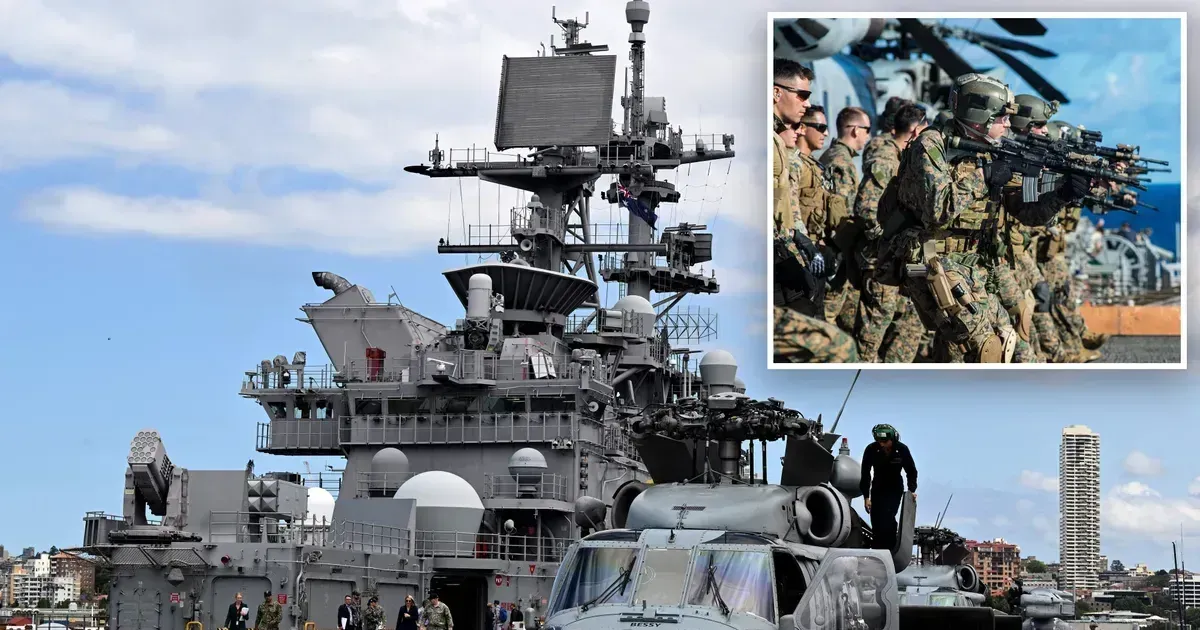
Pentagon officials confirmed today the strategic redeployment of the USS Tripoli into the Persian Gulf. This movement of the amphibious assault ship, alongside the 15th Marine Expeditionary Unit, marks an attempt to dismantle Iranian influence over the Strait of Hormuz. Marine units aboard the vessel are trained for rapid response and coastal operations, providing a versatile platform for amphibious landings or maritime interdiction. Defense analysts suggest the presence of such a significant naval asset aims to deter Tehran from further disrupting global oil shipping routes. The update was dated March 13, 2026. The vessel remains one of the largest non-carrier ships in the American fleet. The economic pressure spread beyond energy desks.
Intelligence reports indicate that Iranian forces continue to exert pressure on maritime traffic through a series of drone harassments and fast-attack craft maneuvers. Navy leadership instructed the USS Tripoli to maintain a constant presence near the northern reaches of the strait. But military logistics remain complicated by the sheer distance from the nearest permanent support bases. The mission requires a delicate balance between showing force and avoiding unintended escalation in a region already saturated with kinetic activity. The ship carries a full complement of F-35B Lightning II fighter jets to provide air cover.
Pentagon Deploys USS Tripoli to Strait of Hormuz
Maritime security remains the stated priority for the American military command as the joint US-Israeli campaign against Iran enters its next phase. Command officials emphasized that the deployment is a necessary response to ongoing threats against commercial tankers. Still, the operational cost of maintaining a Marine Expeditionary Unit in these waters exceeds several million dollars per day. Defense contractors have ramped up production of precision-guided munitions to replace stocks being expended in regional skirmishes. Naval planners are coordinating with regional allies to establish a revolving patrol schedule. Energy markets are pricing in a long-term blockade.
Petroleum prices climbed 12% following the announcement of the USS Tripoli positioning. In turn, diesel and gasoline costs at American pumps rose to levels not seen since the peak of the 2022 energy crisis. For one, the disruption of the Strait of Hormuz affects approximately 20% of the global petroleum supply. Traders on the New York Mercantile Exchange are hedging against a potential total closure of the shipping lane. Such volatility in the energy sector historically precedes a broader slowdown in manufacturing and consumer spending across the United States.
Fertilizer Shortages Threaten American Agricultural Stability
Farmers across the Midwest face a different kind of casualty from the conflict in the form of a severe fertilizer shortage. Iran and its regional neighbors serve as primary exporters of the chemicals required for nitrogen-based fertilizers. Agriculture Secretary Brooke Rollins announced on Friday that the White House is exploring a series of bailouts to prevent a collapse in domestic crop yields. By contrast, previous years saw a surplus of these essential inputs. Fertilizer prices have tripled since the commencement of the war, forcing some producers to leave fields fallow for the upcoming spring season. Agriculture remains the most vulnerable sector of the domestic economy.
Rollins stated that the administration is looking at every available lever, from direct subsidies to supply chain rerouting, to ensure food security. Meanwhile, the cost of the proposed bailout package is estimated to reach $15 billion. Separately, food processors warned that the spike in fertilizer costs will manifest in higher grocery prices by late summer. Bread and meat products are expected to see the sharpest increases due to their reliance on grain-heavy supply chains. Small family farms are struggling to secure the credit necessary to purchase inputs for the 2026 planting cycle.
Federal Reserve Monitors Inflation Spike Linked to Energy
Data from the Federal Reserve show that a key inflation gauge had already begun to move higher in January. The Personal Consumption Expenditures price index rose by 0.3% month over month, even before the full impact of the Iran war reached the pumps. In particular, core inflation, which excludes volatile food and energy categories, remains stubbornly high at 2.8% on an annual basis. Central bank governors are now debating whether the war-induced energy spike will require further interest rate hikes to prevent a wage-price spiral. Fed officials had previously hoped to begin cutting rates early this year.
"The administration claims it can find a dime for every missile launched in the Gulf, but it cannot find a dime for health care or the Medicaid expansions that keep our rural hospitals open," said a lead negotiator for the House Democratic Caucus.
Higher interest rates combined with soaring energy costs are creating a restrictive environment for American businesses. In fact, small business confidence dropped to a five-year low in the most recent survey. Yet, the central bank appears committed to its mandate of price stability regardless of the geopolitical climate. Investors are now pricing in a 70% chance of a rate hike at the next meeting. Economists at Goldman Sachs adjusted their growth forecasts downward to reflect the combined pressure of war spending and monetary tightening.
Capitol Hill is becoming a secondary battleground as lawmakers debate the trade-offs of the current military strategy. Congressional Democrats have intensified their attacks on the Republican-led spending plan, which prioritizes defense allocations over social programs. They argue that the hundreds of billions directed toward the Iran conflict are directly responsible for the inability to fund Obamacare and Medicaid. For instance, the proposed cuts to rural health clinics would save roughly the same amount of money spent on a single week of naval operations in the Persian Gulf.
Medicaid rolls have shrunk in several states as federal pandemic-era protections expired and were not replaced. Democratic leadership points to the USS Tripoli deployment as an example of misplaced national priorities. At the same time, Republican leaders maintain that national security is the foundational requirement for any functional economy. They suggest that a failure to stop Iranian aggression would lead to an even more catastrophic global depression. The debate over the 2027 fiscal year budget is expected to be the most contentious in a decade. Healthcare funding remains the primary friction point in the Senate. Republicans argue that the war in Iran is a necessary defense of the global order that sustains American prosperity. But the visual of skyrocketing gas prices and empty pharmacy shelves in rural America complicates their political messaging. Voters in swing states are increasingly citing the cost of living and the Iran conflict as their primary concerns. Recent polling shows a majority of Americans favor a diplomatic settlement over continued military escalation.
Domestic Economic Spillover
The domestic cost of a foreign conflict rarely arrives with a single dramatic headline. It shows up in diesel invoices, fertilizer shortages, hospital procurement delays and budget choices that officials pretend are unrelated. Washington can call the deployment strategic, but households will experience it as another bill added to an economy already running out of slack.