Tehran launched a precision missile barrage at the Haifa oil refinery early Thursday morning, sending thick plumes of black smoke over Israel’s northern coast and igniting fresh volatility in global energy markets. Smoke filled the sky above the industrial zone as Israeli emergency crews rushed to the scene of the impact on March 19, 2026. This strike represents the most direct hit on Israeli energy infrastructure since the escalation of regional hostilities began late last year. Local residents reported hearing multiple explosions before the Israeli Defense Forces confirmed the breach of northern airspace by several Iranian projectiles.
The strike put refinery risk and Gulf supply routes back at the center of oil trading. Energy analysts immediately adjusted risk premiums as the news broke. Israeli Energy Minister Eli Cohen downplayed the severity of the incident in a public statement released shortly after the fires were contained. Cohen insisted that the facility sustained no significant damage and operations would continue with minimal disruption. But visual evidence from the ground told a more complicated story, with multiple storage tanks visibly charred and secondary explosions caught on social media feeds. Security officials in Jerusalem are currently evaluating the failure of localized missile defense systems to intercept the low-altitude incoming fire.
By contrast, the Iranian state media apparatus characterized the strike as a surgical demonstration of their long-range capabilities. They claimed that the Haifa facility was specifically targeted to highlight the vulnerability of Israeli strategic reserves. Jerusalem has long maintained that its energy sector is fortified against such incursions, yet the visible smoke over the Mediterranean suggests a breakdown in that protective shield.
Haifa Refinery Damage Reports Conflict with Official Stance
Conflicting accounts regarding the status of the refinery have left traders in London and New York struggling to price the event accurately. While Cohen dismissed the damage as negligible, independent satellite imagery analysts noted activity consistent with a partial shutdown of the refining units. The facility processes approximately 197,000 barrels of crude oil per day, making it an essential artery for the domestic Israeli economy. Any prolonged outage would force the government to rely more heavily on expensive imported refined products, straining a budget already stretched by military expenditures.
Investors reacted with predictable haste. Brent crude futures jumped 4.2% within an hour of the first reported blast, briefly touching the $100 per barrel threshold. Market participants are increasingly concerned that this specific engagement marks a move from proxy skirmishes to direct industrial sabotage. Shipping insurance premiums for vessels entering Israeli waters have already seen a three-fold increase since the morning raid. Still, the immediate physical damage to the refinery may be less significant than the psychological impact on regional stability. Israel has historically relied on its technological edge to deter such strikes, but the penetration of the Haifa perimeter suggests that Iranian missile technology has evolved to challenge even the most advanced interception arrays. The Israeli Cabinet is reportedly meeting in an underground bunker to discuss a potential retaliatory strike against Iranian energy assets in the Persian Gulf.
QatarEnergy Infrastructure Crippled for Five Years
Separately, the economic consequences of the broader conflict have devastated the liquefied natural gas sector in the neighboring Gulf. QatarEnergy Chief Executive Saad al-Kaabi announced a staggering blow to the nation's production capacity following a series of related attacks on processing hubs. He confirmed that the ongoing regional insecurity has effectively removed 17% of Qatar’s LNG output from the global market. This deficit is not a temporary glitch in the supply chain but a long-term structural failure that could persist for half a decade.
"QatarEnergy may have to declare force majeure on long-term contracts for up to five years."
Force majeure declarations allow companies to skip deliveries due to circumstances beyond their control, and such a move would be catastrophic for European and Asian nations dependent on Qatari gas. Al-Kaabi emphasized that the damage to specialized cooling units and extraction hardware requires parts that are currently stuck in bottlenecked shipping lanes. Many of these components are manufactured in the West, where export controls and shipping risks have made procurement nearly impossible. In turn, global gas prices have surged to levels not seen since the height of the 2022 energy crisis. Germany and Japan are particularly exposed to this supply shock, as they have spent the last two years pivoting away from Russian pipelines toward Qatari sea-borne deliveries. The loss of nearly one-fifth of the world’s most reliable LNG supply threatens to push several major economies into a deep recession before the end of the fiscal year.
Trump Administration Proposes Lifting Iran Oil Sanctions
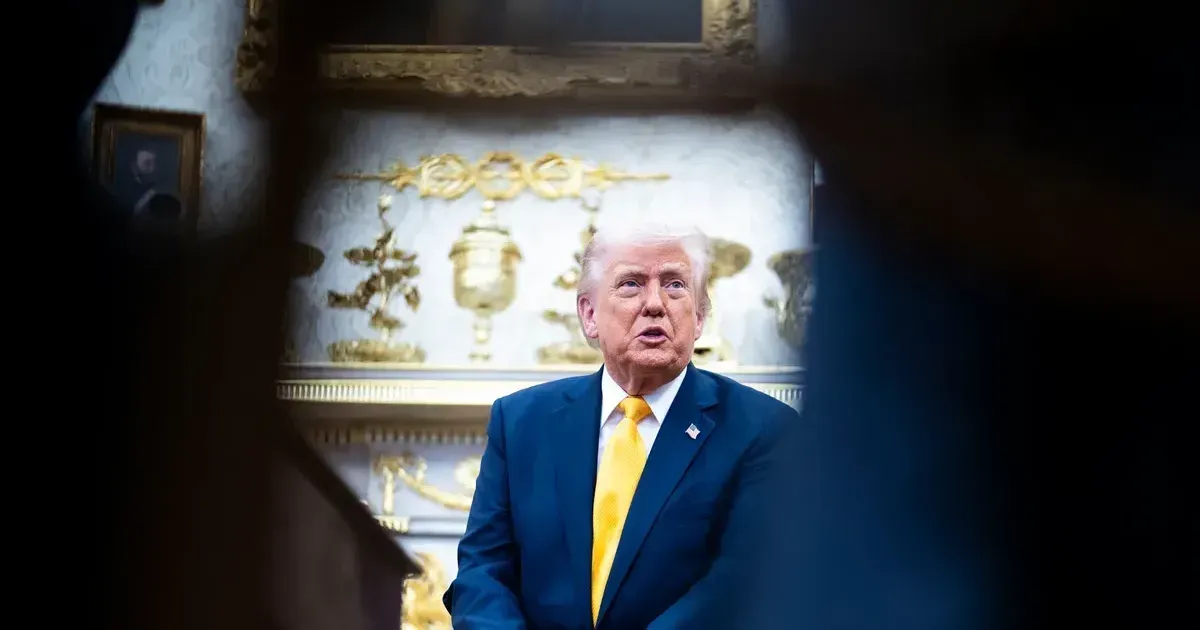
President Donald Trump responded to the surging prices with a policy proposal that has stunned both allies and domestic critics. Facing pressure to stabilize the American economy as gas prices at the pump hit record highs, the White House suggested a radical departure from its previous hawkish stance. The Treasury Department is now weighing the possibility of lifting specific sanctions on Iranian oil exports to flood the market with supply and drive prices down.
Treasury officials described this move as a paradoxical but necessary step to protect the American consumer from a total economic collapse. By allowing Iranian crude back into the formal banking system, the administration hopes to neutralize the price spikes caused by the very conflict Tehran is fueling. Critics on Capitol Hill have already labeled the plan as contradictory, arguing that it would in effect provide Iran with the funds needed to continue its missile program. Yet, the political reality of an election cycle appears to be driving the decision-making process in Washington. Trump told reporters that he would do whatever is required to lower oil prices, including negotiating with adversarial regimes. The move would effectively reverse years of maximum pressure campaigns in exchange for short-term price relief at gas stations in the Midwest and South.
Global Energy Security in Jeopardy After Gulf Attacks
Logistical chaos continues to plague the Strait of Hormuz, where the risk of total closure is no longer a theoretical exercise for maritime strategists. Shipping giants have begun rerouting tankers around the Cape of Good Hope, adding twelve days to the journey and thousands of dollars in fuel costs per trip. These delays are compounding the supply shortages already triggered by the Haifa strike and the Qatari production cuts.
For instance, the cost of chartering a Very Large Crude Carrier has doubled in the last seventy-two hours. Global logistics networks are built on the assumption of free and open transit through the world's primary chokepoints, an assumption that is currently being dismantled by Iranian drone and missile strikes. Even so, some smaller operators continue to gamble on the passage, betting that their hulls will not be the next targets of opportunity. Energy security has now become a zero-sum game where national interests are overriding long international agreements. European nations are reportedly considering seizing existing gas inventories to ensure domestic heating through the upcoming winter months. The United States maintains a major strategic reserve, but officials are hesitant to tap into it while the duration of the QatarEnergy outage remains uncertain.
The Energy Risk Behind the Haifa Strike
Why should Western consumers expect stability when their leaders gamble with the very geography of energy production? The proposed Trump strategy of lifting sanctions on Iranian oil to offset the damage of Iranian missiles is an exercise in geopolitical cowardice. It reveals a Washington so terrified of five-dollar-a-gallon gasoline that it is willing to fund the very missiles falling on Haifa just to keep suburban voters quiet. This is not diplomacy, it is a ransom payment disguised as market management.
We are watching the complete erosion of the post-Cold War energy order, where the security of a refinery in Israel or a gas hub in Qatar is secondary to the immediate political needs of the White House. If the United States follows through on this paradoxical lifting of sanctions, it will signal to every rogue state that industrial sabotage is an effective way to gain leverage over the American Treasury. The world does not need more Iranian oil; it needs a coherent strategy that does not involve subsidizing its own destruction. Reliance on volatile Gulf states has always been a precarious foundation for the global economy, yet the current administration seems determined to double down on that dependency even as the smoke from Haifa rises. Real energy independence requires the courage to let the market feel the pain of conflict rather than insulating it with the blood money of adversaries.