Mortgage Rates Feel the Oil Shock
Tehran's decision to engage in direct regional conflict has reached far beyond the oil terminals of the Persian Gulf, manifesting in a sudden and painful spike in American borrowing costs. Financial markets reacted with immediate volatility to the erupting hostilities, sending US mortgage rates upward at their fastest pace in eleven months. Prospective homebuyers, already weary from years of high prices, now face a spring sales season clouded by deep uncertainty. Bloomberg Economics reported that the jump in rates reflects a broader market anxiety regarding inflation, as investors demand higher yields to compensate for the risks of a wider war.
Inflationary fears are driving this volatility. On March 12, 2026, the mortgage-rate jump showed how quickly a foreign conflict can reach American household budgets. Once the conflict began, the bond market responded by selling off Treasuries, which pushed yields higher. Because mortgage rates typically follow the lead of the 10-year Treasury note, the cost of a 30-year fixed-rate loan surged almost overnight.
Real estate agents in major hubs like Phoenix and Atlanta report that several buyers have already pulled out of contracts. Such a sudden movement in interest rates can disqualify thousands of families from the homes they were just about to purchase. For the middle class, the monthly-payment math is becoming harder to defend. Investors across the globe are bracing for a prolonged period of elevated prices.
Global markets have become increasingly sensitive to energy supply disruptions, and the threat of a closed Strait of Hormuz has sent traders into a defensive crouch. New data suggests that the surge in borrowing costs could persist if the military situation does not stabilize quickly. Market analysts suggest that the Federal Reserve may be forced to keep interest rates higher for longer to combat the inflationary pressure of rising energy costs, further punishing the housing sector. Energy costs are now moving through the international trading order with unusual speed.
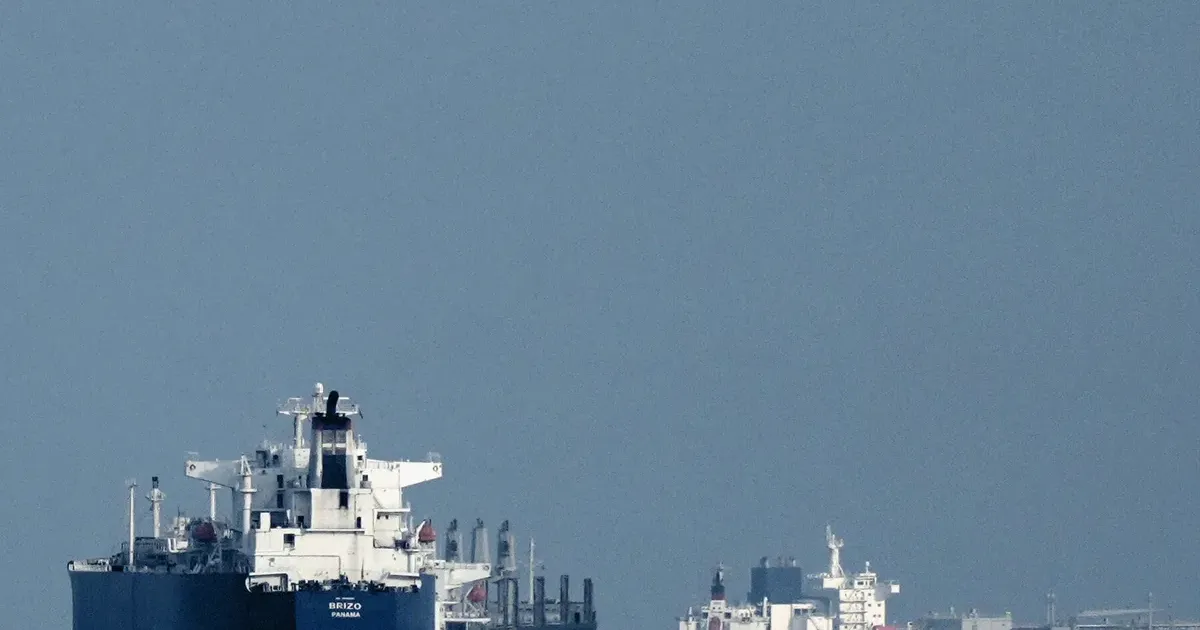
Crude oil prices climbed sharply as soon as the first missiles were confirmed, adding significant pressure to a global economy already struggling with fragmented supply chains. Ships carrying key goods are now diverting around the Cape of Good Hope to avoid potential fire in the Gulf or the Red Sea, adding weeks to delivery times and millions to fuel bills. Insurance premiums for maritime freight have skyrocketed, a cost that will inevitably be passed on to consumers at the grocery store and the gas pump. While some analysts hoped for a swift resolution, the New York Times reports that the fallout from the Iran war is delivering another blow to an already battered world economy.
Housing Affordability Takes Another Hit
Still, the current crisis is not happening in a vacuum. International trade was already suffering from the breakdown of established norms and the rise of protectionist policies in major economies. Such structural weaknesses make the present energy shock far more dangerous than those of previous decades. Every barrel of oil not shipped through the Gulf is a hole in the global balance sheet that cannot be easily filled by other producers.
Security in the Persian Gulf remains the linchpin of global price stability. National economies that rely heavily on energy imports are feeling the squeeze most acutely. Parts of Europe and East Asia are seeing industrial output slow as electricity costs rise in tandem with natural gas and oil prices. This upward trajectory in energy costs acts as a regressive tax on the entire world, siphoning wealth away from consumers and into the hands of energy producers and defense contractors.
If the conflict expands to include more regional players, the current oil shock could transition from a temporary spike into a permanent fixture of the 2026 economic calendar. Kyiv and Tehran may be thousands of miles apart, but their respective conflicts are now twin engines of global economic distress. The ongoing war in Ukraine had already strained the supply of grain and fertilizers, and the addition of a major Middle Eastern conflict has pushed the global food and energy system to its breaking point. Central banks, which had recently expressed optimism about taming inflation, are now reconsidering their timelines for rate cuts.
International observers note that the world is facing a rare synchronization of geopolitical shocks that leave little room for error in fiscal policy. This trend toward instability is reinforced by the erosion of the international trading order that governed global commerce for decades. Multilateral institutions appear increasingly powerless to mediate these disputes or provide a safety net for developing nations caught in the crossfire. Instead of cooperation, the world is seeing a rush toward regional blocs and bilateral agreements that often prioritize security over economic efficiency.
Such a shift inevitably leads to higher prices for everyone as the benefits of global scale are lost to the realities of geopolitical friction. Washington finds itself in a state of strategic paralysis, with chaotic US policymaking adding another layer of risk to an already fragile situation. Political divisions have hampered the ability of the government to provide a clear and consistent response to the crisis, leaving both allies and markets in the dark.
Household Cost Channel
Disregard the sanitized press releases from the Treasury Department regarding resilience because the global economic reality is far more grim. We are watching the terminal collapse of a cheap-energy era that was built on the shaky foundation of Middle Eastern stability and Russian cooperation. Washington elites spent years pretending that the world could transition to a green economy without securing the traditional energy corridors that actually power the modern world. Now, American families are paying the price through six-percent-plus mortgage rates and a housing market that resembles a ghost town. The belief that the United States could remain insulated from a Persian Gulf conflagration was always a delusion of the highest order. Policy experts in D.C. have allowed the domestic energy industry to be hamstrung by regulation while simultaneously failing to deter the very conflicts that make foreign oil a necessity. This is not just a market correction but a systematic failure of grand strategy. Investors should prepare for a decade where inflation is a persistent predator rather than a temporary guest. The international order is not just breaking, it is being actively dismantled by those who lack the courage to defend it or the foresight to replace it with something sustainable. Expect higher rates, lower growth, and a lot more excuses from the people who failed to see this coming.