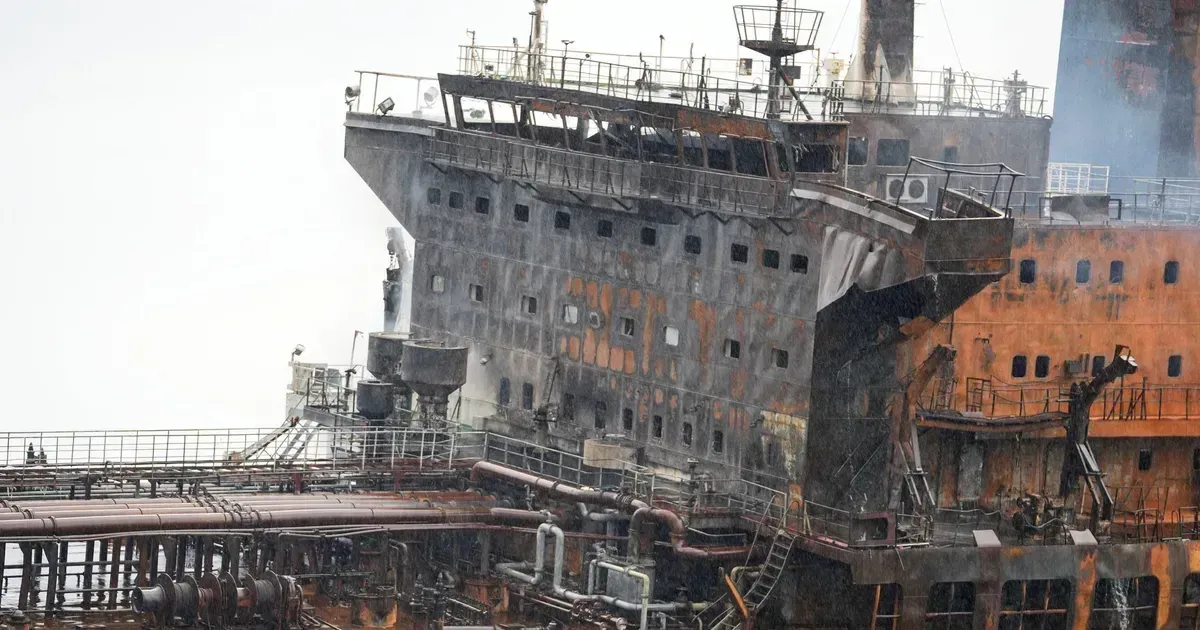
Tankers Put the Gulf on Edge
Umm Qasr's midnight stillness shattered when two explosions tore through the hull of the Safesea Vishnu on Wednesday. Video footage released by the Islamic Revolutionary Guard Corps Navy shows a motorboat approaching the tanker under cover of darkness. A massive column of fire erupted from the vessel's side, illuminating the nearby Zefyros, which was engaged in a ship-to-ship cargo transfer at the time. On March 13, 2026, the Gulf escalation moved from threat language into direct pressure on shipping and naval assets. IRGC personnel recorded the strike, shouting religious slogans and claiming loyalty to Iran's supreme leader while the tanker burned. Crude oil markets reacted with immediate volatility as traders processed the visual evidence of direct maritime sabotage.
Brent crude prices surged past 100 dollars per barrel in the hours succeeding the footage release. Analysts suggest the targeting of a vessel during a cargo transfer indicates a high level of surveillance and tactical intent. Iran previously warned it would set the region's energy infrastructure on fire if its own facilities faced Western strikes. Market participants now face a reality where the primary transit routes for global energy are active combat zones.
Such threats are no longer rhetorical flourishes from Tehran.
Economic consequences of a prolonged shutdown in the Gulf would be catastrophic for Western recovery efforts. Insurance premiums for maritime traffic in the region have tripled since the Safesea Vishnu incident. Ship owners are rerouting vessels around the Cape of Good Hope, adding weeks to delivery schedules and increasing fuel costs. Iran's ability to disrupt the flow of oil with low-cost motorboats and suicide drones creates an asymmetric advantage.
One motorboat and a handful of explosives can paralyze a vast amount of global commerce for days. How will the global economy absorb these costs if the Strait of Hormuz becomes impassable? Conflict moved from the commercial lanes to the American naval presence when IRGC officials claimed a successful strike on the USS Abraham Lincoln. Tehran's state media outlets broadcast that ballistic missiles rendered the nuclear-powered aircraft carrier non-operational.
Carrier Claim Remains Disputed
Pentagon officials issued a swift denial, asserting the carrier remains fully functional and continues its mission in the Arabian Sea. A separate engagement occurred near the carrier group when a US Navy vessel opened fire on an approaching Iranian ship. The status of that Iranian vessel remains unknown, though the engagement confirms the hair-trigger environment surrounding American assets. US officials characterize the Iranian claims as propaganda intended to strengthen domestic morale.
Iranian military commanders insist the era of American naval invincibility has ended. While Bloomberg highlights the tactical risks to US assets, Reuters notes that no visual evidence has emerged to support the claim of a damaged carrier. Discrepancies between these reports leave the actual condition of the USS Abraham Lincoln a matter of intense speculation among satellite intelligence analysts. What is certain is that the proximity of the two forces has reached its most dangerous point in decades.
Naval combat in the 21st century relies heavily on electronic warfare and missile defense systems. The USS Abraham Lincoln utilizes the Aegis Combat System to track and intercept incoming threats. If Iran successfully breached this shield, the implications for American power projection would be severe. IRGC Navy tactics rely on overwhelming these systems through saturation attacks involving dozens of smaller targets simultaneously. This strategy aims to deplete the interceptor stocks of larger US destroyers. Military historians observe that even a single successful hit on a carrier would constitute a massive symbolic defeat for Washington. Donald Trump described the conflict as moving rapidly during a brief press conference. His administration has issued warnings to Tehran following a series of drone attacks targeting Saudi Arabia and Israel.
Oil Becomes a Second Weapon
Iran's new supreme leader issued a directive stating that any nation hosting American military bases would be considered a legitimate target. Dozens of drones were launched at Saudi oil facilities and residential areas in Israel over the last forty-eight hours. Most of these were intercepted by regional air defenses, yet the sheer volume of the salvos indicates an expansion of the battlefield. This move forces regional powers to choose between their security partnerships with the United States and the threat of Iranian retaliation.
Saudi Arabia has not yet released a formal statement regarding the damage to its energy fields. Israel responded with its own set of threats, suggesting that a counter-offensive is being planned in coordination with US Central Command. Conflict is no longer contained to a single maritime corridor. Iraq has become another theater for this expanding war.
A US military aircraft crashed in Iraqi territory on Thursday, prompting a high-stakes rescue mission. Early reports suggest the crash was due to a mechanical failure, but the IRGC-affiliated militias in the area claim they brought the plane down. Rescue teams are operating in a hostile environment where local actors are increasingly aligned with Tehran's regional objectives. Trump's rhetoric suggests the United States is prepared for a wider kinetic engagement. Tehran's response is a promise of total war in the energy sector. New leadership in Iran has abandoned the cautious diplomacy of the previous decade. The supreme leader's warnings regarding US bases in Gulf Arab states represent a shift toward overt confrontation. Tehran appears to believe that the United States lacks the stomach for another long-term conflict in the region.
Deterrence Faces a Maritime Test
By attacking the Safesea Vishnu and claiming a hit on a carrier, Iran is testing the limits of American deterrence. Washington is responding with increased naval patrols and rhetorical threats, but these measures have not slowed the IRGC's operations. Such a vacuum of effective deterrence usually precedes a larger explosion of violence. Iran's use of the Safesea Vishnu attack video as a recruiting tool highlights the ideological nature of this struggle.
This incident demonstrates that the IRGC is willing to record its violations of international law to project strength. Footage of a burning tanker is a powerful visual for a regime that seeks to lead the anti-Western front in the Islamic world. Western intelligence agencies are monitoring Iranian missile silos for signs of further launches. Satellite imagery shows increased activity at IRGC bases along the coast.
If ballistic missiles are indeed being readied for another round of strikes, the US Navy may be forced to conduct preemptive strikes on Iranian soil. That scenario would trigger the very energy war Iran has threatened. The most important point is uncertainty. A verified carrier hit would be a strategic rupture, but an unsupported claim can still move markets if traders believe the next attack may be real. That is why insurers, shipowners and naval planners are reacting before a complete public record exists. In the Gulf, the cost of doubt is measured in rerouted cargo, higher premiums and fuel-price risk.