Handala's cyberattack claim against Stryker has put medical technology, Iranian-linked hacking, and South Africa's diplomatic balancing act inside the same security frame. The cyber claim escalated on March 11, 2026.
Stryker Becomes a Cyberwar Target
Cybersecurity teams at Stryker, a titan of the American medical technology sector, spent the morning scrambling to contain a breach that appears to have compromised sensitive internal systems. Handala, a cybercollective with deep and documented ties to Iranian intelligence services, claimed credit for the operation via social media channels early Wednesday. While the company has yet to provide a full inventory of the damage, the group released several screenshots purporting to show administrative access to Stryker servers, a move intended to cause maximum reputational damage. This intrusion targets a critical node in the global healthcare supply chain, raising immediate concerns about the security of patient data and the continuity of surgical equipment distribution.
The medical technology breach collided with sanctions pressure and diplomatic hedging, widening the story beyond a single corporate intrusion.
Handala maintains a history of aggressive digital sabotage, often timing its strikes to coincide with kinetic escalations in the Persian Gulf. Evidence from the dark web suggests the group utilized a sophisticated spear-phishing campaign that bypassed multi-factor authentication protocols. Intelligence experts at Mandiant and CrowdStrike are investigating whether the breach involves ransomware or if the primary objective was simply the exfiltration of intellectual property. Iranian state media has remained quiet regarding the claims, yet the pattern of behavior aligns perfectly with Tehran's broader strategy of asymmetric warfare against Western economic interests. The timing is hardly coincidental.
Washington is currently grappling with a multifaceted conflict involving Iranian proxies across the Levant, and a strike on a major U.S. corporation like Stryker is a blunt instrument of retaliation. Analysts believe that by hitting a medical firm, Iran seeks to demonstrate that no sector is off-limits, regardless of the humanitarian implications. Hospitals across the United States rely on Stryker for everything from joint replacements to neurosurgical tools, meaning any disruption to their logistics could have lethal consequences in operating rooms from Boston to Seattle. Security researchers note that Handala has previously targeted Israeli infrastructure, but this shift toward a massive American healthcare provider indicates a widening of the digital front.
Pretoria Tries to Stand Between Camps
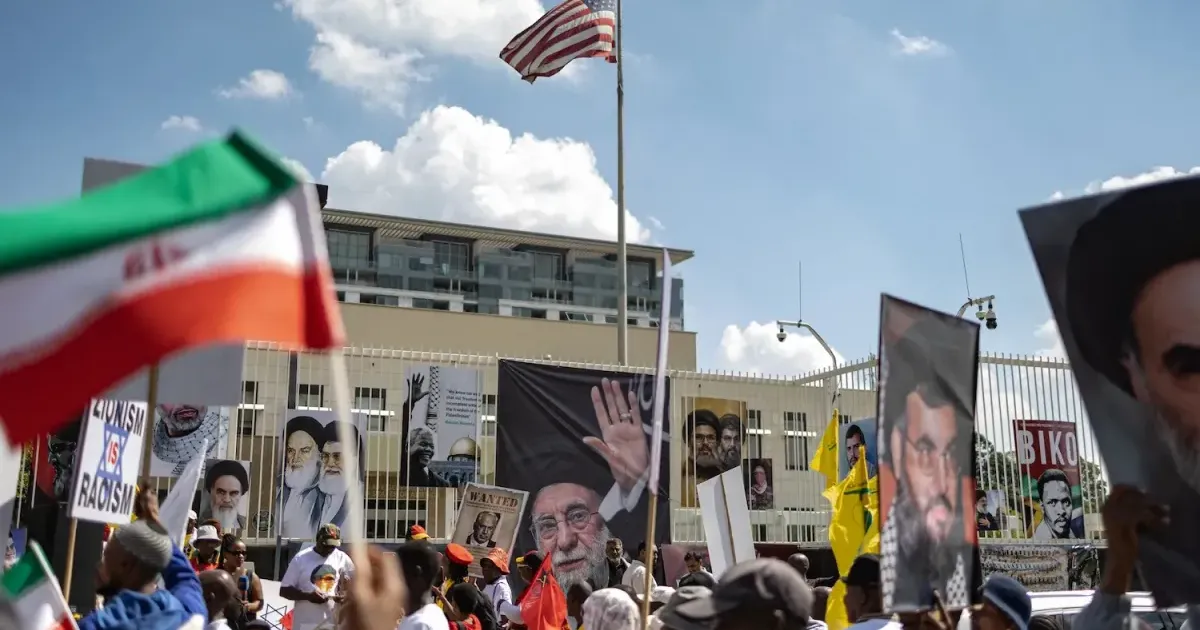
South Africa finds itself caught in an increasingly untenable position as the Iran War draws in traditional allies and adversaries alike. President Cyril Ramaphosa faces a delicate balancing act, attempting to maintain lucrative trade ties with the United States while honoring historical and diplomatic commitments to Tehran. Pretoria has long viewed Iran as a partner in the Global South, a relationship forged during the anti-apartheid struggle when Iran cut off oil exports to the minority-led regime. Today, that loyalty is being tested by heavy-handed pressure from the U.S. State Department, which expects its partners to enforce strict sanctions regimes against the Islamic Republic.
Trade statistics reveal the depth of the dilemma facing the African National Congress. The United States remains one of South Africa's largest trading partners, particularly through the African Growth and Opportunity Act, which grants duty-free access to American markets. Simultaneously, Iran has become a significant destination for South African agricultural exports and a potential source of affordable energy. Losing either would devastate an economy already struggling with chronic unemployment and infrastructure decay. But Washington has signaled that neutrality may no longer be a viable option for nations seeking to maintain favored status in the American financial system.
Diplomatic circles in Pretoria are buzzing with rumors of a private ultimatum delivered by U.S. officials last week. South African Foreign Minister Naledi Pandor has consistently advocated for a negotiated settlement, criticizing Western-led sanctions as blunt instruments that harm civilians more than regimes. This dual-track approach has earned Pretoria praise in Tehran and Moscow, yet it has sparked a fierce debate within the South African parliament.
Asymmetric Pressure Turns Global
Opposition leaders argue that the government is risking its most important economic relationship for the sake of an ideological affinity with a pariah state. They warn that if the U.S. Treasury decides to target South African banks for facilitating Iranian transactions, the resulting capital flight would dwarf the current economic downturn. The Stryker hack and the diplomatic friction in the southern hemisphere are two sides of the same geopolitical coin. Iran is leveraging its cyber capabilities to project power far beyond its borders, while simultaneously using its diplomatic reach to create friction within the Western alliance.
This tension is particularly visible within the BRICS+ framework, where nations like South Africa and Brazil are resisting the U.S. demand for a total embargo on Iranian commerce. By creating these points of friction, Tehran hopes to dilute the effectiveness of American isolation tactics, turning a regional war into a global endurance test. Military historians often point to the way secondary powers are forced to choose sides during periods of systemic instability. In the current environment, the choice is not just political but deeply integrated into the digital and financial architecture of the modern world.
A cyberattack on a medical firm in Michigan can be felt in the boardroom of a bank in Johannesburg, as global insurance premiums spike and risk assessments are rewritten overnight. The Handala hackers are not just stealing data, they are participating in a coordinated effort to make the cost of American foreign policy too high for the domestic public and international partners to bear. Complexity is the new weapon of choice. Retaliation for the Stryker breach is likely to occur in the shadows, far from the public eye.
Why Neutrality Is Getting Harder to Sell
Will the United States finally acknowledge that its policy of strategic patience has morphed into a theater of the absurd? For years, the federal government has watched as Iranian-backed groups like Handala treated American corporate infrastructure as a digital playground, yet the response from Washington remains confined to tepid sanctions and strongly worded memos. The refusal to draw a hard line in the digital sand has effectively invited the current siege on Stryker. When a rogue state can threaten the supply of surgical equipment to American hospitals with total impunity, the concept of national security becomes a punchline. Pretoria is playing a similarly cynical game, reaping the benefits of American market access while providing diplomatic cover for a regime that actively seeks to destabilize the global order.
It is time to stop pretending that neutrality is a noble stance in this conflict. South Africa cannot have it both ways, and the U.S. should stop subsidizing the ambivalence of nations that refuse to stand against blatant state-sponsored cyber terrorism. The world is splitting into two distinct camps, and those trying to stand in the middle will eventually be crushed by the gravity of both.