School Strike Exposes Intelligence Failure
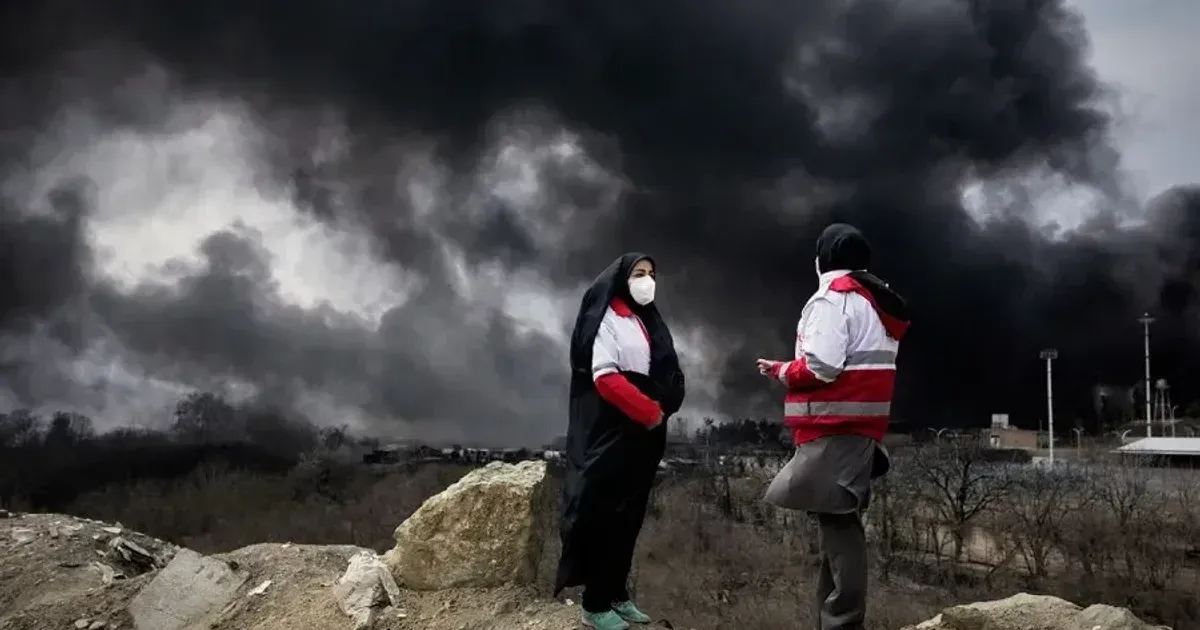
The strike brought a gruesome clarity to the limits of high-technology warfare when a misdirected precision-guided bomb struck the Shajarah Tayyebeh elementary school. Reports from southern Iran indicate that approximately 175 people, primarily students and faculty, died in the blast. Rescue workers spent the subsequent forty-eight hours pulling small bodies from the pulverized concrete of what was once a three-story educational facility. On March 13, 2026, the school strike turned a military campaign into a political and moral liability. US military officials initially remained silent before acknowledging that the site appeared on target lists as a command-and-control node for the Islamic Revolutionary Guard Corps. Investigative details emerging from the New York Times suggest the information used to justify the strike was years out of date.
Sources within the intelligence community confirm that while the building may have served military purposes during a 2022 exercise, it had long since returned to its civilian function as a primary school. Military operations often rely on a chain of verification that starts with satellite imagery and ends with human intelligence on the ground.
But in the haste of the current offensive, that chain appears to have snapped. Technicians at the National Geospatial-Intelligence Agency reportedly flagged the site as a potential civilian area three weeks ago. Yet the target remained in the active queue because no secondary source could definitively disprove the older data. 175 civilians paid the price for this bureaucratic inertia. Analysts at the Pentagon are now scrutinizing why the Shajarah Tayyebeh elementary school was not removed from the strike list earlier.
The longer the investigation takes, the more the strike becomes a test of alliance discipline. Regional partners that quietly support pressure on Tehran still have to explain civilian deaths to their own publics, while humanitarian organizations will demand a chain-of-command account rather than a technical apology.
Tehran Uses the Attack to Tighten Control
It remains unclear if the error was a result of software glitches or a failure in the manual vetting process. Some veteran officers suggest that the sheer volume of targets has overwhelmed the staff responsible for collateral damage estimates. Human loss rarely aligns with the geometry of strategic objectives. Intelligence assessments from the United States provide a sobering view of the Iranian government's stability despite these external pressures.
Reuters reported Thursday that a multitude of classified reports show consistent analysis that the regime is not in danger of collapse. Iranian security forces have maintained a tight grip on internal dissent, and the leadership in Tehran shows no signs of internal fracturing. One senior official noted that the current offensive has actually consolidated power around the Supreme Leader.
Security services have used the threat of foreign invasion to justify a massive crackdown on any remaining domestic opposition. Instead of the expected popular uprising, the strikes on infrastructure and civilian sites have fostered a sense of nationalistic defiance among segments of the population that were previously indifferent to the government.
Iranian state media has capitalized on the school strike, broadcasting images of the carnage to stir anti-Western sentiment. Public anger now targets the external aggressors rather than the internal mismanagement. That pressure also changes how future targets are reviewed. Commanders may slow approvals, add legal checks or pull older intelligence files from the queue until a second source confirms civilian use. Those steps reduce speed, but they are the only way to keep one failed strike from discrediting a broader campaign.
Washington Faces Political Blowback
Intelligence agencies have informed the White House that the clerical establishment retains full control of the military and the paramilitary Basij forces. Political tremors from the war have reached the halls of Congress, where the Republican Party is experiencing a deep internal rift. This conflict has become a proxy battle over a broader, long-simmering disagreement within the right about the extent of American support for Israel and the necessity of Middle Eastern intervention.
Traditional hawks continue to advocate for a total victory over the Iranian regime, but a growing isolationist wing questions the cost of another multi-trillion-dollar engagement. RealClearPolitics reports that several key GOP donors have expressed concern over the lack of a clear exit strategy.
The caucus is now split between those who view the survival of the Iranian state as an existential threat and those who see the war as a drain on domestic resources. Republican lawmakers who previously supported the offensive are now distancing themselves from the mounting civilian casualties. Senatorial offices have been flooded with calls from constituents concerned about the 175 children killed in southern Iran. This political pressure has slowed the passage of emergency funding bills. Some members of the House Freedom Caucus have openly criticized the administration for relying on flawed intelligence, arguing that American blood and treasure are being wasted on inaccurate targeting. The governing coalition that once seemed unified in its stance against Tehran is now paralyzed by ideological disputes. The current situation echoes previous American interventions where the assumption of rapid regime collapse proved unfounded. Military planners often overestimate the impact of kinetic strikes while underestimating the social cohesion that forms under fire. Iran possesses a deep-seated institutional memory of resistance dating back to the Iran-Iraq War of the 1980s. Security analysts point out that the regime has spent decades preparing for exactly this type of conventional assault. They have decentralized their command structures and buried their most critical assets deep underground.
The central issue is accountability. A strike error of this scale cannot be treated as a routine targeting correction, because it changes how allies, adversaries and domestic lawmakers judge the entire campaign. The more Tehran uses the school attack as proof of foreign aggression, the harder it becomes for Washington to argue that military pressure is isolating the regime rather than strengthening its internal narrative.
The political damage is harder to contain because school deaths travel faster than military explanations. Even allies that accept the strategic case against Tehran will want proof that the target list is being rebuilt around current intelligence rather than inherited assumptions.