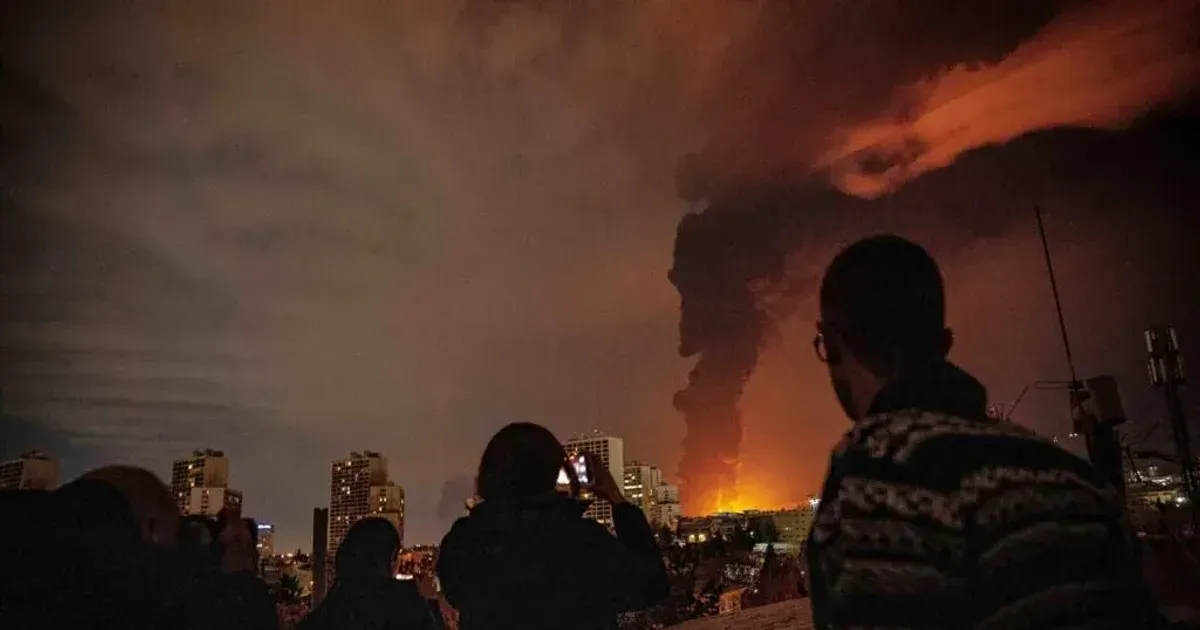
Missiles Hit Northern Israel
The morning began with air raid sirens across the Galilee and northern suburbs as Iranian medium-range ballistic missiles breached Israeli airspace. On March 13, 2026, the attacks showed how quickly separate fronts were merging into one regional crisis. Residents reported hearing multiple sonic booms before a visible impact occurred in a densely populated residential sector. Social media footage verified by military analysts shows the moment a missile struck a housing complex, sending debris into nearby streets. Local emergency services responded to fires at the scene while residents retreated to hardened shelters under the threat of secondary launches.
Northern Israel has remained a primary target for cross-border exchanges, yet the use of direct Iranian ordnance represents an expansion of the tactical engagement. Tensions remained high as emergency crews cleared wreckage and searched for potential survivors in the rubble, according to local emergency services. Video evidence captured the trajectory of the projectiles, which appeared to bypass initial layers of the regional defense umbrella. Iranian media outlets provided footage of launches from sites within the Islamic Republic, claiming the strikes were a response to recent Israeli military maneuvers. Damage to civilian property in Israel was immediate, with several structures sustaining structural failures.
Damage assessments from the northern district indicate that civilian infrastructure bore the brunt of the early morning barrage.
Forensic analysis of the shrapnel suggests the use of Fateh series missiles, known for their precision and high-explosive yield. Intelligence officials in Tel Aviv are currently reviewing radar data to determine the exact launch origin and the total number of projectiles that penetrated the defensive grid before the impact on the ground. Saudi Arabia’s Royal Air Defense Forces reported their most significant engagement of the year on Friday morning. Interceptor batteries engaged and destroyed more than two dozen drones targeting critical oil infrastructure and logistical hubs across the kingdom. Riyadh attributed the surge in drone activity to renewed Iranian threats aimed at destabilizing the global energy market.
Military officials confirmed that Patriot PAC-3 batteries successfully neutralized the incoming threats before they could reach their intended coordinates. Defense analysts suggest the drone swarms utilized a low altitude flight path designed to evade traditional radar detection. These interceptions prevented a catastrophic disruption to production, though the threat remains active as regional friction extends beyond the borders of the Levant. Oil markets responded with predictable volatility.
Saudi Defenses Face Drone Swarms
Brent crude futures climbed steadily as news of the Saudi interceptions reached trading floors in London and New York. Analysts at major financial institutions noted that the frequency of these attacks creates a risk premium that could persist throughout the fiscal quarter. Saudi energy officials emphasized that production remains stable despite the proximity of the drone strikes to key processing plants. Security around the East-West pipeline has been reinforced with additional mobile radar units and electronic warfare assets.
Investors continue to monitor the situation for signs of a prolonged campaign against shipping lanes and refining capacity, which would force a reevaluation of global supply projections and further increase market volatility. Iraq has transformed into a high-intensity combat zone for American forces stationed at regional bases. The Islamic Resistance in Iraq, an umbrella organization for various Tehran-aligned militias, claimed responsibility for more than thirty coordinated attacks on US sites within a twenty-four-hour window. These strikes utilized a combination of one-way attack drones and short-range rockets to saturate base defenses.
Military installations such as Al-Asad Airbase and facilities near Erbil reported multiple impacts, forcing personnel into bunkers for extended periods. Pentagon officials have characterized the volume of fire as an attempt to overwhelm the Counter-Rocket, Artillery, and Mortar systems currently deployed to protect American personnel. The frequency of these engagements suggests a deliberate strategy to degrade the logistical and operational capabilities of the American presence in the region. Sources within the regional command confirmed the loss of a US refueling aircraft in Iraqi airspace. The Islamic Resistance in Iraq released a statement claiming that suitable weapons were used to down the KC-135 Stratotanker. Such an asset is key for maintaining the air corridor between the Mediterranean and the Persian Gulf. Radar signatures showed the aircraft disappearing from tracking screens north of Baghdad during a routine refueling mission. Recovery teams are currently attempting to secure the crash site while avoiding engagement with hostile militia units active in the area.
US Forces Come Under Pressure
The loss of a heavy refueling platform sharply complicates the ability of the Air Force to provide sustained air cover for ground operations and search and rescue operations. French military personnel have also been caught in the widening geographic scope of the conflict. A French soldier assigned to a training and support mission was killed during a drone swarm attack in Iraqi Kurdistan. Paris confirmed the death on Friday, identifying the individual as a member of the special forces participating in regional security operations.
This casualty occurs as European nations face growing pressure to justify their continued presence in a deteriorating security environment. French President Emmanuel Macron has ordered an immediate review of force protection protocols for personnel stationed across the Levant. The death of a NATO ally's soldier highlights the risks faced by international coalitions operating in areas where proxy forces exercise significant control over the battlespace. Military analysts in Europe are debating the long-term viability of European participation in the conflict.
Western defense ministries are struggling to adapt to the drone saturation tactics employed by regional militants. Tehran itself has not remained immune to the cycle of violence. Fresh explosions rocked the Iranian capital early Friday morning, with reports of smoke rising from industrial sectors on the outskirts of the city. State media acknowledged the blasts but provided few details regarding the cause or the extent of the damage. Residents in Tehran reported hearing secondary explosions that suggest a series of strikes targeting sensitive military or logistical sites. Security forces have cordoned off several neighborhoods, and internet connectivity in specific districts has seen significant degradation. Whether these blasts were the result of a coordinated cyberattack, sabotage, or a kinetic strike from a regional adversary remains a subject of intense speculation. International intelligence agencies are analyzing satellite imagery to identify the specific nature of the blasts.
Tehran Blasts Widen the Conflict
Analysts suggest that the strikes on Tehran may be a direct response to the missile launches against Israel. Iranian authorities have heightened their air defense readiness across the country, particularly near the Natanz and Fordow nuclear facilities. Strategic assets have been moved to hardened underground bunkers to mitigate the risk of a sustained aerial campaign. Proxy groups in Iraq and Lebanon have already vowed to increase their tempo of operations should the Iranian heartland face further direct aggression.
The logistical networks connecting Tehran to its regional affiliates are now under heavy surveillance by Western intelligence platforms as they attempt to map the flow of weapons and logistical support. Global shipping continues to divert from the Red Sea as the risk of drone attacks from Yemen persists. Brent crude prices remain sensitive to every report of kinetic activity near the Bab al-Mandab strait. Strategic planners in Washington are weighing the benefits of a more aggressive posture against the risk of a full-scale regional war that would draw in additional global powers.
Deterrence has become increasingly complex as non-state actors acquire capabilities once reserved for sovereign militaries. The danger is not only the number of attacks, but their simultaneity. Israel, Saudi Arabia, Iraq and Tehran are now part of the same escalation map, making it harder for commanders to isolate one front from another. Civilian risk is rising on both sides of the conflict. Residential strikes, drone swarms and militia attacks all create pressure for retaliation before investigators can establish a complete record of what happened. That compression makes diplomacy harder. Each capital is reacting to its own casualties and domestic audience while adversaries test the limits of air defense, logistics and political patience.