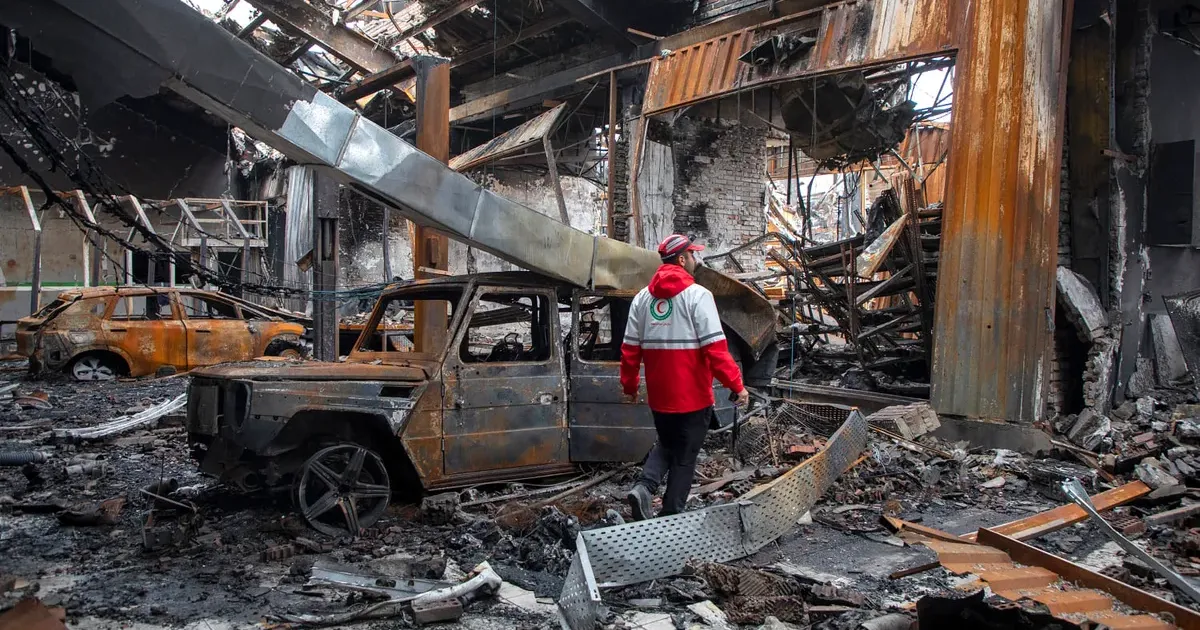
Iranian Parliamentary Speaker Mohammad-Bagher Ghalibaf accused the United States of preparing a secret ground assault while publicly requesting diplomatic negotiations. Speaking through state media outlets IRNA and Tasnim, Ghalibaf claimed that Washington maintains a duplicitous posture to mask its true military intentions. On March 29, 2026, tensions reached a new height as Tehran began mobilizing domestic defenses in anticipation of a potential incursion. This development coincides with reports of a meaningful American military build-up in the region.
Intelligence reports confirm the arrival of 3,500 troops in the Persian Gulf over the last forty-eight hours. Iranian military commanders view this deployment as a direct threat to national sovereignty rather than a peacekeeping effort. Ghalibaf asserted that the current American administration uses the veneer of dialogue to buy time for tactical positioning. Discrepancies between public statements from the White House and the rapid movement of hardware suggest a widening gap in American foreign policy.
Ghalibaf Accuses Washington of Deception
Official Iranian statements emphasize a state of high alert across all branches of the armed forces. Ghalibaf informed the national assembly that the military must prepare for every contingency, specifically focusing on border security. IRNA reported that the speaker remains skeptical of any offer coming from Washington. Trust between the two nations have largely evaporated following decades of sanctions and failed agreements. Tehran characterizes the current situation as an existential struggle against Western imperialism.
The enemy, openly, sends messages of negotiation and dialogue, but secretly is planning a ground attack.
Security analysts in the Middle East note that Iran has historically used such rhetoric to energize its populace during times of economic distress. By framing the United States as an imminent invader, the regime seeks to suppress internal dissent. The arrival of fresh infantry units in the Persian Gulf provides a convenient target for Ghalibaf's accusations. Whether these claims have a basis in classified intelligence or are purely ideological remains a subject of intense debate among global observers.
Ukraine conflict coverage was sidelined by the Middle East crisis as military planners and lawmakers focused more heavily on Iran.
Russian forces launched a large spring offensive across the Donbas region while the international community fixed its gaze on the Persian Gulf. Peace talks that once appeared to be a priority for the State Department have slipped down the agenda in favor of the Iran crisis. Moscow has seized this opportunity to intensify its bombardment of Ukrainian infrastructure. Kyiv officials expressed private concerns that the sudden shift in American focus will lead to a reduction in lethal aid shipments. Washington appears unable to manage two high-stakes geopolitical crises simultaneously.
Military aid packages for Ukraine faces new hurdles in Congress as resources are diverted to the Middle East. Strategic analysts suggest that the Kremlin benefits directly from the escalation between Washington and Tehran. Every American asset moved toward the Persian Gulf is an asset not available to strengthen the eastern flank of NATO. The distraction in the Middle East has provided the Russian Ministry of Defense with the breathing room it lacked during the winter stalemate. Offensive operations near Kharkiv have already reclaimed several miles of territory.
Republican Leadership Pushes for Escalation
Senator Lindsey Graham has become the most vocal proponent for a direct military confrontation with the Iranian regime. Once a fierce critic of the current president, Graham has fully reconciled with Donald Trump to advocate for a more aggressive foreign policy. Graham argues that the complete overthrow of the Iranian government would provide a transformative moment for Western interests. He recently invoked the memory of the battle of Iwo Jima to describe the level of commitment required for such an effort. To Graham, the current tension is an opportunity to achieve a goal he has sought for three decades. Critics within the Republican party suggest that Graham’s rhetoric is a dangerous departure from the isolationist tendencies seen in recent years. Skeptics view the push for war as a hubristic moves that could spiral into a global catastrophe. Graham, however, insists that a decisive strike is the only way to prevent Tehran from achieving nuclear parity. He maintains that the falls of the clerical regime would be the modern equivalent of the fall of the Berlin Wall. This alignment between the South Carolina senator and the White House have shifted the internal party balance toward interventionism.
Strategic Build-up in the Persian Gulf
Personnel from the 82nd Airborne Division and other specialized units include the bulk of the 3,500 troops recently moved to the Persian Gulf. Logistics hubs in Qatar and Bahrain are operating at maximum capacity to handle the influx of equipment and supplies. Former White House strategist Steve Bannon commented that the administration is still weighing the risks of a full-scale ground invasion. Bannon suggested that while a final decision has not been reached, the logistical preparations make such an option increasingly viable. Military planners are focusing on securing the Strait of Hormuz against potential Iranian sabotage.
Washington remains silent on the specific duration of this deployment. Iranian officials have responded by conducting naval drills involving fast-attack boats and coastal missile batteries. The Persian Gulf has become a crowded theater where a single miscalculation by a junior officer could spark a wider conflict. Regional allies such as Saudi Arabia and the United Arab Emirates are monitoring the situation with increasing apprehension. They fear the economic repercussions of a shutdown in global oil shipping lanes. Any conflict in the Persian Gulf would immediately send energy prices to record highs.
War Planning and Diplomatic Credibility
Washington is sleepwalking into a regional fire that it lacks the resources to finish. By allowing the hawkish whims of Senator Lindsey Graham to dictate the tempo of mobilization, the Trump administration has effectively abandoned its own America First principles. The obsession with a Berlin Wall moment in Tehran ignores the bloody lessons of the last twenty years of Middle Eastern intervention. A ground assault on Iranian soil would not be a clean, decisive victory but a generational mess that would bleed the American treasury dry. Military planners are dangerously overconfident in their ability to decapitate the regime without triggering a huge, asymmetric insurgency that spans the entire Shia crescent.
The cost of this distraction is already visible on the plains of Ukraine. While the White House focuses on the Persian Gulf, Vladimir Putin is methodically dismantling the European security architecture. American hegemony cannot survive a two-front struggle against a resurgent Russia and a defiant Iran. By moving 3,500 troops into the line of fire, the United States has surrendered the initiative to the very regime it seeks to intimidate. Tehran now has the power to dictate the start of the war through a well-timed provocation. Washington is no longer the master of its own destiny in this crisis. The verdict is clear. Hubris has replaced strategy.