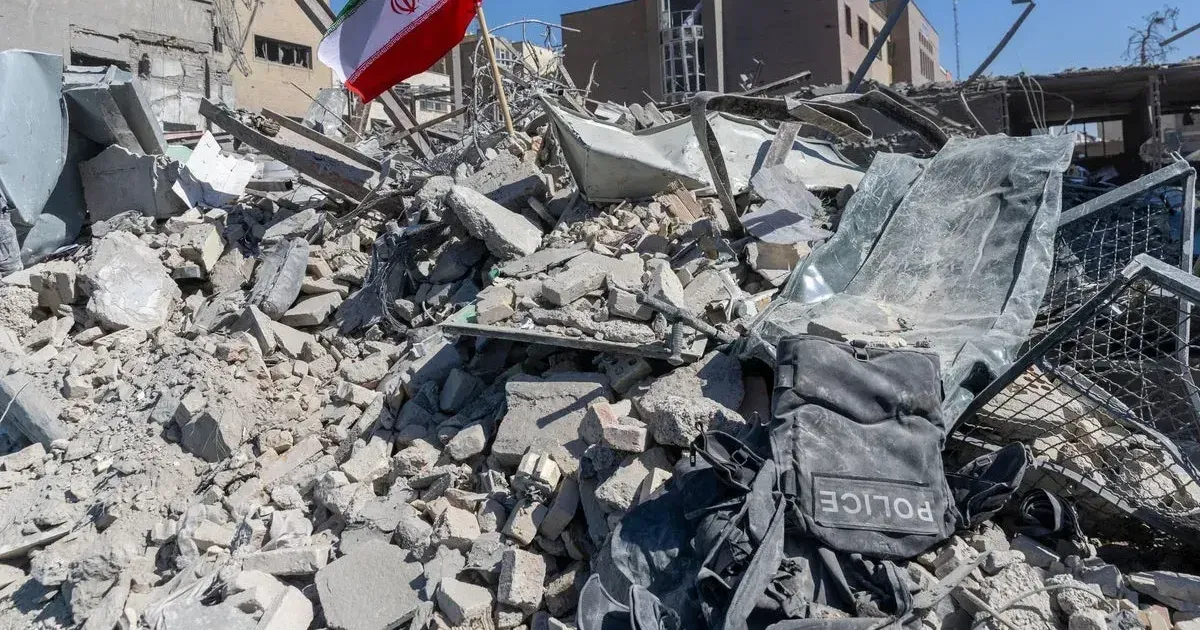
Militia Claim Complicates Crash Probe
Plumes of thick black smoke rose over the desolate stretches of western Iraq early Friday morning. Search and rescue teams pushed into the Anbar province desert shortly after a US military aircraft disappeared from radar tracking systems. Military officials in Baghdad confirmed that a major operation is underway to locate the wreckage and any potential survivors. Local witnesses reported seeing a low-flying aircraft struggling with visible engine trouble before a sudden explosion illuminated the horizon near the Syrian border. On March 13, 2026, the militia claim turned a military crash into a contested battlefield narrative.
Intelligence analysts are currently scrutinizing a statement released by the Islamic Resistance in Iraq. This umbrella group of armed factions, which maintains deep ideological and logistical ties to Tehran, claimed responsibility for the downing of the aircraft. Their statement asserted that the plane was intercepted as part of a broader campaign to expel American forces from the region. While the Pentagon has acknowledged the crash, officials have yet to confirm whether the incident was caused by mechanical failure or hostile fire from ground-based defense systems.
If their claim proves accurate, it would represent a significant escalation in the kinetic capabilities of these proxy groups.
Islamic Resistance militants frequently use drones and short-range missiles to target Western assets in the Middle East. This specific incident comes at a time when regional stability is increasingly fragile. Military hardware recovered from previous skirmishes suggests that these factions have acquired more sophisticated anti-aircraft technology over the last eighteen months.
Whether that technology was used in the Anbar desert remains the primary focus of the ongoing investigation. Donald Trump addressed the situation briefly from the White House lawn before departing for a scheduled briefing at the Pentagon. He described the conflict as moving rapidly and suggested that the United States would not tolerate attacks on its personnel or hardware. He did not provide specific details regarding the status of the aircrew but his tone suggested a high level of urgency within the National Security Council.
His administration has previously favored direct, high-impact responses to threats originating from Iran-backed militias. Tehran responded to the unfolding crisis with a series of aggressive declarations. Foreign ministry officials suggested that any American retaliatory strikes against Iranian energy infrastructure would result in a catastrophic response. They warned that they would set the region's oil and gas infrastructure on fire if their domestic facilities were targeted.
US Forces Search in Hostile Territory
Such rhetoric has historically been used to deter Western intervention, but the specificity of the threat indicates a hardened stance within the Iranian Revolutionary Guard Corps. The global energy market reacted with immediate volatility as traders weighed the possibility of a total shutdown in the Strait of Hormuz. The calculation for Washington has changed. Energy analysts at major London-based firms are monitoring the situation with intense scrutiny.
Crushing sanctions and previous military engagements have already strained global supply chains. A localized conflict in Iraq usually causes a temporary price spike, but a direct confrontation involving Iranian oil fields would be fundamentally different. Tehran possesses the capability to disrupt shipping lanes that handle approximately twenty percent of the world's petroleum liquids. Crude oil futures surged by six percent within hours of the initial crash reports reaching the trading floors in New York and London.
Iraq remains caught in the middle of this geopolitical tug-of-war. Baghdad relies on American security cooperation while simultaneously managing the influence of powerful domestic political blocs aligned with Iran. Government leaders in Iraq have called for restraint on both sides to prevent their territory from becoming a permanent battlefield for foreign powers. Their influence over the Islamic Resistance is notoriously limited, as these factions often operate with a degree of autonomy that bypasses the official Iraqi chain of command. This claim of responsibility by the militia group puts the Iraqi government in an impossible diplomatic position. Rescue operations face significant environmental and security hurdles. The Anbar desert is a vast, unforgiving environment where visibility can drop to zero during frequent dust storms. Armed cells belonging to various extremist groups continue to operate in the shadows of the western border, making any ground-based recovery effort extremely dangerous.
Air support for the rescue mission is being coordinated from regional bases, though the threat of further anti-aircraft fire has forced pilots to adopt more cautious flight patterns. Every hour that passes without a confirmed location for the crew increases the political pressure on the White House to act decisively. Silence followed the initial reports from the crash site. Military historians often point to the cyclical nature of violence in the Persian Gulf.
Iraq Becomes an Airpower Risk
Each decade brings a new wave of technological advancement and tactical shifts that redefine how these proxy wars are fought. In 2026, the proliferation of cheap, high-precision weaponry has leveled the playing field for non-state actors like the Islamic Resistance. They no longer need a standing air force to challenge American air superiority. A single well-placed missile can now trigger a global economic crisis and force a superpower to rethink its regional posture. Diplomatic channels between Washington and Tehran are reportedly frozen. European mediators have attempted to de-escalate the rhetoric, but both sides appear committed to a path of confrontation. Trump’s insistence that the conflict is moving rapidly suggests that the window for a negotiated settlement is closing. If the US military determines that the plane was indeed shot down, the response will likely be aimed at the command-and-control centers of the militias involved.
However, Iran's threat to ignite the region's oil fields is a potent deterrent against any strike that touches Iranian soil. Search aircraft have detected an infrared signature in a remote canyon approximately forty miles from the last known coordinates of the flight. Special operations teams are currently on standby to move in once the area is secured by drone overwatch. The identity and condition of those on board the downed plane remain the most critical unknowns in this unfolding drama.
Until those personnel are recovered, the risk of a full-scale regional war remains at its highest point in years. The claim cannot be treated as fact without evidence, but it still changes the operating environment. Rescue and recovery teams have to assume that hostile actors may exploit the crash site for propaganda or further attacks. That makes force protection as important as the accident investigation. Commanders need to recover personnel and evidence while limiting the chance that a crash becomes a second engagement.