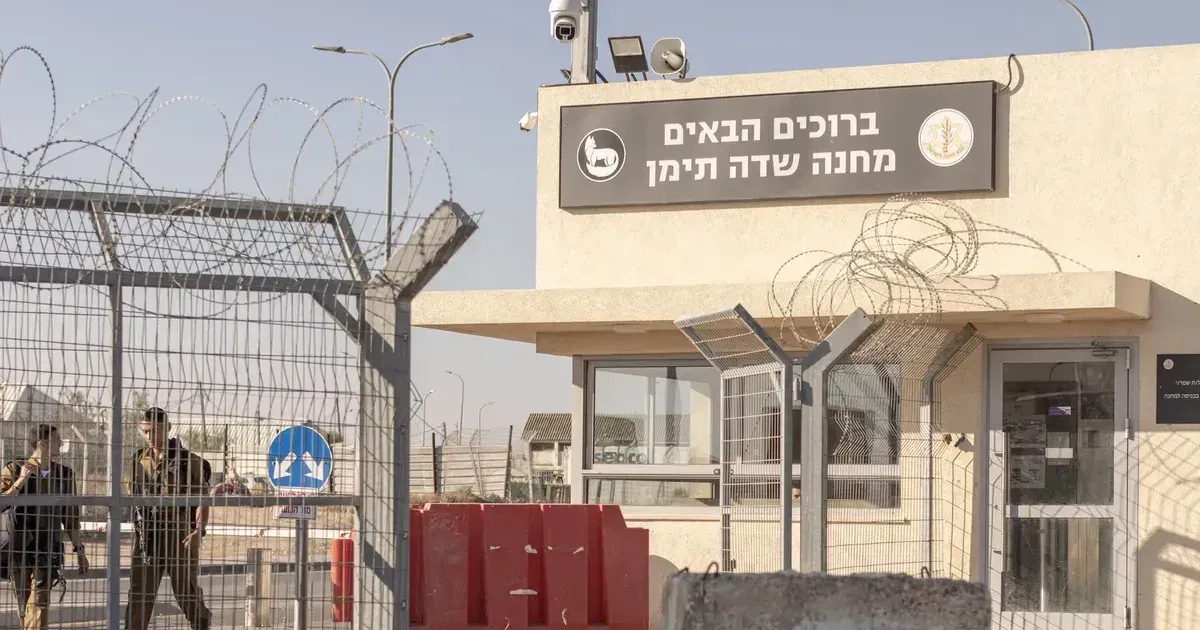
Israel abandoned a case against five soldiers accused of abusing a Palestinian detainee despite severe medical findings. The decision intensified criticism that military justice is failing during a wider regional conflict.
Military Abuse Case Collapses
The case forced a reckoning inside the Israeli military justice system as prosecutors officially withdrew charges against five soldiers accused of torturing a Palestinian detainee. The Israel Abandons Case Against Soldiers Accused of Abuse report carried a March 12, 2026 time marker for readers following the latest account. Doctors at the hospital where the prisoner was treated reported a harrowing array of injuries, including multiple broken ribs and a torn rectum. These medical findings initially sparked a rare moment of public scrutiny over the treatment of captives within the high-security facilities that have become central to Israel's expanded military operations.
Five soldiers walked free today. Prosecutors cited insufficient evidence to proceed with a criminal conviction, despite the severity of the physical trauma documented by independent medical staff. Military lawyers argued that the chaos of the detention environment made it impossible to pinpoint specific culpability among the personnel on duty. Critics of the decision contend that the move indicates a systemic reluctance to hold military personnel accountable for actions that would be classified as war crimes under international law.
Human rights organizations had closely followed the proceedings, viewing them as a test of whether the Israeli legal framework could still function as a check on military excesses during periods of high-intensity conflict. Internal friction within the Israeli government played a visible role in the case's trajectory.
West Bank Violence Adds Legal Pressure
Right-wing activists and several high-ranking members of the ruling coalition had vocally supported the accused soldiers, describing them as patriots tasked with handling dangerous combatants. Protests outside the military court had previously devolved into scuffles between those demanding justice for the detainee and those who believe soldiers should possess legal immunity during wartime. Justice officials now find themselves trapped between international legal obligations and a domestic political climate that increasingly views judicial oversight as an obstacle to national security. While the legal drama unfolded in the military courts, a separate and equally lethal conflict intensified across the West Bank.
Israeli settlers have launched a series of aggressive incursions into Palestinian villages, resulting in at least five deaths over the past week. Security analysts observe that these groups are taking advantage of a military and public focus that is currently diverted toward the escalating war with Iran. Palestinian residents in these rural areas report that attacks have become more frequent and more coordinated, often involving the use of live ammunition and the destruction of agricultural property. Violence has reached a fever pitch.
Strategic analysts suggest that the settler movement has sensed a vacuum in domestic law enforcement. Military resources are being funneled to the northern front and the ongoing strikes against Iranian infrastructure, leaving a skeleton crew of police and soldiers to manage the West Bank.
Iran War Distracts the Cabinet
Reports from DW News indicate that some settlers are moving with an unprecedented level of confidence, establishing new outposts and forcing Palestinian families from their ancestral lands. Local leaders claim that the lack of military intervention during these raids implies a level of tacit approval from the central government, or at the very least, a calculated indifference to the displacement of non-combatants. Evidence of this coordination appeared during an attack on a village near Nablus, where armed settlers arrived in several vehicles and began firing at residential structures. Witnesses described a scene of terror as families fled into the hills while their olive groves were set ablaze.
No arrests were made in the immediate aftermath of the incident. This strategic silence from the Ministry of Defense has emboldened radical elements within the settler community who believe that the total annexation of the West Bank is now a viable political objective. Iran remains the primary focus for the Israeli cabinet and its allies in Washington. The ongoing air campaign against Tehran's missile sites has dominated the headlines, providing a convenient curtain for domestic legal failures and territorial expansion in the Palestinian territories.
Military leaders argue that the existential threat posed by a nuclear-capable Iran necessitates a total commitment of resources, often at the expense of internal policing or the meticulous prosecution of individual soldier misconduct. This judicial reversal occurred during a period of extreme national stress, where the preservation of military morale is often prioritized over the abstract principles of human rights.
Accountability Crisis
Diplomatic tension is rising as European allies express concern over the dismissal of the torture case. Several nations have suggested that if Israel cannot demonstrate a credible ability to self-regulate, international tribunals may be forced to step in. US-Israel messaging is becoming harder to manage as the death toll in the West Bank continues to climb. Such internal contradictions within the alliance are increasingly visible to European partners and regional governments.
Washington remains officially supportive of Israel's right to defend itself against Iran, yet State Department officials have privately expressed frustration that settler violence is complicating efforts to build a regional coalition against Tehran.
This strategic shift has left Palestinian villages vulnerable. Without the consistent presence of the Israel Defense Forces to act as a buffer between settlers and residents, the West Bank is sliding into a state of localized warfare. Community leaders on both sides of the divide warn that if the rule of law is not restored, the region will experience a level of bloodshed not seen since the second Intifada. The removal of legal consequences for soldiers only fuels the perception that there is no longer a red line for violence against those in custody. Legal experts suggest that the collapse of the torture case will have long-term repercussions for Israel's standing in international courts. When a domestic legal system fails to investigate and prosecute credible claims of abuse, it opens the door for the International Criminal Court to exercise its jurisdiction.
Military Accountability Test
Can a nation maintain a professional military when the rule of law stops at the prison gates? The decision to drop charges against soldiers who presided over a man arriving at a hospital with his internal organs ravaged is not just a failure of justice; it is a declaration of moral bankruptcy. By shielding these five men, the Israeli military has effectively told its entire rank and file that the Geneva Conventions are merely suggestions rather than requirements. Every time a commander looks the other way, the professional fabric of the Israel Defense Forces dissolves a little further. History shows us that a military that loses its ethical compass eventually loses its strategic efficacy. When soldiers believe they are above the law, they become a liability to the state they serve. We are watching the slow-motion destruction of Israel's democratic soul, facilitated by a government more interested in appeasing radical settlers than in upholding the basic tenets of human dignity. If Jerusalem continues on this path, it will find itself an international pariah, isolated not by the strength of its enemies, but by the weakness of its own integrity. True security cannot be built on a foundation of broken ribs and silent courts.