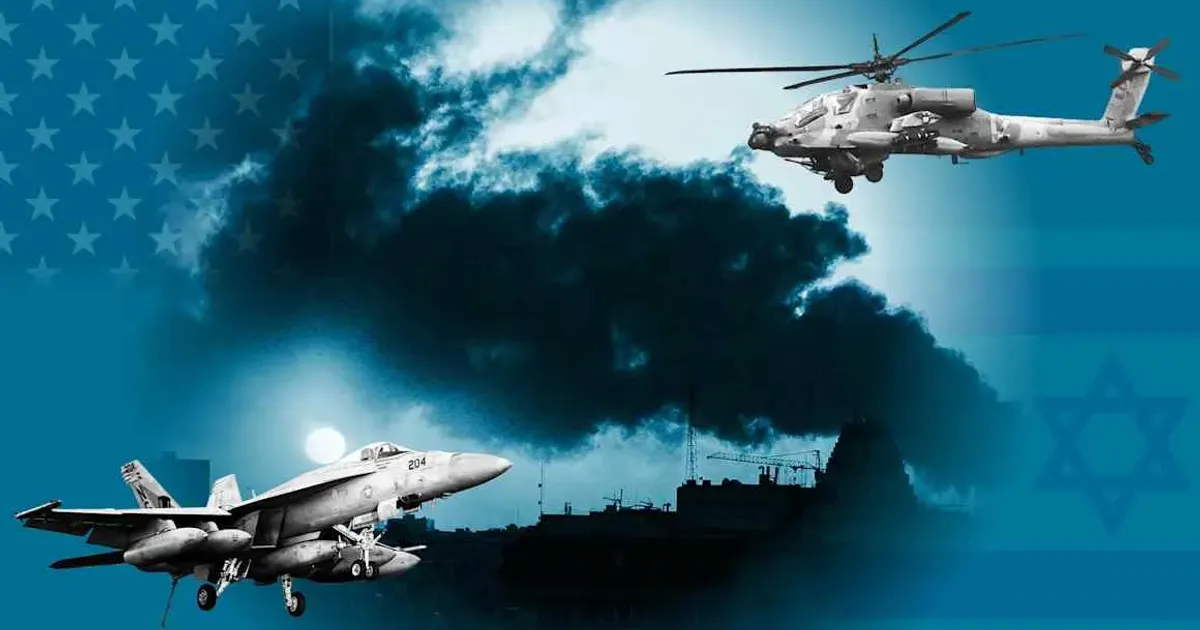
The Israel-US campaign against Iranian-linked targets has moved from shadow pressure into a more direct military posture across the region.
Coordinated Strikes Raise the Stakes
Smoke curled from the ruins of a logistics hub north of Baghdad on March 12, 2026, marking what intelligence analysts call a new era of overt Western intervention. For decades, the conflict between Washington and Tehran played out in the shadows of the Iraqi desert, characterized by deniable drone strikes and back-channel threats. Those days of strategic ambiguity have vanished. Today, the Pentagon and the Israel Defense Forces operate with a level of tactical synchronization that has not been witnessed in seven decades. While previous administrations kept Jerusalem at a distance during regional sorties to avoid inflaming Arab neighbors, current military realities have forced a total integration of command structures. Defense officials in Washington confirm that the latest wave of strikes targeted advanced missile manufacturing sites linked to the Quds Force. These facilities, hidden within the complex urban sprawl of central Iraq, served as the primary supply line for regional militias. Unlike previous engagements where the United States acted as a solo enforcer, the current campaign involves joint air-to-ground operations where Israeli F-35s and American B-21 Raiders share the same digital battlespace. The sheer scale of this coordination is startling to long-time observers of Middle Eastern security architecture. Military historians point back to the Suez Crisis of 1956 as the only comparable moment of such blatant, high-stakes military collusion between Jerusalem and its Western allies. Back then, the alliance was an awkward marriage of convenience against Egyptian nationalization efforts. In 2026, the bond is forged in the fire of shared existential threats from an Iranian regime that has pushed its proxy reach to the very edge of the Mediterranean.
Proxy Networks Become Direct Targets
Iraq remains the central chessboard where these interests collide. Since the 2003 invasion, the country has functioned as a permeable membrane for both Iranian influence and American military hardware, yet the current escalation is a total breakdown of the status quo. Financial markets have responded with predictable volatility. Brent crude spiked above 110 dollars per barrel within hours of the first reports of explosions in Baghdad. Investors are no longer pricing in a mere regional skirmish but are instead bracing for a sustained interruption of Persian Gulf shipping lanes.
The coordinated strikes intensified on March 12, 2026, turning proxy warfare into a more direct regional test.
Such a shift in market sentiment reflects the gravity of the military movements on the ground. When the world's most advanced air forces begin flying joint sorties over sovereign Iraqi territory, the global economy feels the shockwaves immediately. Intelligence circles in London and Washington are currently debating the effectiveness of this overt aggression. While some suggest that the destruction of missile hubs will delay Iranian regional ambitions, others fear it will only solidify the resolve of the IRGC. The shadow front has moved into the light.
Tehran has responded by mobilizing its remaining assets in the Levant, signaling that it will not retreat despite the overwhelming technological superiority of the US-Israeli coalition. General Mark Harrison, a senior advisor on Middle Eastern affairs, noted in a private briefing that the integration of Israeli target sets into American operational planning is now permanent.
Deterrence Risks Becoming Momentum
But this level of intimacy comes with significant political risks for the White House. By tying American military power so closely to Israeli tactical objectives, Washington risks losing its ability to act as a neutral arbiter in any future peace negotiations. The math of regional diplomacy is being rewritten in real-time by the thunder of heavy ordnance. Calculated risks have become the standard currency in this theater. Iraq has long been a battleground for competing interests, yet the current murky conflict has taken on a more sinister character.
Local politicians in Baghdad find themselves caught between a population weary of foreign intervention and a security apparatus that is increasingly beholden to outside powers. Protests have erupted in Sadr City, where thousands of residents have denounced the violation of Iraqi sovereignty. Still, the central government remains paralyzed, unable to stop the skies from becoming a corridor for foreign jets. Recent reports from the Financial Times suggest that the IDF has deployed special forces units deep into Iraqi territory to assist in laser designation for American strikes. This tactical cooperation goes beyond electronic data sharing and enters the realm of physical, ground-level combat synergy.
This strategy is a significant departure from the containment policies of the early 2020s. It is no longer about holding the line.
Regional Civilians Pay First
It is about actively dismantling the infrastructure of the opposition. Such operations require a massive amount of logistical support. Logistics hubs in Jordan and Cyprus have seen a 40 percent increase in traffic over the last month. Heavy transport aircraft are moving specialized munitions that were previously reserved for a direct conflict with a peer adversary. This operational shift suggests that the Pentagon expects the current phase of the war to last for months, if not years.
Everything has changed for the Iraqi people. Observers in the region are watching for the next move from the Iranian supreme leadership. If Tehran chooses to retaliate through its maritime proxies in the Strait of Hormuz, the local conflict in Iraq could quickly transform into a global energy crisis. For now, the focus remains on the smoking craters in northern Baghdad and the unprecedented sight of US and Israeli flags flying figuratively in the same cockpit over the Euphrates. The shadow war is dead, replaced by a glaring, high-definition conflict that threatens to consume the entire region.
Coordination Needs an Exit Plan
Israel and the US coordinated direct strikes on Iranian proxy targets, signaling deeper operational alignment against Tehran-linked forces. Proxy warfare can widen quickly when retaliation becomes expected, and civilian infrastructure and neighboring states face the first spillover risks.
The central danger is that proxy strikes blur the line between limited deterrence and a wider state-to-state confrontation. The decisive question is whether the strikes are tied to a defined political objective or simply extend the escalation cycle. The military logic is understandable, but military logic alone is not strategy. If coordinated strikes do not lead toward a political endpoint, they become another gear in a machine that rewards escalation.