Fourteen Days of Fire Over the Persian Gulf
Tehran saw the horizon glow orange on Friday morning as twenty separate waves of Israeli fighter jets hammered targets across the Iranian capital and its surrounding provinces. Military activity reached a peak on Day 14 of a campaign that has effectively dismantled the previous norms of Middle Eastern engagement. Reports from the ground indicate that the scale of the strike far exceeded earlier skirmishes, focusing specifically on the high-value infrastructure required for long-range ballistic capabilities. The report was published March 13, 2026. The sounds of anti-aircraft fire echoed through the Alborz mountains for over four hours, yet the sheer volume of incoming precision munitions appeared to overwhelm local batteries. Local witnesses in the western districts of the city described a sequence of impacts that rattled windows miles from the actual blast zones.
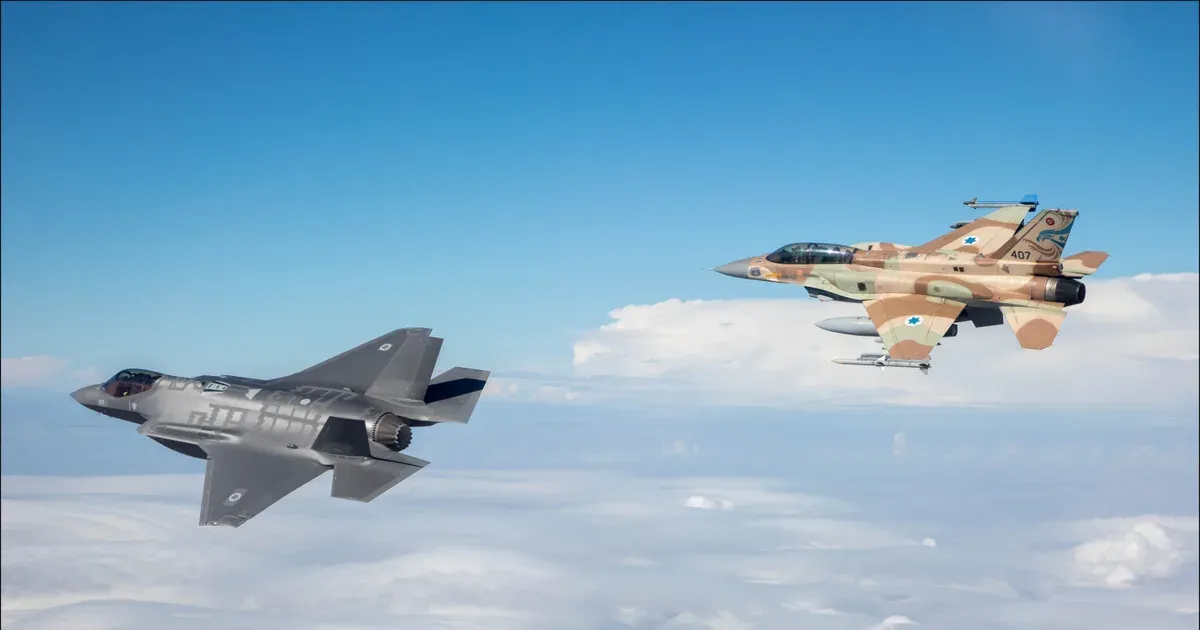
Israeli military officials confirmed that their air force hit more than 200 distinct targets throughout western and central Iran in a single 24-hour period. Specialized squadrons of F-35 and F-15I aircraft conducted the operations, focusing on a triad of strategic assets: mobile missile launchers, integrated air defense systems, and the clandestine production sites where Iran manufactures its precision-guided munitions. TASS reports suggest that the Israeli Defense Forces (IDF) utilized dozens of jets in coordinated formations to strip away radar coverage before the primary strike packages arrived. This offensive aimed to decapitate the immediate retaliatory capacity of the Islamic Revolutionary Guard Corps by hitting command and control nodes simultaneously.
This offensive aimed to decapitate the immediate retaliatory capacity of the Islamic Revolutionary Guard Corps.
Military planners in Tel Aviv seem to have prioritized the destruction of the S-300 and S-400 batteries that provide a protective umbrella over Iran's most sensitive nuclear and research facilities. By targeting the eyes and ears of the Iranian military, the IDF has created corridors of vulnerability that could be exploited in future sorties. Are these strikes the precursor to an even broader campaign against the nuclear program itself?
Fireballs illuminated the Alborz mountains as secondary explosions ripped through underground silos.
Retaliation from the Iranian side shifted immediately to the maritime theater where Tehran still holds significant tactical leverage. Al Jazeera reported that Iranian fast-attack boats and swarm drones targeted commercial vessels in the vicinity of the Strait of Hormuz within hours of the Tehran bombings. These asymmetrical responses are designed to inflict economic pain on the global community, forcing international pressure on Israel to cease its air campaign. The disruption in the Gulf has already slowed the flow of liquefied natural gas and crude oil, causing ripples across Western energy exchanges. Markets in London and New York saw immediate spikes as traders priced in the possibility of a total blockade of one of the world's key energy arteries.
Energy analysts now watch the $124 per barrel mark with increasing concern as the security situation in the Persian Gulf deteriorates. While earlier conflicts in the region saw brief price jumps that eventually stabilized, the sustained nature of this 14-day exchange has broken the confidence of the shipping industry. Many of the largest tanker fleets have diverted their vessels toward the Cape of Good Hope, a move that adds weeks to transit times and millions to operational costs. Crude prices are currently trading at their highest levels since the early months of the 2022 energy crisis.
Washington remains in a precarious position, balancing the defense of its primary regional ally with the need to prevent a total global economic meltdown. Pentagon officials stated that the US was informed of the Israeli flight paths but did not participate directly in the kinetic phase of the Friday strikes. But the presence of US carrier strike groups in the Arabian Sea provides a silent backstop that prevents other regional actors from intervening on Tehran's behalf. Diplomatic channels between the White House and the Iranian leadership are reportedly frozen, leaving the Swiss embassy as the sole remaining conduit for de-escalation messages.
Satellite imagery reviewed by independent analysts shows significant damage to the Isfahan industrial complex and several missile assembly plants near Natanz. The precision of the munitions suggests that Israel has acquired high-fidelity intelligence regarding the internal layouts of these hardened facilities. Several structures previously identified as civilian research centers were reduced to rubble, a fact that the Iranian government has used to fuel domestic outrage. Still, the secondary detonations captured on infrared sensors point toward the presence of solid-fuel rocket boosters and high explosives at these locations.
Insurance premiums for shipping in the Persian Gulf have tripled within forty-eight hours.
Reports from TASS indicate that Russian officials have expressed grave concern over the breach of Iranian airspace, though Moscow has refrained from offering direct military assistance to its partner in Tehran. While Al Jazeera highlights the humanitarian cost and the civilian panic in the Iranian capital, the TASS narrative focuses on the technical success of the Israeli suppression of enemy air defenses. These differing accounts reflect the deepening schism between the geopolitical blocs supporting the two combatants. The lack of a unified international response has given the IDF the operational space it needs to continue its systematic dismantling of the Iranian missile network.
Conflict dynamics are currently favoring the side with total air superiority, but the long-term sustainability of such a campaign remains in question. Israel has expended a significant portion of its stand-off munition stockpile over the past two weeks, necessitating a rapid replenishment from American inventories. As the strikes move further east toward the interior of Iran, the logistical challenges for the Israeli Air Force will only increase. Such a deep-penetration strategy relies on perfect intelligence and the continued absence of a credible Iranian air-to-air threat.
Geopolitical consequences will likely extend far beyond the borders of the Middle East as the world grapples with the new reality of overt state-on-state warfare. Defense spending across Europe and East Asia is expected to rise as nations observe the effectiveness of high-end drone swarms and fifth-generation fighters in modern combat. For the average consumer in the UK or US, the most immediate impact will be felt at the gas pump and in the monthly heating bill. Can the global economy survive a prolonged closure of the Hormuz Strait?
Tehran Strikes Reset Regional Risk
Westphalian sovereignty means little when Israeli F-35s are circling the Iranian capital with impunity. The fiction of a balanced regional power struggle has been burned away by the fires currently consuming Tehran’s missile factories. For decades, the international community has operated under the delusion that Iran’s proxy networks and ballistic threats created a stalemate of mutual assured destruction. That stalemate is dead. We are now seeing the brutal reality of what happens when a technologically superior military decides that the cost of inaction has finally exceeded the cost of total war. Skepticism toward Israeli intelligence has always been a favorite pastime of the European diplomatic corps, but the secondary explosions in Isfahan prove that the IDF knew exactly where the bodies, and the boosters, were buried. This disruption of the global oil market is a high price to pay, yet it is a price the West has inadvertently agreed to by failing to curb Tehran’s nuclear ambitions through decades of toothless sanctions. If the Strait of Hormuz remains a hostage to Iranian drone swarms, the blame lies as much with the hesitant leaders in Washington as it does with the hardliners in Tehran. The age of the shadow war is over and the age of the firestorm has begun.