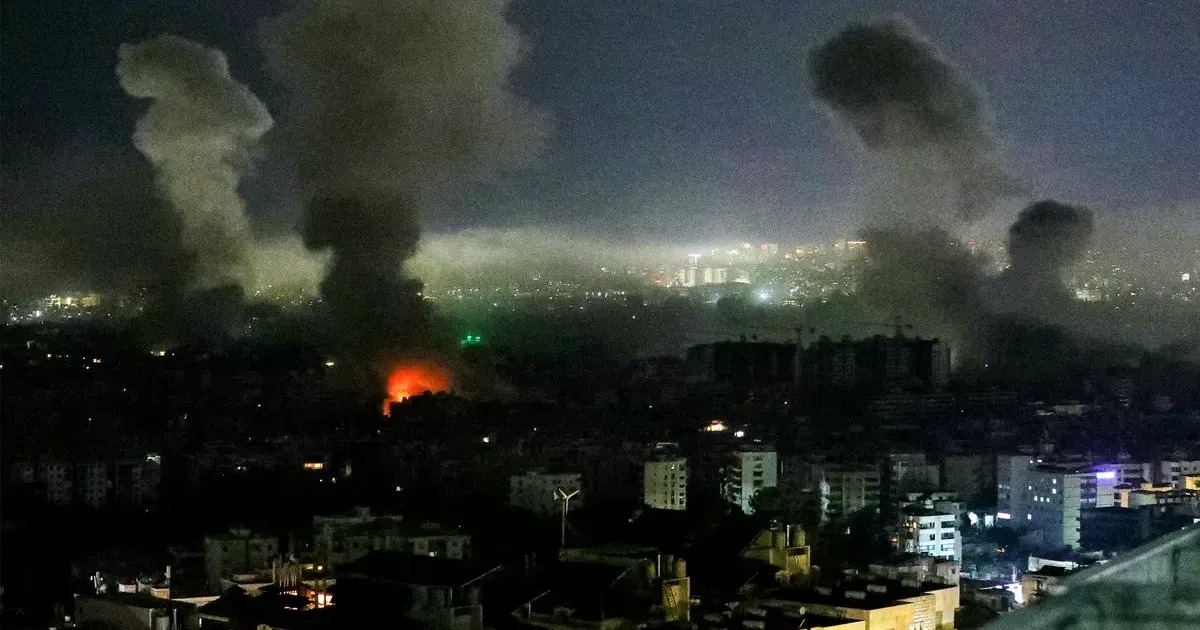
Israel pounded central Beirut and threatened land seizure, pushing the Lebanon crisis into a more dangerous phase where urban warfare, sovereignty and civilian displacement are colliding. The Beirut pressure had already moved beyond a border exchange. Diplomats were watching for signs of a wider campaign. The escalation drew alarm on March 12, 2026 because strikes in a capital carry a different political weight than exchanges along a border zone. When military pressure moves into the center of a city, the conflict becomes harder to contain and harder for outside governments to frame as limited.
Urban Strikes Raise the Stakes
Central Beirut is not only a geographic target. It is a symbol of state authority, civilian life, economic activity and the memory of previous cycles of destruction and rebuilding. That makes central Beirut strikes especially volatile. Even if Israel describes targets as security-related, the wider population experiences the attack through fear, damaged infrastructure and the possibility of more displacement. Urban strikes also increase the risk of mistakes. Dense neighborhoods, mixed-use buildings and crowded roads make civilian harm harder to avoid and harder to explain afterward.
Territory Threat Changes the Frame
The threat of land seizure shifts the conflict from deterrence into sovereignty. A state can debate security demands; it reacts far more sharply when territory appears to be on the table. Israel may argue that stronger pressure is needed to force action against Hezbollah. Lebanon may argue that it is being punished for an armed group the state cannot fully control. That gap is the center of the crisis. Beirut is expected to deliver control it may not possess, while Israel is signaling that symbolic enforcement will not be enough.
Hezbollah and State Weakness
Hezbollah complicates every diplomatic formula because it operates as an armed movement with political influence and military capacity outside normal state command. Lebanese leaders may face demands from Israel, pressure from foreign governments and domestic fear that confronting Hezbollah too directly could trigger internal instability. A purely military solution may reduce immediate threats but deepen the political conditions that keep Hezbollah powerful. A purely diplomatic solution may move too slowly for Israeli security planners.
Civilian Consequences
The first victims of escalation are often families who have no control over the strategy. Strikes, threats and rumors can push people to leave homes before any formal evacuation order exists. Hospitals, schools and local authorities can become overwhelmed quickly if displacement spreads from border areas into the capital or surrounding districts. The humanitarian risk is not separate from the military risk. Civilian suffering changes diplomatic pressure, domestic politics and the legitimacy of every next operation.
Regional risk is now part of the Lebanon crisis rather than a separate diplomatic concern.
The crisis also sits inside a wider regional confrontation involving Iran, the United States and Gulf security. Actions in Beirut may be read by other actors as signals about red lines beyond Lebanon. That creates a danger of escalation by interpretation. One side may intend limited pressure while another reads it as preparation for a broader campaign. Foreign governments will likely push for de-escalation channels, monitoring and clearer language around territorial threats. Ambiguity is dangerous when each side believes the other is testing resolve.
Escalation Risk
The next phase depends on whether Israel defines a clear threshold for stopping and whether Lebanon can offer measures that appear credible without tearing its politics apart. If strikes continue and land-seizure language hardens, the crisis could move from coercion into a more open territorial confrontation. That would make diplomacy far more difficult. The legal questions are serious. International law treats occupation, annexation and civilian protection differently from ordinary battlefield claims, and language about taking land will draw immediate scrutiny from allies, adversaries and humanitarian organizations. Israel may argue that threats are intended to create deterrence rather than announce a permanent plan. But in a conflict environment, public threats can take on a life of their own and become benchmarks that leaders feel pressured to meet. For Lebanon, the danger is fragmentation. The government may condemn Israel, try to manage Hezbollah, appeal to foreign mediators and reassure citizens all at once. Each audience demands a different message. The United States and European governments will face their own dilemma. They may support Israeli security concerns while trying to prevent a move that destabilizes Lebanon further and inflames regional politics. Aid agencies will also need access plans if strikes expand. Urban displacement requires shelter, medical supplies, fuel, water and reliable information about safe routes. Those systems can fail quickly when fear spreads faster than official instructions.
The conflict therefore has both a military clock and a humanitarian clock. The military clock counts targets and retaliation; the humanitarian clock counts people leaving homes, clinics losing capacity and families running out of options. The pressure on Beirut also affects Lebanon's already fragile economy. Strikes in or near the capital can disrupt businesses, banking confidence, tourism, port activity and the daily movement of workers who are trying to survive around the conflict. If land seizure becomes a serious operational objective rather than a threat, the conflict would move into a more legally and politically combustible category. That would complicate support from allies who are already trying to balance security arguments with civilian-protection concerns.
Hezbollah may respond in ways designed to restore deterrence, but that can create a cycle in which each side believes restraint would be read as weakness. Those cycles are difficult to stop once civilian casualties and displacement rise. Lebanese state institutions face a credibility trap. If they cannot prevent Hezbollah activity, Israel may claim the state has failed. If they try to confront Hezbollah directly, internal stability could fracture further. The risk for Israel is that tactical pressure produces strategic isolation. Urban strikes and territorial threats may satisfy immediate security demands while increasing diplomatic resistance and regional anger. That is why mediators will focus on practical off-ramps: monitoring arrangements, limits on border activity, humanitarian access and language that reduces the political cost of stepping back.
The escalation has already changed the frame. Lebanon is no longer facing only border pressure; it is facing a direct challenge to security, sovereignty and civilian endurance at the same time.