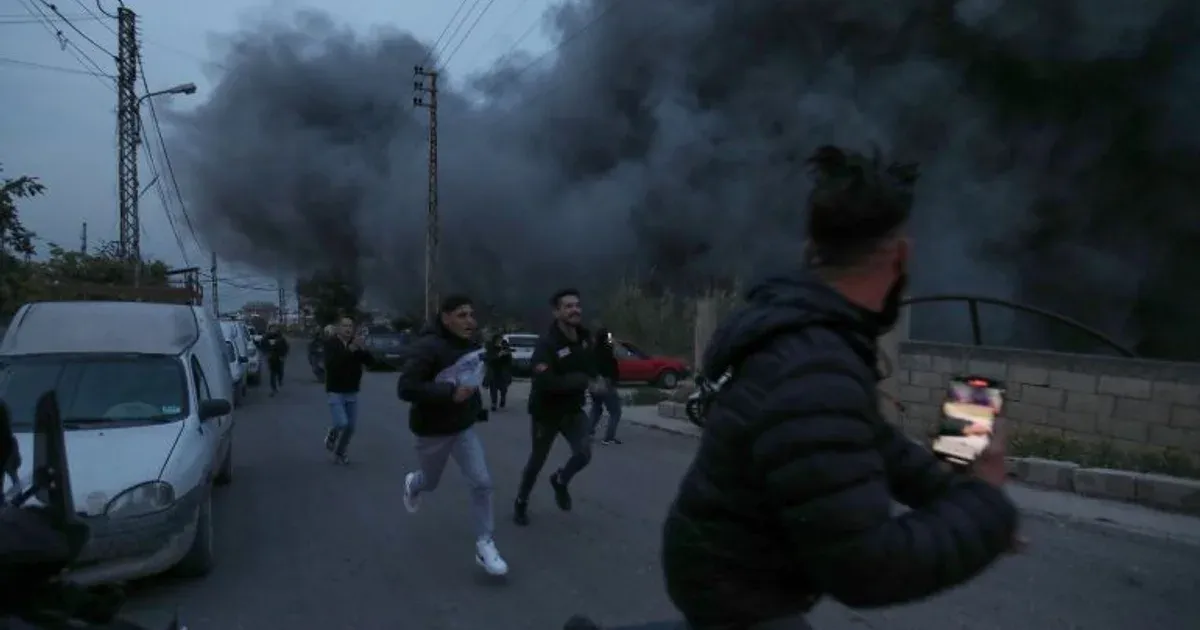
Israeli strikes that killed 30 people across Lebanon have widened the civilian and diplomatic stakes of the campaign.
Deadly Wave of Air Operations Hits Beirut Suburbs and Southern Villages
Rescue teams in the Beirut neighborhood of Aramoun sifted through smoldering debris late Wednesday. The strike pattern had already widened across the border. It raised the civilian stakes. By March 12, 2026, Israeli strikes had widened the pressure on Lebanon. Israeli warplanes hammered the residential enclave earlier that day, though initial reports remained vague regarding the specific target or the ultimate casualty count in that specific sector. Witnesses described the sound of multiple explosions that shook the foundations of nearby apartment blocks, sending plumes of gray smoke over the capital's southern perimeter. Local civil defense units struggled to reach the impact site due to debris blocking narrow streets, a recurring challenge in these densely populated suburbs. Lebanon's Ministry of Public Health confirmed a grim tally elsewhere across the country. At least 30 individuals lost their lives within a 24-hour window. Such a death toll underscores the intensifying nature of the air campaign as it enters a more aggressive phase. Data from the ministry indicates that the violence has moved beyond the immediate border zones, reaching into residential pockets that previously served as safe havens for those fleeing the initial fighting. While early reports focused on military targets, the sheer volume of fatalities suggests a broadening of the kinetic footprint. Southern villages bore the heaviest burden of the latest escalation. In Tebnine, eight people died during a single wave of sorties. Deir Intar saw another three fatalities. These small communities, once known for their tobacco farms and historic ruins, have been transformed into theaters of war. Families often find themselves trapped in their homes because the roads are too dangerous to travel during the day. Local clinics are overwhelmed by the influx of shrapnel victims, and medical supplies are dwindling rapidly as supply chains from Beirut remain severed. Chaos has become the default state for millions of Lebanese citizens. Military officials in Tel Aviv maintain that their operations target specific operational cells belonging to armed groups. Evidence on the ground frequently challenges that assertion. Hospitals in Tyre and Sidon report that most victims arriving in their emergency wards are non-combatants, including women and children fleeing the southern border zones. TASS reported that the outcome of the Aramoun strike was not immediately clear, yet the psychological impact on the civilian population is undeniable. Panic has gripped the capital as residents realize that no neighborhood is truly off limits.
Infrastructure Collapse and the Refugee Surge
Displaced families now exceed 1.4 million across the nation. Schools have transformed into overcrowded shelters where sanitation is failing. Disease risks mount as the infrastructure for clean water collapses under the pressure of sustained bombardment. In many northern cities, the sudden arrival of thousands of southern refugees has strained the local economy and social fabric. Tensions are rising in public parks and squares where families sleep on thin mattresses under plastic tarps. The government in Beirut, crippled by a long-standing political deadlock, appears unable to provide even basic relief. International diplomatic efforts remain paralyzed.
Washington and London continue to issue calls for restraint while providing the very munitions used in these sorties. Critics point to this hypocrisy as a primary driver of the regional instability. This pattern of verbal condemnation paired with military support creates a cycle of violence that shows no sign of abating. Diplomacy has failed to produce a ceasefire or even a temporary humanitarian pause. Instead, the rhetoric from all sides suggests a commitment to total military victory, regardless of the human cost. This strategy ignores the reality that every civilian death seeds the ground for future recruitment into radical factions.
History suggests that air campaigns rarely achieve long-term political stability. The 2006 conflict provides a cautionary precedent where massive aerial bombardment failed to achieve its stated strategic goals. Today, the scale of destruction is far more widespread. Infrastructure like power plants, bridges, and water pumping stations has been targeted, leaving entire regions in the dark. Without electricity, the cold March nights become a life-threatening struggle for the elderly and the very young.
Food prices have surged 400 percent since the onset of the current hostilities. Banking sectors, already crippled by years of financial mismanagement, cannot provide the liquidity needed for basic survival. A loaf of bread now costs a day's wages for many laborers in the Bekaa Valley. Agriculture has largely ground to a halt as farmers are unable to tend to their fields or harvest crops in the south. This economic paralysis will have repercussions for years, even if the bombs stop falling tomorrow.
Doctors at the American University of Beirut Medical Center describe a system on the verge of total failure. Fuel for generators is scarce. Surgeries occur by flashlight when the grid flickers out. Medical professionals work 20 hour shifts, treating horrific burn injuries and trauma from collapsing buildings. The mental health crisis is equally severe, with an entire generation of children now showing signs of profound post-traumatic stress.
Geopolitical Shifts and the Buffer Zone Strategy
Violence in the south continues to expand northward. Aramoun sits just south of Beirut proper, suggesting a shift in the geographical scope of the air campaign. If the capital's immediate suburbs remain under fire, the likelihood of a total siege increases. Military analysts suggest that the current objective is to create a zone of desolation that prevents any return to normalcy. By making life unbearable in these regions, the tactical goal seems to be the forced depopulation of areas considered strategic by military planners.
Geopolitical analysts at the European Council on Foreign Relations suggest that Israel is attempting to create a buffer of desolation. By making the south uninhabitable, they aim to force a political concession from the Lebanese government. Success in such a venture remains doubtful. The Lebanese state is too weak to enforce the demands of a foreign power, and the armed groups being targeted are deeply embedded in the local population. Every destroyed house and every killed civilian reinforces the narrative of resistance that these groups rely upon for their legitimacy.
Humanity is being ground into the dust of the Levant.
Final reports from the past 24 hours indicate that the strike in Tebnine was particularly devastating, leveling a residential block and killing entire families. The Ministry of Health continues to update its figures, but the chaos of the conflict makes accurate data collection nearly impossible. Many victims remain buried under rubble, their names yet to be added to the official lists. As night falls over Beirut, the hum of drones remains a constant presence, a reminder that more strikes are likely before dawn.
A Wider Campaign Makes Verification Harder
The widening strike pattern increases pressure on civilians and on governments trying to keep the conflict contained. Once attacks spread across more locations, displacement, retaliation risk and diplomatic urgency all rise together.
That makes verification essential. Casualty figures, target claims and military explanations need careful separation, because each update can influence public opinion and the next round of regional decision-making.