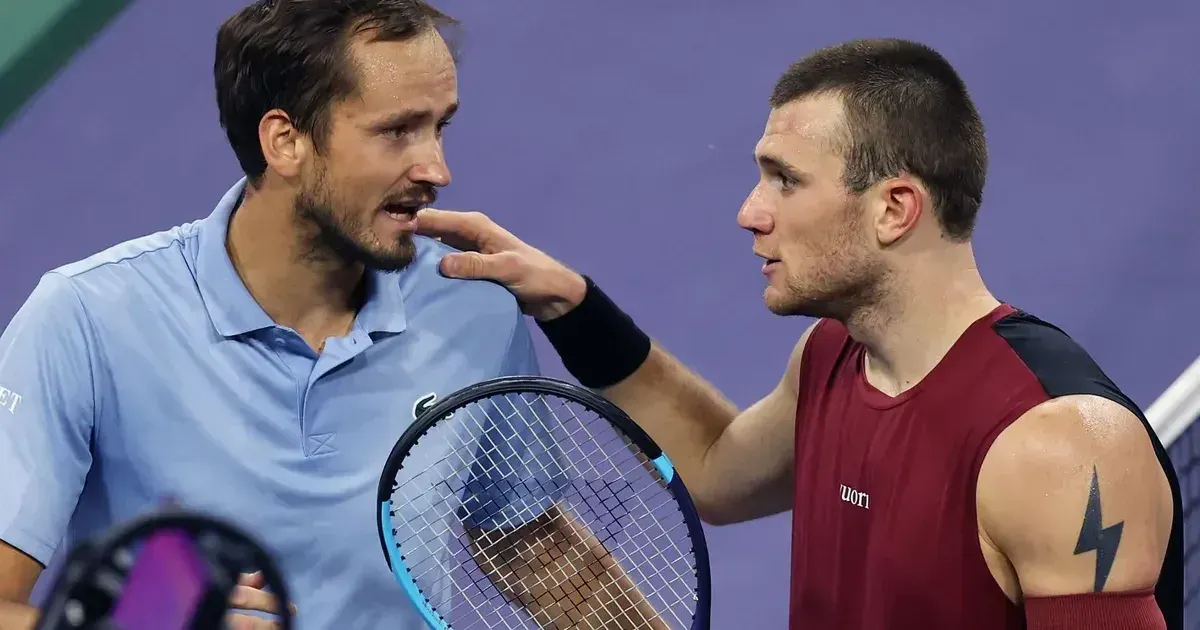
Jack Draper's Indian Wells title defense ended with a call that left the match feeling more procedural than athletic. Daniil Medvedev advanced, but the argument centered on whether a hindrance ruling fit the moment. On March 13, 2026, that decision turned a tight quarter-final into a debate over officiating judgment.
The score sat at a knife-edge in the third set of this quarter-final when the decision turned a tactical battle into a bureaucratic dispute. Stadium 1 erupted in a chorus of boos that drowned out the automated line-calling system and left the young Briton pleading his case to an unmoved official. Draper arrived in the Coachella Valley carrying the heavy burden of 1,000 ranking points to defend, and the pressure became physical in the heat. Drama peaked during a grueling 22-shot rally where Draper appeared to have forced Medvedev into a desperate defensive lob. Just as the Russian prepared to strike, the umpire intervened, ruling that Draper had made a vocalization or movement that unfairly distracted his opponent. ATP Rule 24 defines a hindrance as any act by a player that is deemed deliberate and which results in the opponent being hindered in making a stroke.
Sources from the BBC suggest the call was based on a loud grunt that occurred sharply after Draper had hit the ball. Sky Sports reported that the ruling centered on a physical gesture Draper made while approaching the net. Medvedev accepted the point without hesitation, moving him to a break point that he converted seconds later. Hindrance calls remain the most subjective weapons in an umpire's arsenal. Unlike the objective precision of Hawk-Eye Live, which has eliminated arguments over ball tracking, Rule 24 relies entirely on human interpretation of intent.
The Call That Changed the Match
Draper argued that his noise was a physiological reaction to the physical exertion of a three-hour match. His frustration stemmed from the lack of a prior warning, as officials often issue a soft caution before stripping a player of a point in a high-stakes moment. Medvedev's history with gamesmanship added a layer of psychological complexity to the encounter. The Russian is known for exploiting officiating rigidities to break the rhythm of younger opponents. Statistics from the match highlight how much the decision tilted the outcome. Prior to the hindrance call, Draper had won 54% of points longer than nine shots.
Following the penalty, that number plummeted to 18% as the Briton struggled to regain his focus. Medvedev seized the opportunity to win twelve of the final fifteen points of the match. Such a collapse is rare for Draper, who had spent the last year refining his mental toughness under high-pressure scenarios. His serve, which averaged 124 mph in the first set, dropped to an average of 116 mph in the closing games. Success at Indian Wells last year had propelled Draper into the global top ten.
This interpretation of the rules now threatens his standing, as the loss of 820 ranking points will likely see him drop out of the top fifteen by Monday. Sky Sports observers noted that the ATP supervisor was called to the court, yet the supervisor rarely overturns a judgment call made by a chair umpire during active play. Draper's coaching team spent the minutes after the match huddled in the player lounge, reportedly reviewing the footage to determine if a formal complaint was warranted. Tennis fans in the United Kingdom woke up to the news of their top player's exit with a sense of weary familiarity. British tennis has long struggled with moments where its stars seem to lose battles not to opponents, but to the intricacies of the rulebook.
Ranking Damage for Draper
While Bloomberg might focus on the commercial impact of a defending champion exiting early, the sporting focus remains on whether the hindrance rule needs a technological overhaul. If ball tracking can be automated, some argue that sound levels and movement patterns should also be subject to objective sensors. Medvedev spoke briefly to the press after the handshake, acknowledging the tension. He claimed he heard a shout that made him hesitate on his backhand. This specific case highlights the friction between the old guard of tennis and the new, physical style of play that Draper represents. Younger players often exhibit higher vocal intensity during rallies, a trait that older officials sometimes mistake for deliberate distraction.
Draper's grunt has been a topic of discussion among ATP scouts for months, but it had never resulted in a point penalty until this quarter-final. Officiating consistency has become a primary grievance for players during the 2026 season. Critics point to several matches in Australia earlier this year where similar vocalizations were ignored. This exit will haunt Draper's clay court preparation, as he now faces a grueling schedule to regain the points lost in the desert. He left the court without the customary wave to the crowd, his bags slung low over his shoulders.
The tournament continues without its reigning king, leaving a vacuum at the top of the draw. The scoreline leaves too much out for anyone seeking a simple explanation. Draper was the better player for two and a half sets, leading in winners and net-clearance metrics. One human decision negated hours of athletic excellence. Such a loss will be recorded as a straight-sets defeat in some databases, but the reality was far more nuanced and painful.