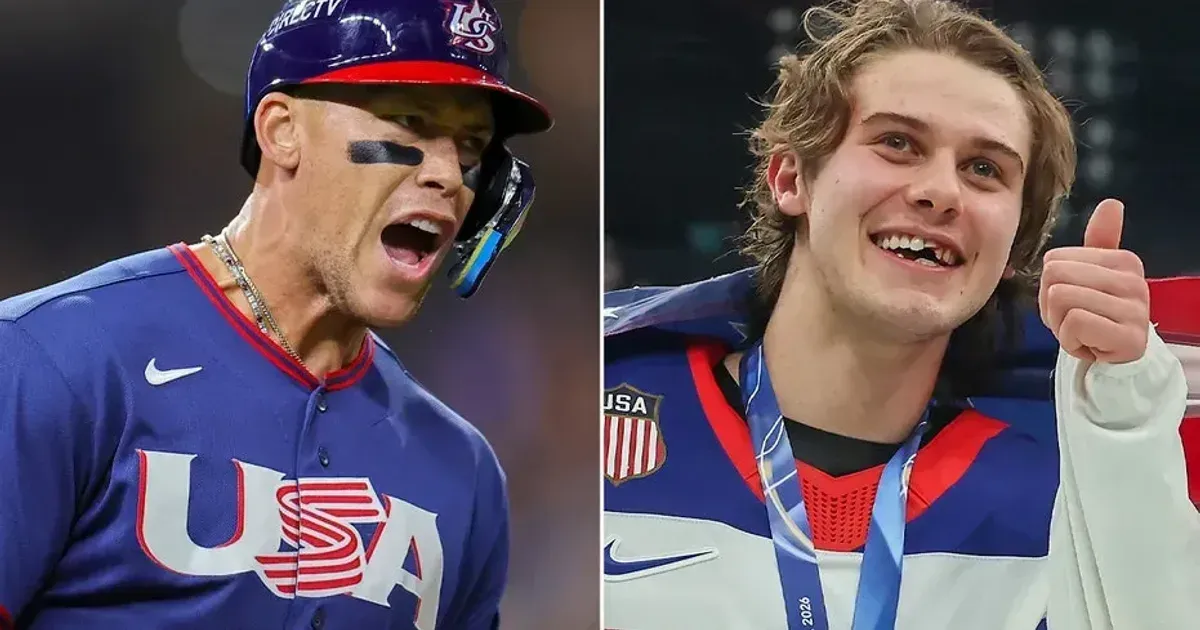
Team USA arrived in Houston with inspiration and unfinished business. Mark DeRosa sat inside a quiet office at Daikin Park on Thursday morning, reflecting on a narrow escape that nearly ended the American title defense before it truly began. By March 13, 2026, the report had become part of a broader public record. Relief defined the atmosphere in the clubhouse after Italy secured a victory over Mexico on Wednesday night, a result that inadvertently vaulted the United States into the quarterfinal round. But the narrow path to survival has forced the American coaching staff to seek motivation from unlikely sources. New Jersey Devils center Jack Hughes emerged as that source by providing a cross-sport rallying cry from the frozen rinks of Milan to the humid diamonds of Houston.
National competition often breeds unique bonds between professional athletes who rarely cross paths during their respective seasons. Hughes recently secured a gold medal for the United States during the Winter Olympics by scoring an overtime winner against Canada. That victory resonated deeply within the baseball dugout. Mark DeRosa confirmed that he shared a personal message from Hughes with the entire roster via a private group chat. This digital gesture aimed to remind the ballplayers of the high stakes involved in any North American rivalry. Friday brings the ultimate test of this cross-sport synergy.
Captain Aaron Judge admitted that the hockey team's success served as a primary catalyst for the baseball squad's current mindset. Judge appeared on the Pat McAfee Show to describe how the baseball players circulated images of Hughes celebrating his golden goal. Squad members viewed the hockey team's resilience as a template for their own recovery. Still, the transition from watching a screen to performing on the field remains the primary hurdle for a lineup that struggled for consistency throughout Pool B play.
Jack Hughes Inspires National Team Synergy
Connections between the winter and summer iterations of Team USA have intensified since the conclusion of the Milan games. Megyn Keller provided the initial spark for the hockey program with her own overtime heroics before Hughes followed suit. These performances created a wave of momentum that hit the baseball clubhouse just as they arrived in Houston for the opening rounds. Players have spent the week discussing the parity of international competition. For one, the underdog status of Italy proved that no roster is safe regardless of its collective payroll in Major League Baseball.
DeRosa noted that the connection will become visible during pre-game ceremonies on Friday. Plans are in place for the baseball players to wear USA hockey jerseys during batting practice as a tribute to their ice-bound counterparts. This aesthetic choice is more than a simple fashion statement. It is a psychological tool to reset the narrative after a disappointing 7-2 loss to Italy on Tuesday. Managers often use such gimmicks to break the tension of a high-pressure tournament environment.
Bobby Witt Jr. noted that the volume of gold medals earned by American athletes in February provided a specific blueprint for the baseball team. Witt observed that the hockey team's ability to overcome a deficit against Canada was particularly instructive. American fans expect dominance, yet the reality of the World Baseball Classic often presents a more complicated picture. Canada enters the quarterfinal after a strong showing in San Juan, where they finished Pool A with a 3-1 record.
Tactical Shifts Before Daikin Park Quarterfinal
Preparation for the Canadian lineup requires a focus on a roster that lacks the star power of the American side but possesses significant tournament experience. Canada used a patient offensive approach in Puerto Rico to dismantle opponents. Their pitching staff relied on a mix of veteran arms and young prospects who have historically performed well on the international stage. By contrast, the American pitching staff has dealt with strict pitch counts and the need to protect arms before the Major League season begins.
Pitching coach Andy Pettitte has spent the last 48 hours reviewing tape of Canada's wins. The Canadian hitters showed a remarkable ability to exploit high fastballs during their opening games. American hurlers must prioritize location over velocity to avoid the early-inning collapses that plagued them against Italy. DeRosa emphasized that the margin for error has evaporated now that the tournament has reached the knockout phase. One bad inning could result in an immediate flight back to spring training camps in Florida or Arizona.
Italy provided the lifeline. Mexico's inability to overcome the Italian pitching staff on Wednesday night was the only reason the Americans remained in the tournament. Players watched the game from their hotel rooms with a mix of anxiety and frustration. They knew their fate was no longer in their own hands. Once the final out was recorded in Houston, the American roster shifted its focus entirely to the upcoming elimination game. The realization of how close they came to elimination has apparently sharpened the focus of the veteran core.
Canada Strategy and Pool A Dominance
Canada arrives in Houston with a different energy after winning three of their four games in San Juan. Their only loss came in a tightly contested match against the host nation. Most scouts noted that the Canadian defense was the most consistent unit in Pool A. They committed zero errors across their first three games. This defensive reliability provides a cushion for their pitching staff and forces opponents to earn every base runner through hits rather than walks or miscues. Managing the emotional peak of a rivalry game is a secondary concern for the coaching staff. DeRosa argued that the rivalry with Canada is self-sustaining and requires little external motivation. Yet the inclusion of the Hughes message adds a layer of inter-departmental pride to the proceedings. Success in one sport often creates a competitive pressure in others. The baseball players do not want to be the ones who failed to match the standard set by the hockey and track programs earlier in the year.
History suggests that USA versus Canada matchups are rarely lopsided in international tournaments. Each team understands the tendencies of the other due to the sheer number of Canadian players scattered throughout the American minor league systems. Many Canadian starters are teammates with the American players they will face on Friday. The familiarity removes the element of surprise and places the emphasis on raw execution. The American lineup features more raw power, but Canada has demonstrated better situational hitting over the last week.
Tournament Pressure Beyond the Pep Talk
Why should a collection of the most expensive athletes in the world require a digital pep talk from a hockey player to find their competitive edge? National pride often masks the structural deficiencies of a roster that nearly crumbled against a middling European program like Italy. The narrative of "inspiration" from Jack Hughes is a convenient distraction from the reality that Team USA baseball has looked disjointed and unprepared for the unique pressures of the World Baseball Classic. Relying on hockey jerseys and group chat messages suggests a team searching for an identity that they should have established months ago.
Canada does not have the luxury of distracting its fans with crossover marketing. They play a disciplined, gritty style of baseball that has already exposed more talented rosters this spring. If the Americans spend more time focusing on their social media connection to Olympic heroes than their fundamental defensive rotations, the quarterfinal will be a short affair. This tournament is not won by the team with the most celebrity endorsements or the best clubhouse vibes. It is won by the rotation that can throw strikes under pressure. Mark DeRosa must move past the gimmicks and demand the professional execution that his $300 million stars supposedly provide every summer. Anything less is a failure of leadership.