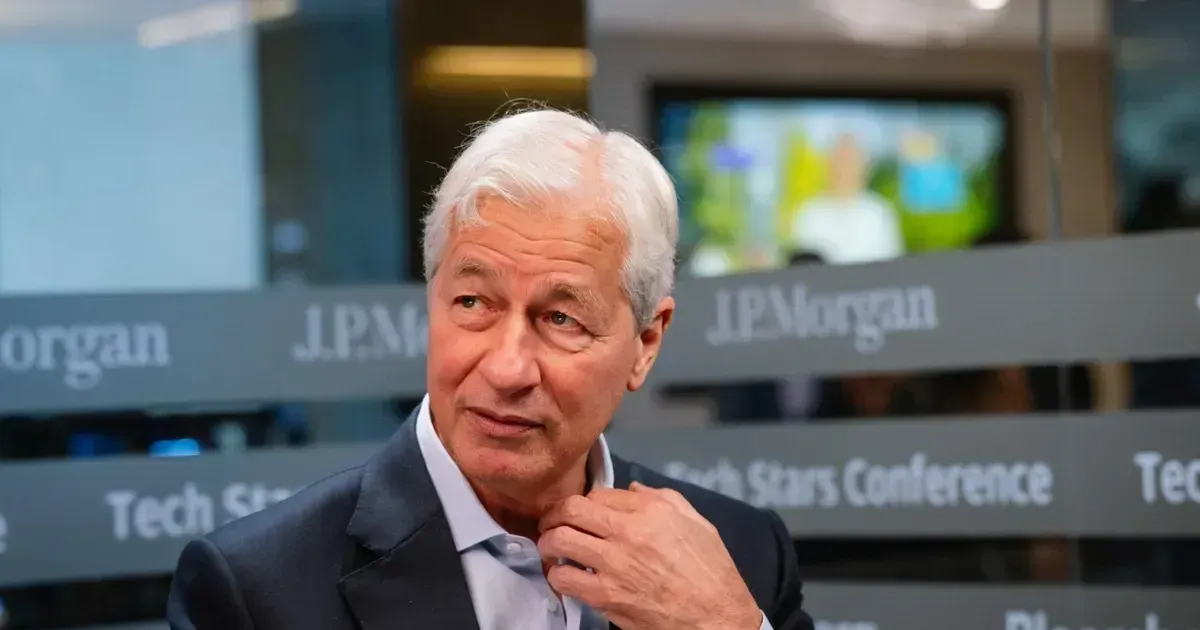
Jamie Dimon has reached another milestone in a career defined by institutional power, personal durability and a tolerance for risk. The update was dated March 13, 2026.
A Career Built After the Citigroup Exit
Sandy Weill and John Reed summoned Dimon to the office on a Sunday afternoon in 1998. He was hosting a hundred potential job candidates at his New York City apartment when the call came. The meeting lasted just long enough for the dual leaders of Citigroup to strip him of his responsibilities. They presented three changes to the bank structure. One person would take over a specific department, another would lead the global investment bank Dimon had built, and he would resign.
Dimon realized the board had already voted and the press release was pre-written. He returned to his apartment to tell his wife and three daughters that he was unemployed. His 10-year-old daughter asked if they would have to sleep on the streets. The 12-year-old inquired about her college prospects. His 14-year-old asked for his cell phone since he no longer needed it for work.
Fifty senior managers from the bank flooded his apartment later that evening to mark the end of an era. Survival took on a literal meaning six years ago when an acute aortic dissection nearly ended his life. Dimon described the sensation of the arterial tear as a knife being driven into his heart. He was rushed to emergency surgery with odds of survival hovering near 50 percent. Before the anesthesia took hold, he called his wife with instructions for the bank general counsel. He ensured JPMorgan had co-CEOs ready to step in if he did not wake up.
Doctors noted that the condition is rare, affecting only about nine people per 100,000 annually. This brush with death followed a previous battle with throat cancer a decade earlier. Dimon emerged from the eight-hour heart procedure with a resolve to live more deliberately. He bought the hospital staff a new refrigerator and sanitizing machine as a token of gratitude. He claims he felt no major regrets while being wheeled into the operating room. Such a lack of remorse stands in contrast to the often volatile nature of his career climb.
Success in the aftermath of the Citigroup firing required a decade of rebuilding that eventually placed him at the helm of the largest bank in the United States.
The Fortress Balance Sheet Legacy
JPMorgan Chase survived the 2008 financial crisis because of a philosophy Dimon calls the fortress balance sheet. While other institutions crumbled under the pressure of subprime mortgages, Dimon maintained high capital reserves and low risk exposure. He famously orchestrated the acquisition of Bear Stearns and Washington Mutual during the height of the panic. These moves were not acts of charity but calculated expansions that secured his bank dominance for the next two decades. He spent years answering to regulators and politicians who questioned the scale of his institution. By 2026, those questions have largely been replaced by an acceptance of his role as the unofficial spokesperson for the American banking sector.
Critics often point to the heavy concentration of power within his person. The appointment of co-CEOs during his 2020 heart surgery highlighted the lack of a clear, single successor at the time. Board members have frequently debated how the firm will function without the man who has led it since 2005. Dimon has consistently pushed back against retirement rumors, stating that he intends to serve as long as his health and the board allow. His 70th birthday provides a natural point for succession planning discussions, yet the bank remains silent on a firm departure date. Financial analysts at Goldman Sachs and Morgan Stanley continue to track his public appearances for hints of a transition plan.
Wall Street observers remember the 1998 firing as a catalyst for the modern era of JPMorgan. The rejection by Sandy Weill forced Dimon to reinvent himself away from the shadow of his former mentor. He moved to Chicago to lead Bank One, which eventually merged with JPMorgan Chase in 2004. This mindset allowed him to approach banking with the perspective of an outsider who understood the internal mechanics of the system. He often reflects on the 1998 apartment meeting as a necessary, if painful, transition. His daughters have long since graduated from the colleges they once feared they could not afford. Records show that JPMorgan Chase now manages over 4 trillion dollars in assets as of the first quarter of the year 2026.
Financial history will likely remember Dimon not for his survival of corporate politics, but for his physical survival against the odds. The 2020 aortic dissection forced a public admission of vulnerability from a man known for projecting strength. He told interviewer Monica Langley that the experience reshaped his outlook without fundamentally changing his management style. He continues to work long hours and maintain a rigorous travel schedule. His commitment to the firm often takes precedence over personal leisure. This 1998 meeting in his apartment remains a vivid memory for the staff who attended his impromptu wake. He still owns that same apartment nearly three decades later. He insists that his life is lived without the burden of unfinished business or lingering regrets.
The CEO as Institution
Does the American banking system rely too heavily on the heartbeat of a single septuagenarian? We are currently observing a dangerous cult of personality at JPMorgan Chase that masks the institutional fragility of a post-Dimon world. While the media celebrates his 70th birthday as a victory of longevity, the reality is that his refusal to step aside creates a vacuum of talent at the top. The bank has become so synonymous with Dimon that its share price is essentially a bet on his personal health rather than its underlying assets. This is not leadership; it is a hostage situation. By prioritizing his own lack of regrets over a structured transition, Dimon is setting the stage for a volatility that his fortress balance sheet may not be able to absorb. We have seen this script before with corporate titans who overstay their welcome, only to leave behind a fractured board and a confused market. True success for a CEO of his stature should be measured by the strength of the organization in his absence. On that metric, the jury is still out. Dimon has survived cancer, heart failure, and firing, but he cannot survive time. His greatest failure may be the belief that he is the only one capable of holding the fortress together.