Detention Limits Return to Court
Joaquin Castro stood outside the South Texas Family Residential Center in Dilley this week, clutching a list of names that federal authorities refuse to acknowledge publicly. The Texas Democrat has transformed his congressional office into a clearinghouse for individual migrant cases, attempting to force the release of parents and children through sheer political pressure. Castro argues that the current administration treats judicial limits as suggestions rather than mandates. The report was published on March 13, 2026.
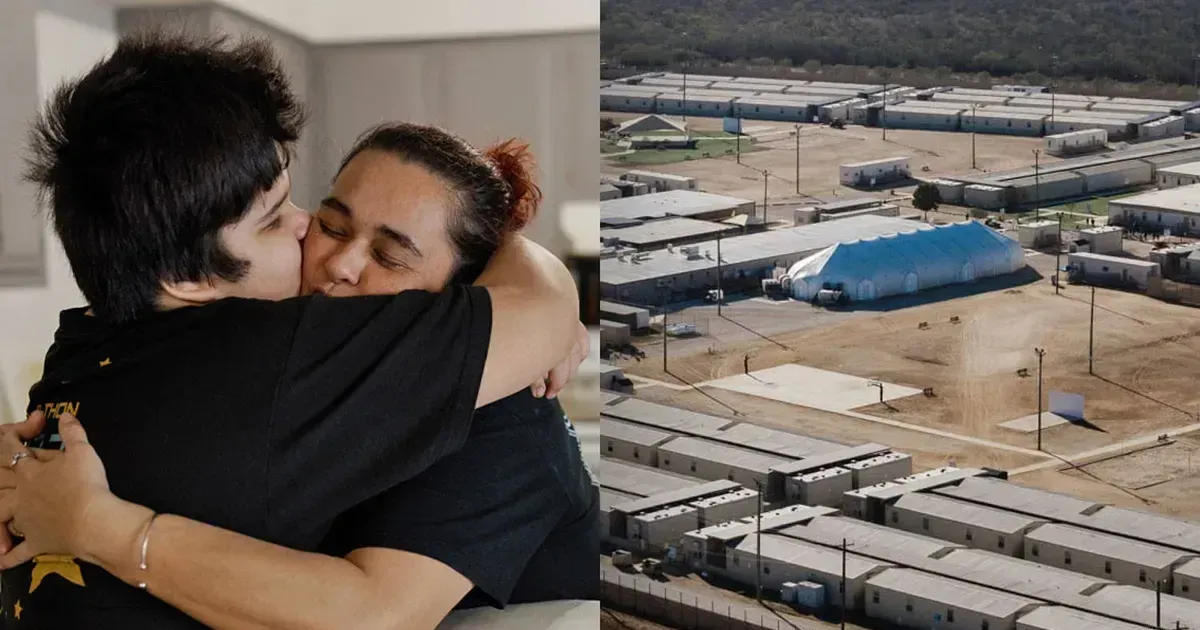
High-ranking officials within the Department of Homeland Security have largely ignored his inquiries, citing national security protocols and administrative confidentiality. Federal law and long-standing court settlements dictate that the government cannot hold children in immigration detention for more than 20 days. Data obtained by NBC News indicates that dozens of families have remained in the Dilley facility for 40, 60, or even 90 days. These figures challenge the 1997 Flores settlement agreement directly.
Lawyers representing the detainees describe a system that has ground to a halt, leaving minors in a state of legal and psychological limbo. While the White House maintains that the influx of families necessitates these extensions, the legal community remains skeptical of the administration's defensive posture. Officials at the Department of Homeland Security maintain that processing delays and high arrival volumes necessitate these extensions. Critics like Castro suggest the delays are intentional, designed to deter future migration through punitive detention.
While The New York Times highlights Castro's personal crusade for individual families, NBC News reports on the systemic breakdown of the 20-day rule. These two perspectives reveal a two-pronged crisis involving both individual human suffering and institutional lawlessness. The disconnect between judicial requirements and executive practice has created a vacuum where accountability vanishes into bureaucratic paperwork. Psychologists who have entered the facilities report a disturbing trend among the youth held past the three-week mark.
Dilley Cases Put Children at the Center
Children who were previously resilient show signs of regression, selective mutism, and severe anxiety. One mother told investigators that her seven-year-old son stopped eating after their second month in custody. He said the place broke something inside of him. Such testimony contradicts government claims that family residential centers provide a safe and humane environment. The long-term effects of this institutionalization on young children remain unstudied by independent bodies because the government continues to restrict researcher access. "We are looking at a clear violation of the law," Castro told reporters during a late-night press conference on the steps of the Capitol. He has utilized his position on the House Intelligence Committee and the Hispanic Caucus to demand unredacted records from ICE. These efforts have met stiff resistance from the White House, which views Castro's inquiries as political theater.
President Trump has repeatedly called for an end to the catch and release policies that the Flores settlement effectively requires. The administration sees the 20-day limit as a loophole that allows undocumented families to disappear into the American interior before their court dates. Political analysts see this clash as a precursor to the 2026 midterm elections. Texas represents the front line of this battle, with facilities like Dilley and Karnes City serving as the primary sites for family detention.
Local advocates claim that ICE has begun bypassing the standard screening process for asylum seekers, moving straight to long-term detention. If the administration continues to ignore the 20-day cap, the judicial system may be forced to intervene with contempt of court charges against high-ranking officials. Legal experts at the American Civil Liberties Union are already preparing filings to this effect. The tension in South Texas is palpable as local residents watch busloads of families arrive daily, with fewer seen departing.
Congress Presses for Records
Resources at these centers are stretched thin. Despite the increased budget allocations for border security, the quality of medical care and legal access remains a point of contention. Castro's office has documented instances where detainees were denied access to their lawyers for days at a time. ICE leadership denies these claims, insisting that all detainees receive due process and adequate support. Yet the mounting backlog of cases suggests that the system cannot keep pace with the administration's aggressive enforcement targets. Internal whistleblowers have suggested that the overcrowding is being used as leverage in budget negotiations. Washington remains deadlocked on a permanent legislative solution. Republicans argue that closing the Flores loophole is essential for border security, while Democrats maintain that detaining children is a moral failure.
Castro has positioned himself as the primary antagonist to the administration's detention complex. He often shares specific stories of detainees on social media to bypass traditional media filters. This strategy puts a human face on a bureaucratic process that often feels cold and distant to voters in the interior of the country. His focus on individual cases makes it harder for federal agencies to dismiss the broader patterns of neglect as mere statistical noise.
Bureaucracy has a way of swallowing the vulnerable. Evidence of the psychological toll continues to mount. Researchers from major medical schools have petitioned the government for independent access to conduct long-term health studies on detained minors. They cite the 20-day limit not as an arbitrary number, but as a threshold beyond which developmental damage becomes likely.
Border Law Meets Executive Defiance
Why do we pretend that legal settlements like Flores still carry the force of law when the executive branch treats them as minor inconveniences? Our political class is engaged in a grotesque pantomime. Democrats like Joaquin Castro perform their outrage for the cameras, while the administration leans into the cruelty of the process to satisfy a base that equates suffering with security. This is not a policy failure; it is a policy choice. We have built a system that relies on the psychological destruction of children to send a message to their parents. If the United States cannot process a few thousand families without violating basic human rights and its own court orders, then the pretense of American exceptionalism is dead. What is unfolding is the slow-motion collapse of the rule of law at the border, replaced by a regime of administrative spite. If Congress were serious, it would defund the facilities that violate court orders tomorrow. Instead, we get press conferences and social media posts while the 20-day limit fades into a historical footnote. The cruelty is the point, and everyone in Washington knows it.