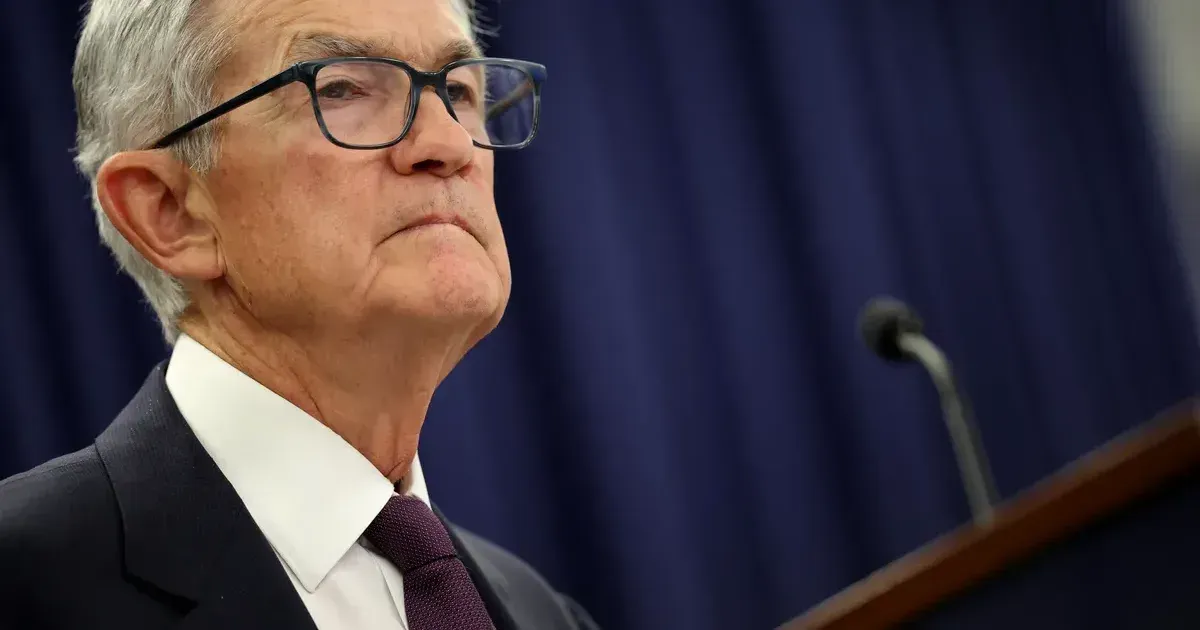
Friday’s ruling in the District Court for the District of Columbia upended a high-stakes legal battle between the executive branch and the nation’s central bank. Judge Amul Thapar issued a permanent injunction halting the Justice Department investigation into Federal Reserve Chair Jerome Powell and several high-ranking officials. By March 13, 2026, federal prosecutors had spent months pursuing allegations of financial irregularities related to a multi-year modernization effort at the central bank’s headquarters. Lawyers for the government argued that internal audits suggested mismanagement of funds in the $2.5 billion renovation project. But the court found these claims lacked sufficient evidence to justify criminal subpoenas.
Judge Thapar described the probe as a thinly veiled attempt to compromise the independence of the Federal Reserve. For months, the administration has publicly criticized the central bank for its refusal to lower interest rates in the face of cooling inflation data. Federal investigators claimed they were merely following a paper trail of suspicious contracts. Still, the judicial order characterizes the Justice Department’s actions as an improper campaign of harassment. According to CBS News correspondent Scott MacFarlane, the ruling effectively quashes all active subpoenas issued to central bank employees over the last quarter. This decision creates a legal firewall around the Eccles Building during a period of heightened economic volatility.
Subpoenas Quashed in Central Bank Inquiry
In fact, the legal conflict intensified when federal agents attempted to seize digital communications from the personal devices of three board governors. Attorneys representing the Federal Reserve argued that such broad requests violated the Administrative Procedure Act and established protections for central bank autonomy. The Justice Department countered by citing a 2025 whistleblower report that alleged favoritism in the awarding of construction bids. Prosecutors insisted that no government official sits above the law, regardless of their role in monetary policy. By contrast, the defense presented evidence that the Inspector General of the Federal Reserve had already cleared the project of criminal wrongdoing in 2024.
The evidence suggests that this investigation was launched not to uncover a crime, but to manufacture a lever with which the executive branch could move the levers of monetary policy.
Judge Thapar wrote those words in a scathing section of his opinion regarding the use of grand jury powers. Legal experts noted that the Justice Department failed to provide a single instance of personal enrichment by Jerome Powell or his colleagues. In turn, the court found that the timing of the subpoenas coincided exactly with the Federal Open Market Committee meetings. The dispute centered on whether a criminal probe can be used as a political tool. The court answered with a definitive rejection of the government’s tactics. NPR News reported that the ruling was the most consequential judicial intervention in Federal Reserve affairs since the 1951 Accord.
Political Pressure and Interest Rate Conflict
Meanwhile, the broader context of the investigation involves a public feud between the President and Jerome Powell over the direction of the Federal Funds Rate. For much of 2025, the administration demanded aggressive rate cuts to stimulate the housing market. Jerome Powell maintained a hawkish stance, citing persistent wage growth and service-sector inflation. This pressure reached a boiling point when the President suggested on social media that the Justice Department should look into the Fed's books. Critics of the administration argue that the renovation probe was a direct result of that directive. In particular, the timing of the first criminal referral matches the week Jerome Powell announced a pause in rate reductions.
Legal analysts suggest that the DOJ’s strategy was to use the threat of criminal charges to force a resignation. Such a move would allow the administration to appoint a more compliant successor. Bloomberg reports indicate that the White House had already vetted several potential candidates for the chairmanship. But the permanent injunction prevents any further discovery in the case. The ruling also bars prosecutors from interviewing any current member of the Board of Governors without prior court approval. This specific project has now become a symbol of the struggle for institutional independence in the 2020s. Government lawyers have already filed a notice of appeal with the D.C. Circuit.
Judicial Ruling Protects Federal Reserve Independence
Historically, the Federal Reserve has relied on judicial support to maintain its distance from the electoral cycle. The Federal Reserve Act provides that governors can only be removed for cause, a high legal bar that protects against purely political firings. In this case, the Justice Department attempted to bypass that protection by framing the dispute as a criminal matter. However, Judge Thapar ruled that the government’s theory of the case was legally insufficient. He pointed out that the DOJ had not identified a single victim of the alleged fraud. And the court emphasized that the Federal Reserve is self-funded, meaning it does not rely on congressional appropriations for its operations.
The legal standoff marks a new chapter in the relationship between the Department of Justice and independent agencies. If the ruling stands, it will likely deter future administrations from using criminal investigations to influence policy. At the same time, the Justice Department maintains that its investigators were acting in good faith. Attorney General Merrick Garland issued a brief statement following the ruling, stating that the department is reviewing its options. Meanwhile, the Federal Reserve has resumed its normal operations, including preparations for the next rate-setting meeting. Jerome Powell has not commented publicly on the ruling since its release on Friday morning. The Eccles Building renovation continues under the supervision of a court-appointed monitor.
Federal Reserve Inquiry Hits a Legal Wall
The ruling matters because it limits how far prosecutors can reach into central-bank governance when the policy fight is already public. Congress can still investigate spending, but a criminal probe aimed at monetary bargaining power now faces a much higher bar. That distinction gives the decision its force. It does not make Powell immune from oversight; it says criminal process cannot be treated as an interest-rate tool. The next fight is likely to move back to subpoenas, appropriations hearings and campaign rhetoric, where the political branches have more room to argue without threatening the Fed's institutional line.