Legal Victory for Missouri Republicans
Jefferson City courthouse hallways fell silent Thursday morning just before Judge David Tunnell delivered a ruling that cements Republican dominance in the state for the next decade. He dismissed a high-stakes legal challenge to Missouri's newly redrawn U.S. House districts. His opinion rejects claims that the map unconstitutionally dilutes the voting power of urban residents. The development was reported March 12, 2026. Republicans in the General Assembly celebrated the victory. They had fought a bitter internal war to produce this specific configuration of districts. Donald Trump threw his weight behind the map late last year, urging state leaders to stop bickering and finalize a plan that would maximize GOP gains. The court decision changed the map debate.
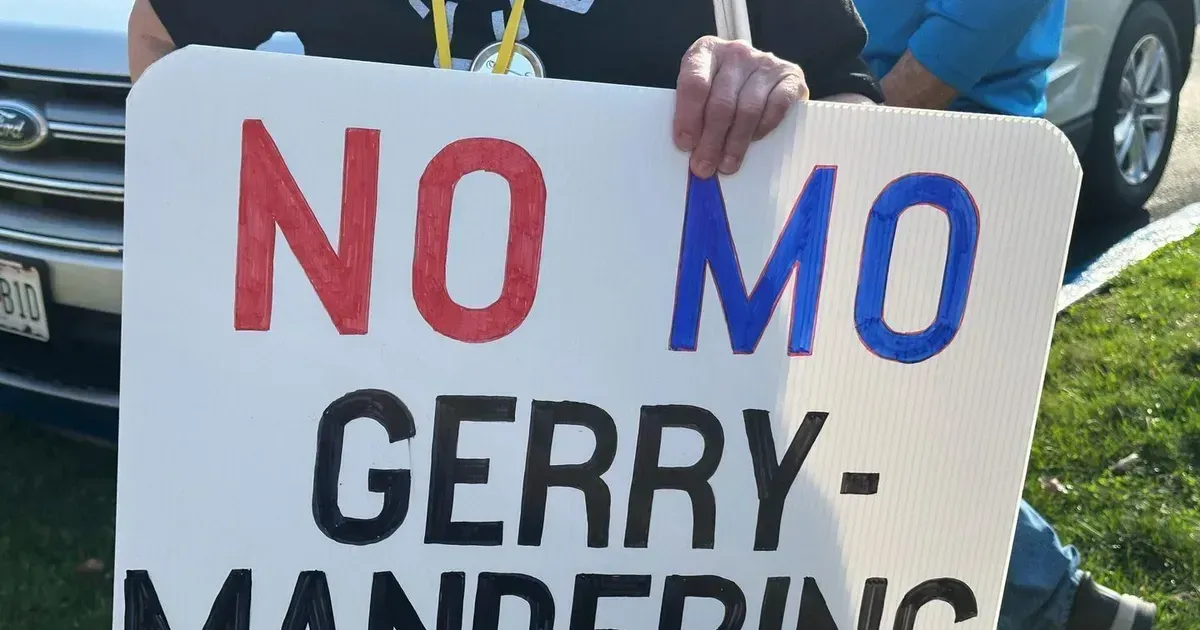
This outcome guarantees that the state's congressional delegation will likely shift from a 6-2 Republican majority to a 7-1 split after the 2026 midterms. Plaintiffs in the case, including several voting rights advocacy groups, argued that the map was a partisan gerrymander. They claimed it fractured communities in Kansas City and St. Louis to ensure rural voters overwhelmed urban voices. Tunnell disagreed, writing that the legislature followed all procedural requirements. He noted that political considerations are naturally part of a process handled by a political body. Critics of the ruling argue it ignores the fundamental right to equal representation.
Power in Missouri now rests firmly with the mapmakers.
Missouri Republicans spent nearly two years debating these boundaries. Hardline conservatives in the state senate, often referred to as the Conservative Caucus, originally demanded an even more aggressive 7-1 map that would have completely dismantled the Democratic stronghold in Kansas City. Leadership initially hesitated, fearing that such a radical shift would invite a successful lawsuit under the state's Clean Missouri transparency laws. But pressure from the national wing of the party, including several prominent members of the Trump campaign, eventually moved the needle. They argued that every single seat counts in the fight for control of the U.S. House of Representatives.
The Trump Factor and National Strategy
Donald Trump viewed the Missouri redistricting battle as an essential component of his broader 2026 strategy. He issued several statements on social media during the drafting phase, calling out specific Missouri legislators who he believed were too soft on Democrats. His intervention broke the legislative logjam. By the time the map reached the governor's desk, it featured a redrawn 2nd District that effectively neutralized the growing Democratic lean of the St. Louis suburbs. Democratic Representative Cori Bush and her colleagues saw their districts packed with even more liberal voters, while surrounding areas were absorbed into sprawling rural districts.
While Bloomberg analysts suggested the legal challenge had a fair chance due to previous Missouri Supreme Court precedents, the local court took a more narrow view of the law. Tunnell's ruling suggests that as long as districts are relatively equal in population and contiguous, the court will not interfere with partisan intent. This judicial restraint is a significant win for the GOP legal team. They argued that the plaintiffs failed to provide a viable alternative map that satisfied all constitutional requirements without also being partisan in the opposite direction.
Previously a competitive swing seat, the 2nd Congressional District now includes a large swath of conservative rural territory. This change makes it nearly impossible for a Democratic challenger to win, effectively ending the career of several moderate candidates who had planned runs for 2026. Data from the most recent census shows that while Missouri's urban centers are growing, the Republican-led legislature successfully used those numbers to strengthen rural representation instead.
Voters in the 2nd Congressional District will feel the most immediate impact of this ruling.
Line drawing remains the ultimate blood sport in Jefferson City.
Legislators in St. Louis expressed deep frustration with the court's decision. They pointed to the sprawling nature of the new 1st District, which they claim was designed to trap as many Democratic voters as possible into a single geographic area. The practice, known as packing, reduces the influence of those voters in neighboring districts. Yet the court found that the legislature stayed within its rights. Tunnell wrote that the court's role is not to act as a super-legislature or to determine what is fair in a political sense, but only to determine what is legal under the state constitution.
Midterm Implications for 2026
Republicans across the country are watching Missouri as a template for other red states. The ability to defend these maps in court provides a roadmap for securing legislative majorities even when the popular vote remains close. 2026 is shaping up to be an election defined by these boundary battles. With the Missouri ruling now in place, the GOP can shift its financial resources away from defending safe seats and toward attacking the few remaining Democratic outposts in the Midwest. The national Republican Congressional Committee has already pledged millions of dollars to support candidates running in these newly favorable districts.
Democrats have few options left. They could appeal to the Missouri Supreme Court, but legal experts suggest the chances of a reversal are slim given the current composition of the bench. Some activists are calling for a new ballot initiative to take redistricting power away from the legislature entirely and give it to an independent commission. Such a move would require hundreds of thousands of signatures and a massive fundraising effort. For now, the maps approved by the legislature and upheld by the court will stand for the upcoming election cycle.
The legislative session will be remembered for how the state party unified under pressure. Despite the initial infighting, the final product reflects a party that is willing to use every lever of power available to secure its future. The 2026 midterms will serve as the first real test of this strategy. If Republicans successfully flip the targeted seat, the Missouri model will likely be replicated across the country in 2030. For the people of Missouri, the lines on the map are now a permanent part of their political identity for the foreseeable future.
Map Litigation Stakes
The blunt reading is that mapmaking has become policy by other means. Missouri's ruling goes beyond a local boundary fight; it tells both parties that the courtroom remains part of the campaign machine. Voters are left to live inside lines drawn by people whose first loyalty is power.