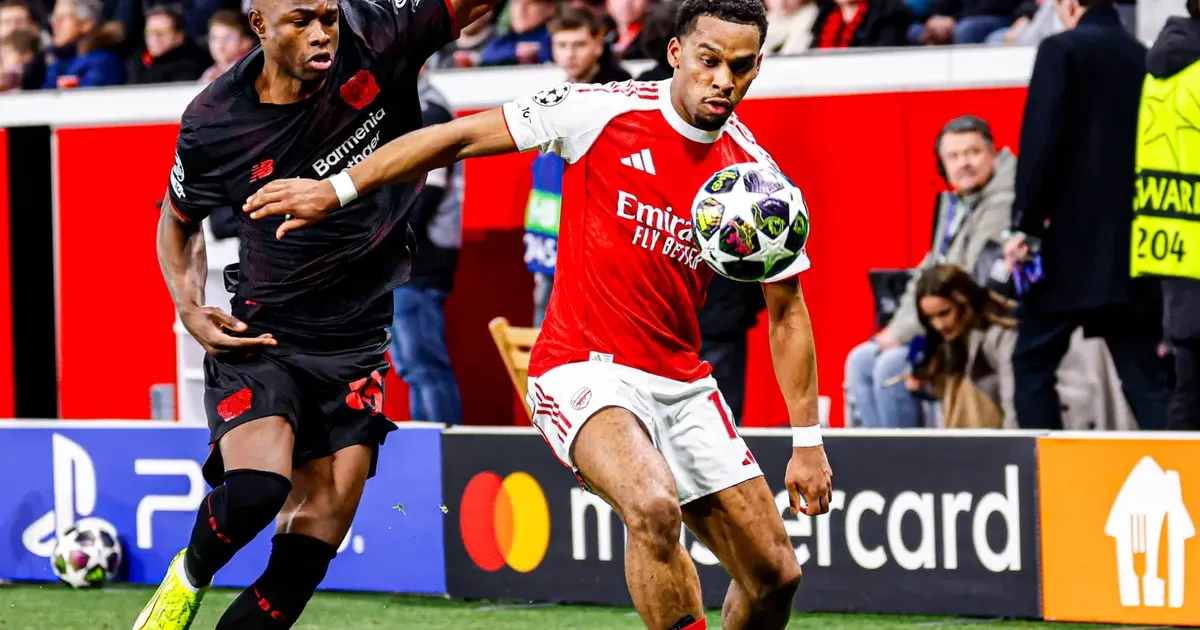
Arsenal left Leverkusen with a draw that made Jurrien Timber’s attacking role look like both a surprise and a warning sign.
Defensive Resilience Meets Offensive Inertia
Rain lashed against the BayArena glass as Mikel Arteta stood motionless on the touchline, watching his North London side grapple with the ghosts of European campaigns past. Arsenal walked away with a 1-1 draw against Bayer Leverkusen in the first leg of their Champions League round of 16 tie, yet the result felt more like a riddle than a reprieve. The March 12, 2026, tie left the scoreboard balanced, but the underlying performance exposed a lopsided tactical reality that could jeopardize their pursuit of a maiden continental trophy. Leverkusen provided a wall that the North London giants simply could not scale. Jurrien Timber emerged as the most potent offensive threat on the pitch, a statistic that serves as both proof of his individual brilliance and a damning indictment of Arsenal's front line. CBS Sports reports that the Dutch defender essentially carried the attack, frequently drifting into central midfield and the final third to bypass a congested Leverkusen midfield. When your primary source of creative spark is a versatile fullback, the structure of the attacking trio demands immediate scrutiny. Bukayo Saka and Gabriel Martinelli found themselves isolated on the flanks, unable to penetrate a disciplined German low block that seemed content to let Arsenal rotate possession fruitlessly. Mikel Arteta remained outwardly defiant during his post-match address to the media. ESPN Soccer notes that the manager vowed his squad would improve and promised to finish the job in London. Such optimism is standard fare for a coach in the knockout stages, but the lack of clinical finishing in high-stakes matches remains a persistent shadow over his tenure. The math does not add up for a team with title ambitions when their expected goals (xG) from open play sit sharply lower than their defensive counterparts.
Tactical Imbalance and the Timber Paradox
Analysis of the ninety minutes reveals a team caught between two identities. Arsenal controlled 62% of the ball, yet they managed only two shots on target throughout the entire contest. Timber’s heat map looked more like that of an inverted playmaker than a traditional defender. He won six duels and completed three successful dribbles into the penalty area, more than any of the recognized forwards. This reliance on a defensive player to spark creativity highlights a lack of verticality in the center of the pitch, where Martin Ødegaard struggled to find pockets of space between the lines. Success in the Champions League rarely favors teams that cannot turn possession into punishment.
Critics point to the summer recruitment strategy as a possible cause for this current malaise. While the defense has reached a level of solidity that rivals the best in Europe, the absence of a predatory striker continues to haunt the Emirates outfit. Kai Havertz occupied the false nine role with his usual industry, but he lacked the physical presence to disrupt the Leverkusen center-backs. Without a focal point to occupy defenders, the creative burden shifts backward, dragging players like Timber out of position and leaving the team vulnerable to the very counter-attacks they seek to avoid.
Bayer Leverkusen exploited these gaps with surgical precision. Their equalizer came from a lightning-fast transition that caught the Arsenal midfield in a state of disorganized retreat. Although the Londoners regained their composure to see out the draw, the fragility of their transition defense remained visible to the thousands of traveling fans. A 1-1 scoreline is objectively a positive result to take back to the Emirates Stadium, but the psychological weight of failing to kill off the game in Germany could linger.
Arteta Vows a London Resurgence
Preparations for the second leg will likely focus on restoring the rhythm of the front three. Arteta suggested that the atmosphere in London would provide the necessary energy to bridge the gap in quality. History shows that Arsenal performs sharply better under the lights of their home ground, where the pitch dimensions and crowd support allow for a more expansive style of play. Still, a return to North London does not automatically solve the problem of a misfiring attack. The coaching staff must find a way to re-engage Saka and Martinelli, who have looked fatigued as the 2026 season enters its most grueling phase.
This stalemate is a logistical hurdle that Arteta believes his players can overcome through sheer technical superiority. He pointed to the team's mental resilience, noting that in previous seasons, a game like this might have ended in a narrow defeat. Maintaining a draw away from home is an evolutionary step for a young squad, even if it lacks the aesthetic flair fans have come to expect. The manager’s confidence rests on the belief that his tactical tweaks in the second leg will unleash the suppressed goal-scoring potential of his primary attackers.
Financial stakes also loom large in the background of this sporting drama. Progressing to the quarter-finals would secure a notable windfall in UEFA prize money and television revenue, important for a club managing the strictures of Profit and Sustainability Rules. Every missed chance in Leverkusen is a potential loss of millions in future earnings. The pressure on the return leg is not just about silver trophies, it is about the long-term economic trajectory of the club in an increasingly competitive global market.
Looking back at Arsenal’s recent European history reveals a pattern of cautious first-leg performances followed by high-tension returns. The 2025 campaign saw similar struggles against Porto and Bayern Munich, where the team often played with a handbrake on during away fixtures. Arteta appears to have internalized these lessons, prioritizing defensive stability over reckless aggression. While this approach keeps the tie alive, it forces the team into a high-pressure scenario where a single mistake at the Emirates could prove fatal.
Leverkusen manager Xabi Alonso will undoubtedly prepare for a second-leg onslaught. He knows that his side only needs one goal to turn the Emirates into a cauldron of anxiety. The German side’s ability to defend deep and strike on the break is perfectly suited for a knockout environment where the home team is forced to take risks. Arsenal’s defense, led by the indomitable William Saliba, must remain perfect if the attackers continue to struggle for goals.
Expectations for the return leg are sky-high among the Gunners faithful. They want to see the vibrant, goal-scoring machine that dominated the early parts of the Premier League season. Instead, they are currently witnessing a team that seems to be overthinking its offensive patterns. If Timber remains the primary attacking outlet in the second leg, the Champions League dream may end much sooner than the London hierarchy anticipated.
What Arsenal Must Fix
Should we really be surprised that a team without a world-class striker is struggling to score goals in the Champions League? Mikel Arteta has built a magnificent defensive machine, a sterile sanctuary of possession that values control above all else, but he has forgotten that football is won in the chaotic moments inside the eighteen-yard box. Relying on Jurrien Timber to lead an attack is not a tactical masterstroke, it is an emergency signal. It tells us that the five-hundred-million-pound project is missing its heartbeat. The obsession with positional play has sterilized the natural instincts of players like Bukayo Saka, turning a once-explosive winger into a cautious cog in a mechanical system. If Arsenal crashes out to Leverkusen in London, the blame should not fall on the players; it must land squarely on a manager who refuses to allow his team to take the necessary risks to win. Playing for a draw away from home is a relic of a bygone era. Modern European giants go for the throat. Until Arteta finds his killer instinct, Arsenal will remain the bridesmaids of the Champions League, perfectly composed, elegantly dressed, and ultimately empty-handed.