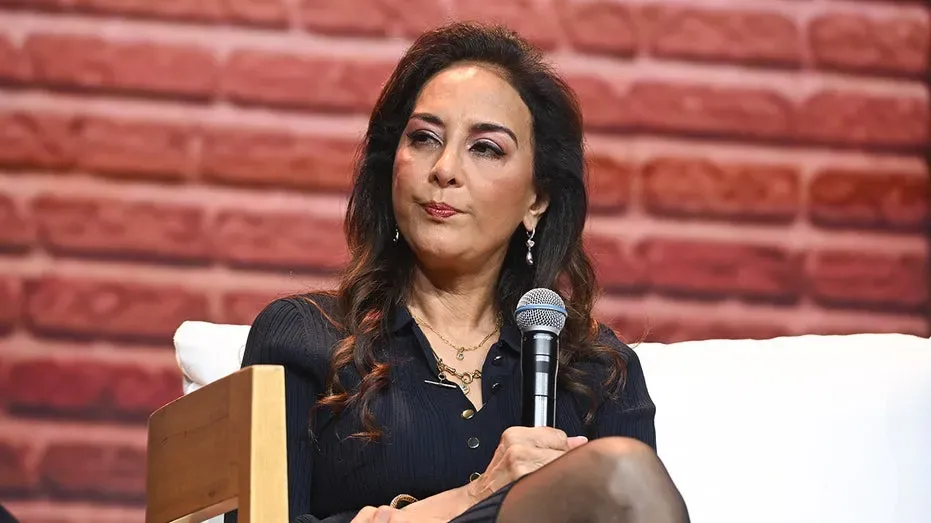
The Justice Department's rejection of challenges to election-security plans intensified legal tension as the 2026 voting calendar approached. The records fight escalated on March 11, 2026.
DOJ Mocks the Election Records Fight
Washington, D.C., became the latest theater for a confrontation between the executive branch and Democratic legal strategists on Tuesday. Harmeet Dhillon, head of the Civil Rights Division within the Department of Justice, dismissed a lawsuit filed by the Democratic National Committee that sought to uncover the administration's plans for election day. Dhillon took to social media to mock the legal filing, comparing the DNC's demands to a child's wish list for the tooth fairy. She argued that the executive branch maintains specific powers that cannot be curtailed by frivolous litigation from political opponents. Marc Elias, a prominent attorney representing the Democratic party, filed the suit in the District of Columbia. Elias's team is demanding records from the Department of Justice, the Department of Homeland Security, and the Department of War under the Freedom of Information Act. These lawyers claim the requests are necessary because the administration has made repeated threats to the integrity of free and fair elections. They specifically pointed to comments made by White House Press Secretary Karoline Leavitt earlier this year. When asked about the potential for federal personnel to be deployed to polling stations, Leavitt did not rule it out, though she noted she had not heard the president discuss the idea. Legal experts suggest the battle is only beginning. Internal documents and FOIA requests target specific information regarding whether federal agents will be present at voting sites. Democrats argue that any federal deployment would intimidate voters and interfere with state-run processes.
His team is demanding records from the Department of Justice, the Department of Homeland Security, and the Department of War under the Freedom of Information Act.
Indiana Turns to a Partisan Registration Partner
Election security has moved from legal theory to the possibility of federal presence, making the records fight more than a procedural dispute.
Republicans maintain that such measures are required to prevent fraud and ensure that only eligible citizens cast ballots. Dhillon's dismissal of the lawsuit highlights the deepening divide over who controls the physical environment of an election. Indiana election officials have taken a different approach to voter engagement by forming a partnership with Major Shift USA. This nonprofit organization, founded by Charlie Kirk, will now assist the Indiana Secretary of State with voter registration initiatives. While state officials describe the move as a way to reach younger demographics and encourage civic participation, critics worry about the partisan nature of the group.
Major Shift USA has long been associated with conservative activism, leading some to question if the registration drives will be conducted with neutrality. Such partnerships are rare for state agencies that typically rely on non-partisan or government-run programs to handle registration. This decision by Indiana indicates a shift toward utilizing ideological allies to strengthen the voter rolls. Critics in the state legislature have already raised concerns that this might lead to selective registration efforts in specific districts. Supporters argue that any effort to increase the number of registered voters is a net positive for the democratic process.
Political participation requires trust in the registration mechanism. Indiana's move occurs while the Republican National Committee is doubling down on its support for state-led security measures.
Federal Probes Test State Control
The RNC has issued statements backing the administration's focus on voter ID laws and more frequent audits of registration data. This strategy focuses on securing the perimeter of the voting process long before a single ballot is cast. FBI agents have expanded their inquiries into the 2020 and 2024 elections within Georgia and Pennsylvania. These investigations involve requests for extensive voter registration records from state officials. The administration claims these audits are necessary to identify systemic vulnerabilities, but local officials have occasionally resisted.
A federal judge recently blocked the Department of Justice from accessing voter rolls in Oregon, citing state privacy laws and the lack of a specific criminal predicate for the search. Tension between federal investigators and state election boards has reached a boiling point. In Pennsylvania, local officials expressed frustration over the scope of the federal requests, claiming they encroach on states' rights to manage their own elections. These inquiries focus on data that includes names, addresses, and voting history of millions of citizens. The Department of Justice maintains that its Civil Rights Division is simply exercising its oversight authority to ensure compliance with federal standards.
Harmeet Dhillon remains steadfast in her position that the DNC's legal maneuvers are a distraction. Her division is prioritizing the passage of a national voter ID bill while simultaneously scrutinizing the records of jurisdictions where they suspect irregularities.
Why Election Administration Is Now Combat
Why do we pretend that election administration remains a neutral clerical function when it has clearly become the primary weapon of modern political warfare? The current administration has correctly identified that controlling the data and the physical presence at the polls is as important as the campaign itself. Harmeet Dhillon's dismissive rhetoric toward Marc Elias is not just a personal jab; it is a signal that the Department of Justice no longer feels obligated to entertain the traditional guardrails of bipartisan consensus. By treating FOIA requests about federal deployments as jokes, the administration is effectively saying that their plans are none of the public's business until they are already in motion.
Meanwhile, Indiana's partnership with Major Shift USA proves that the GOP is successfully outsourcing state functions to ideological foot soldiers. It is a brilliant, if ruthless, strategy to ensure the electorate is shaped in their image before election day even arrives. If Democrats think a few FOIA lawsuits and some snarky tweets from Marc Elias will stop a determined executive branch from reshaping the voting environment, they are remarkably naive. The era of the non-partisan election official is dead, replaced by a high-stakes struggle for administrative dominance.