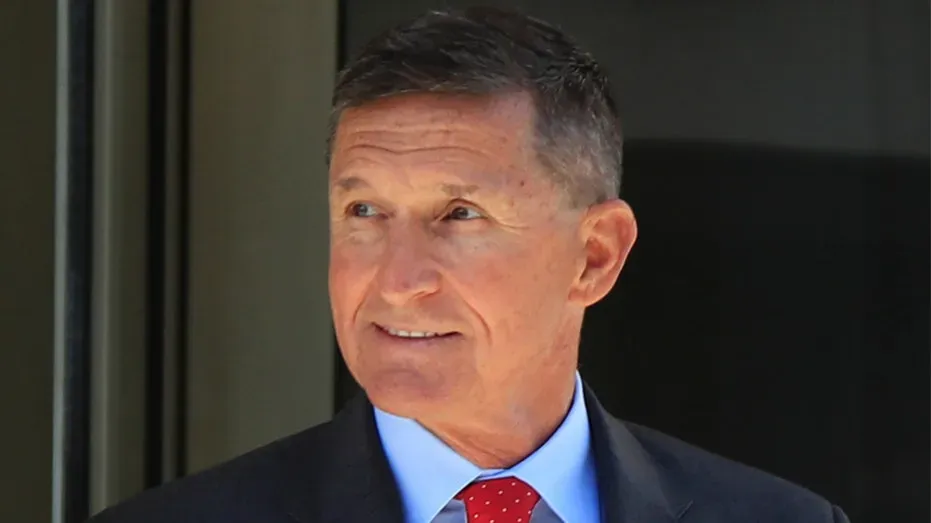
Michael Flynn reached a financial agreement with the Justice Department on March 26, 2026, to resolve his long-running lawsuit alleging malicious prosecution. The agreement concludes a legal battle that spanned nearly a decade and originated in the investigation into Russian interference in the 2016 election. While court documents filed in federal court did not explicitly list the payout amount, reports indicate the federal government will pay the former national security advisor roughly $1.2 million to settle the matter. This sum is a compromise between the government and the retired lieutenant general, who had initially sought a much larger award in his 2023 legal filing.
Flynn originally pleaded guilty on Dec. 1, 2017, to giving false statements to the FBI regarding his communications with the Russian ambassador. Those discussions involved Russia’s response to United States sanctions and a United Nations Security Council resolution regarding Israel. Special Counsel Robert Mueller brought the charges during his investigation into ties between the campaign of Donald Trump and Russian figures. The Mueller inquiry shadowed much of the subsequent administration and resulted in charges against multiple high-level associates, including former campaign chairman Paul Manafort.
Yet the case against the former general began to fracture when Michael Flynn sought to withdraw his guilty plea in 2019. He argued that federal prosecutors acted in bad faith and accused the FBI of professional misconduct during his initial interviews. He specifically pointed to documents that suggested investigators were more interested in securing a lie than uncovering the truth about his foreign contacts. Donald Trump eventually issued a full pardon to Flynn in late 2020, which ended the criminal proceedings but set the stage for a civil retaliatory action.
Setting that aside, the 2023 lawsuit filed by Flynn sought at least $50 million in damages for what his legal team described as a coordinated effort to destroy his career. The complaint alleged that the Justice Department and the FBI targeted him for political reasons rather than legitimate national security concerns. According to the Associated Press, the finalized settlement aims to avoid a lengthy and potentially embarrassing trial for the government. A public trial would have likely forced the disclosure of internal communications from the highest levels of the FBI and DOJ.
Michael Flynn Russia Investigation and Case History
Legal analysts suggest the settlement is a functional exit for the government from a politically sensitive chapter of modern history. The Mueller report, while detailing extensive contacts between the Trump campaign and Russian officials, did not establish a criminal conspiracy to influence the election. But the investigation secured several convictions and pleas before it concluded. Flynn was the first high-ranking official to fall under the Mueller probe, making his eventual vindication or settlement a point of intense interest for legal observers on both sides of the aisle.
The figures say otherwise: the charges against Flynn stemmed from a January 2017 interview at the White House. FBI agents questioned him about his calls with Sergey Kislyak, the Russian ambassador to the United States. Investigators claimed Flynn denied discussing the sanctions imposed by the Obama administration, while intercepted communications showed the topic had been addressed. Critics of the investigation argue the FBI deviated from standard protocols by not informing the White House Counsel before the interview. This detail became a foundation of Flynn's later claims of malicious intent.
Still, the government maintains that its investigators acted within the scope of their authority at the time. The settlement does not include an admission of wrongdoing by the Justice Department, a standard feature of federal legal resolutions. By providing a financial payout, the government effectively silences a critic while preventing the discovery process from unearthing more internal documents. The closure of this case removes a sizable legal hurdle for the current administration as it attempts to move past the controversies of the 2016 cycle. For added context, see Elite Tribune's look at investigation into Russian interference.
Associated Press Reports Estimated Settlement Figures
Official court papers seen by journalists do not disclose the financial terms, but the $1.2 million figure has been confirmed by multiple sources familiar with the deal. This amount is intended to cover legal fees and other costs accrued by Flynn over the course of his multi-year defense and subsequent civil litigation. While the payout is only a fraction of the $50 million originally requested, it provides a hefty recovery for a man whose personal finances were reportedly drained by legal expenses. Flynn had previously sold his home to fund his defense against the Mueller team.
Meanwhile, the settlement agreement arrived just as the case was moving toward a critical phase of evidence exchange. Prosecutors and defense attorneys had been haggling over the scope of internal FBI records that would be made available to Flynn's team. Some of these records reportedly include notes from senior officials discussing the tactical advantages of prosecuting a national security advisor. The decision to settle suggests the government focused on confidentiality over the chance of winning a dismissal in open court.
Michael Flynn argued in his 2023 lawsuit that federal prosecutors engaged in wrongful and malicious prosecution to target him for political reasons.
Legal experts view the settlement as a pragmatic exit for both parties. For the Justice Department, it ends a cycle of negative publicity and avoids a trial that would have reignited debates over the Mueller probe. For Flynn, it provides a financial settlement that he can frame as a victory to his supporters. The resolution of the civil suit marks the final legal thread tied to his specific role in the 2016 transition period.
Department of Justice Conduct and Legal Standards
And yet the wider effects for the Justice Department remain a topic of debate in Washington legal circles. The agency has faced recurring accusations of politicization since the start of the Russia inquiry. Settling a malicious prosecution claim, even without an admission of guilt, will be interpreted by some as a tacit acknowledgement that the Flynn investigation was handled poorly. Critics of the bureau will likely use the payout as evidence that internal reforms are necessary to prevent similar situations in the future.
The flip side: supporters of the original investigation point out that Flynn twice pleaded guilty under oath before a federal judge. They argue that the decision to settle is a political calculation by the current administration rather than a reflection of the case's merits. These observers contend that the FBI had a legitimate reason to investigate a national security advisor who was not truthful about his contacts with a foreign adversary. The settlement avoids resolving these fundamental disagreements, leaving the historical record open to interpretation.
To begin with, the legal standard for malicious prosecution in federal cases is notoriously high. A plaintiff must prove that the government initiated a criminal proceeding without probable cause and with a primary purpose other than bringing an offender to justice. Flynn's team believed they had enough evidence to meet this threshold, citing the 2020 discovery of internal FBI notes. The government likely realized that even a small chance of losing such a case was a risk not worth taking.
Federal Malicious Prosecution Lawsuit Requirements
That said, the resolution of the Flynn case does not create a binding legal precedent for other Mueller defendants. Each case involves unique facts and different levels of government conduct. Paul Manafort and other figures charged during the probe have not seen similar settlements, largely because their charges involved financial crimes that were distinct from the political nature of Flynn's false statements. The Flynn settlement appears to be a unique result of the specific circumstances surrounding his FBI interview.
Taxpayers now bear the cost of this decade-long investigative arc. The payout will come from the Judgment Fund, a permanent congressional appropriation used to pay settlements and judgments against the federal government. The fund ensures that the Justice Department budget is not directly impacted by the $1.2 million payout. However, the political cost of the settlement may prove more serious than the financial one as Congress examines the details of the agreement.
Justice Department officials shifted their gaze to other pending matters shortly after the settlement was announced. They have not released a formal statement regarding the specific reasons for the deal. The silence is typical of high-profile settlements where the goal is to minimize further media coverage. The case of Michael Flynn is now functionally closed, ending one of the most litigious periods in the history of the Office of the National Security Advisor.
The Elite Tribune Perspective
Does the payout to Michael Flynn represent a correction of a widespread failure or a surrender to political pressure? Many will see the $1.2 million check as a quiet admission that the Russia probe was flawed from its inception. But the reality is far more cynical. The Justice Department is likely buying silence and closure rather than admitting any moral error. By settling, the government prevents a public trial that would have forced a reckoning with the messy, often contradictory internal logic of high-stakes political investigations. It was never about justice in the abstract.
It was a cold calculation to reduce further reputational damage to an agency already struggling with public trust. Flynn, for his part, walks away with a seven-figure sum that, while smaller than his initial request, is a functional vindication in the eyes of his supporters. We should be wary of viewing this as a triumph of the rule of law. It is a business transaction designed to bury a skeleton that has rattled in the DOJ's closet for too long. In the end, the taxpayer foots the bill for a decade of institutional ego and partisan warfare.