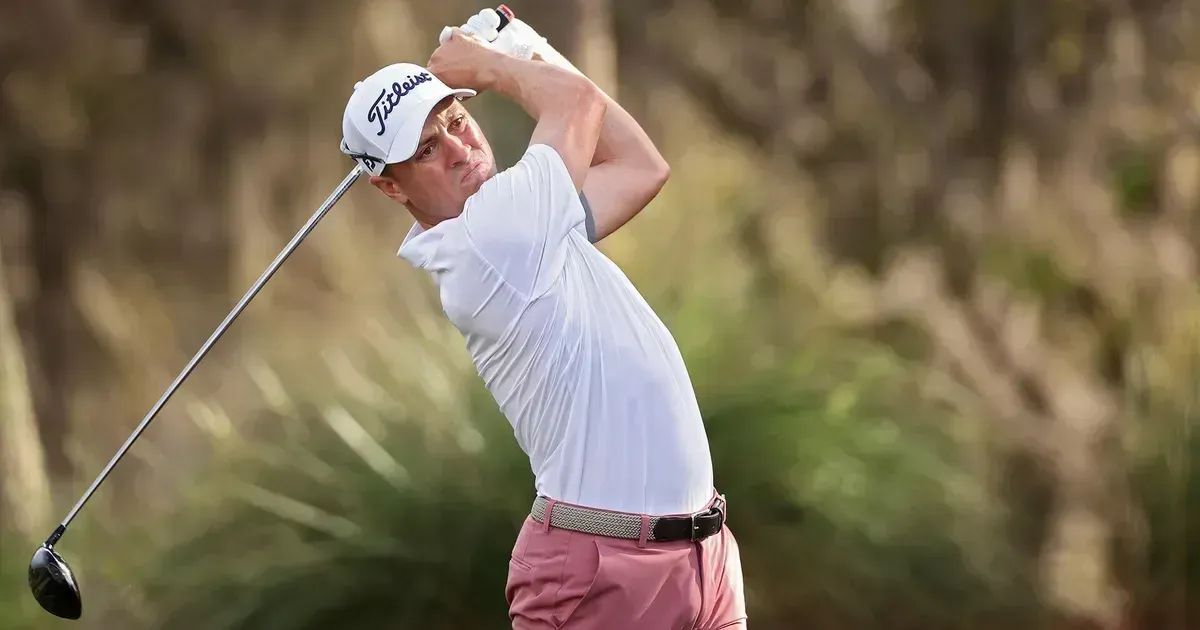
Thomas Finds Form at Sawgrass
Ponte Vedra Beach witnessed a jarring contrast in fortunes Thursday when the 2026 Players Championship opened under a canopy of high expectations and shifting winds. Justin Thomas, a golfer who seemed lost in a thicket of mechanical errors just seven days ago, suddenly found clarity on the treacherous corridors of TPC Sawgrass. The update was dated March 13, 2026.
His performance suggested a man who had successfully discarded the psychological baggage of consecutive 79s in favor of the precision required to handle one of the sport's most unforgiving venues. Thomas occupies a position near the summit of the leaderboard, eyeing what would be a second career victory at this event. Scorecards across the field reflected the volatility that Pete Dye famously baked into the Stadium Course.
While Thomas surged, five players secured a share of the early lead, including Sepp Straka and Sahith Theegala. Their consistency stood in opposition to the difficulties faced by the defending champion. By the time the afternoon shadows lengthened across the property, the leaderboard resembled a puzzle where established stars and hungry challengers fought for every inch of bermudagrass. Straka and Theegala occupied spots in a crowded five-way tie for the lead.
Rory McIlroy walked off the eighteenth green having signed for a 2-over 74, a score that left him eight shots adrift of the leaders. Much of the pre-tournament conversation focused on his physical condition, yet the Northern Irishman was quick to dismiss health as the primary factor for his poor start. He pointed to competitive rust rather than his back as the catalyst for his wayward ball-striking. McIlroy noted that his body felt fine despite the sluggish nature of his play. His title defense now rests on a razor-thin margin as he prepares for Friday's second round.
McIlroy Faces a Cut-Line Fight
Sky Sports reports characterized his start as sluggish, a description that aligns with the visual evidence of a player struggling to find his rhythm. The disconnect between McIlroy's off-season work and his on-course execution became apparent through several errant drives and missed opportunities on the greens.
ESPN sources confirmed that although the back injury was a concern in previous weeks, the golfer himself feels the issue is mental sharpness. Whether a 74 is salvageable at Sawgrass remains a topic of intense debate among the gallery. Justin Thomas appears to have unlocked a version of his game that vanished during his recent outings.
His turnaround is particularly striking given the magnitude of his failure only one week prior. Golf is a game of short memories, but carding two 79s in a row usually leaves scars that take months to heal. Thomas bypassed that recovery period entirely by posting a score that puts him in prime contention for the $25 million purse. His approach shots into the par-four ninth showcased a level of control that few others matched during the morning wave. Five players currently dictate the pace of the tournament. Sepp Straka and Sahith Theegala are utilizing a strategy of aggressively conservative play, attacking pins only when the wind dies down. Their presence at the top of the leaderboard complicates the path for more famous names trying to claw back into the mix. Unlike the major championships where the course often dictates a single style of play, Sawgrass allows for various avenues to success.
The rebound matters because Sawgrass rarely gives struggling players an easy landing. A confident round there can change the week quickly, but it also tests whether the correction survives wind, water and Friday pressure. Thomas still has to prove the improvement is more than a one-day feel, while McIlroy must turn a defensive second round into a survival exercise. A course with water in the closing stretch can turn one impatient swing into a weekend spent chasing. The field’s shape also matters: with several players already tied near the top, a famous name cannot wait until Saturday to recover. Friday is where a bad start either becomes a manageable blemish or turns into an early exit.
That is why the second round carries more weight than the leaderboard alone suggests. Thomas needs confirmation that his swing fix can hold under tournament pressure, while McIlroy needs a round that changes the tone before the cut arrives.