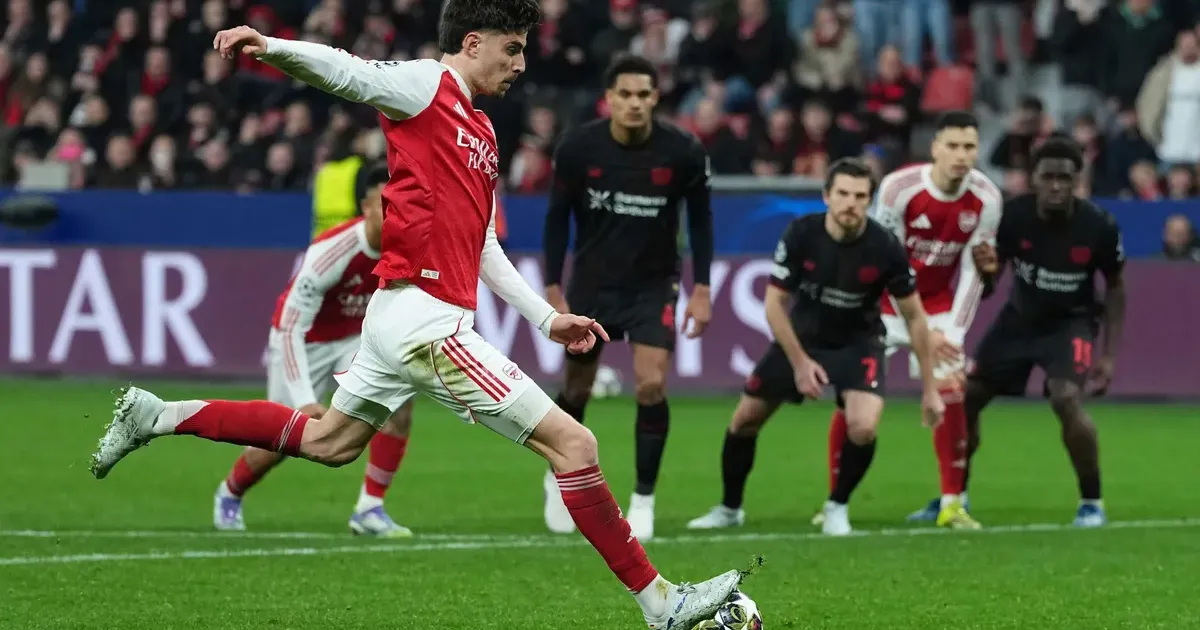
Kai Havertz’s late penalty rescued Arsenal from a frustrating night against Leverkusen and changed the tone of the tie. The first leg turned on March 11, 2026
Havertz Turns Return Into Damage Control
Kai Havertz stood over the penalty spot at the BayArena, facing the supporters who once sang his name with adoration. Eighty-nine minutes of grueling football had passed, and the scoreboard showed Bayer Leverkusen leading by a single goal. Pressure did not break the German forward. He struck the ball with a clinical precision that silenced the home crowd, securing a 1-1 draw for Arsenal in the first leg of this Champions League round-of-16 tie. Xabi Alonso watched from the touchline with a mask of stoic frustration. His Leverkusen side had controlled the rhythm for nearly the entire evening, yet a momentary lapse in the final minutes allowed the Premier League giants to escape with a key result.
Havertz converted the late chance that changed the tone of the tie, turning a Leverkusen win into an Arsenal escape.
Arsenal struggled to find their usual fluidity throughout the first half. Leverkusen's defensive structure remained compact, forcing Mikel Arteta's men into wide areas where they were easily neutralized. Granit Xhaka, another familiar face in this fixture, patrolled the midfield with a veteran's sense of timing. He broke up Arsenal's play before it could ever reach the dangerous front three. Leverkusen looked the more likely to score from the opening whistle, utilizing the pace of their wing-backs to stretch the Arsenal backline. When the breakthrough finally came for the hosts, it felt earned.
BayArena erupted in a collective roar that seemed to shake the very foundations of the stadium. Arteta reacted by shifting his tactical setup late in the second half. Replacing tired legs with fresh energy, he pushed Havertz into a more advanced role, gambling on the forward's intimate knowledge of the Leverkusen turf. Still, the German side appeared resilient.
Madrid and Paris Show the Wealth Gap
Every time Arsenal pushed forward, Jonathan Tah and his defensive partners stood firm. The match appeared to be heading for a narrow 1-0 Leverkusen victory until a chaotic scramble in the box led the referee to point to the spot. Replays showed a clear clip on the heel of an Arsenal winger. Havertz stepped up to handle the responsibility against his former employers. This result sets up a mouth-watering return leg at the Emirates Stadium. Arsenal now holds the psychological advantage of an away draw, even if the away-goal rule no longer provides the same mathematical cushion it once did.
Leverkusen will travel to London knowing they can outplay the Gunners, but they must find a way to maintain their focus for a full ninety minutes. Alonso will likely emphasize the missed opportunities in his post-match briefing. Losing a lead so late in a knockout match often haunts teams when they face the pressure of a second leg in a hostile environment. Manchester City and Real Madrid began their latest chapter in what has become the definitive rivalry of the modern era. Pep Guardiola and Carlo Ancelotti represent the two poles of elite coaching, one obsessing over positional play and the other prioritizing individual brilliance and structural adaptability. Real Madrid hosted the first leg at the Bernabeu, a venue that has seen more European miracles than any other.
City arrived with the confidence of defending champions, looking to dictate the tempo through Rodri and Kevin De Bruyne. Each encounter between these two sides feels like a final, played out across 180 minutes of high-intensity tactical chess. Early exchanges in Madrid suggested a cautious approach from both sides.
Why Champions League Drama Feels Rigged
Why do we continue to celebrate a tournament that has become a closed loop for the hyper-wealthy? European football is currently cannibalizing itself in favor of a recurring cast of characters that ensures the same six or seven clubs dominate every spring. The late drama at the BayArena or the tactical nuances in Madrid cannot mask the reality that the Champions League is no longer a competition of merit but a competition of resources. Leverkusen remains one of the rare exceptions, a team built on scouting and coaching rather than bottomless oil wells or sovereign wealth funds. Their inability to hold a lead against a financially superior Arsenal is a predictable symptom of the current sporting climate. Arteta and Guardiola are hailed as geniuses, yet they operate with budgets that would sustain entire leagues in smaller nations.
Bayer Leverkusen is a rare exception to the rule, a team built on scouting and coaching rather than bottomless oil wells or sovereign wealth funds.
We are asked to marvel at the tactical complexity while ignoring the fact that the deck is stacked from the moment the group stages are drawn. True sporting drama requires the possibility of a genuine upset, a concept that is becoming increasingly rare in the knockout rounds. Unless UEFA addresses the massive financial disparity between the top ten clubs and the rest of the field, this tournament will continue to feel like a high-budget remake of the same movie every year. The fans deserve a competition where the winner isn't determined by the size of their bank account before the ball is even kicked.