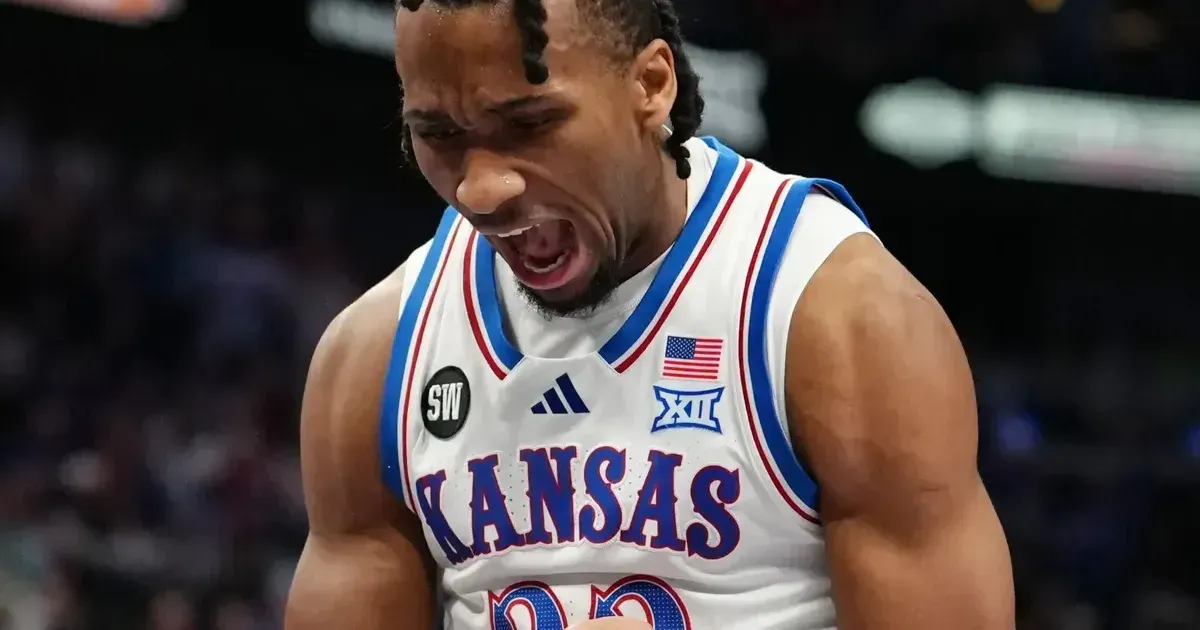
Kansas City serves as the epicenter of the college basketball world tonight as the T-Mobile Center hosts two of the most anticipated matchups in the Big 12 Tournament. Two heavyweights prepare for a collision that will define the narrative of the conference before the national brackets are finalized. Houston enters the arena as the top seed, a position earned through a season of relentless defensive pressure and disciplined half-court execution. Their opponent, the Kansas Jayhawks, brings a legacy of postseason success and a roster that has finally found its rhythm after a volatile regular season. By March 12, 2026, Kansas and Houston had turned the Big 12 bracket into a tactical test. The atmosphere in the arena is expected to favor the regional favorites from Lawrence, but the oddsmakers in Las Vegas remain focused on the numerical dominance of the Cougars. Betting markets opened with Houston as a 6.5-point favorite.
Still, the prevailing sentiment among professional handicappers suggests that fading the favorite might be the strategic play for Friday night. Analysts from the NY Post have pointed toward Kansas as a live underdog capable of disrupting the Cougars' rhythm. Bill Self has historically excelled in the semifinal round, often utilizing tactical adjustments that neutralize high-pressure defenses. Houston relies on a system that suffocates ball handlers and limits second-chance opportunities. This defensive intensity has carried them to a 28-4 record, but it has occasionally sputtered when faced with elite shot-making. Kansas has the personnel to challenge that efficiency if their perimeter shooters remain consistent. The Jayhawks rank in the top twenty nationally for effective field goal percentage.
Houston Defense Challenges Kansas Offense
Houston built its reputation on a grueling defensive scheme that forces opponents into long, contested jumpers as the shot clock expires. They allow only 56.4 points per game, the lowest mark in the Big 12. In fact, their adjusted defensive rating is among the best seen in the modern era of the sport. Success for the Cougars begins with their ability to control the glass. They frequently out-rebound opponents by double digits, effectively ending possessions after a single miss. However, Kansas presents a unique challenge because of their high-low passing game and the presence of dominant interior scorers. If the Jayhawks can bypass the initial wave of pressure at the timeline, they can exploit the space behind the Houston defensive shell. Data from the last three head-to-head meetings shows that the winning team consistently won the points-in-the-paint battle.
Meanwhile, the health of the Kansas roster remains a focal point for bettors heading into the tip-off. Injuries plagued the Jayhawks during the late stages of February, leading to a slide in the conference standings. Recent performances suggest those concerns have largely dissipated as the primary rotation players have returned to full strength. The Jayhawks moved through the quarterfinal round with a clinical performance that highlighted their depth. Betting volume on Kansas +6.5 has increased steadily throughout the morning session. Some offshore books have already moved the line to 6.0 in anticipation of heavy late action from the public. The game is scheduled to begin at 7 p.m. local time.
Iowa State Defensive Schemes Test Arizona Shooters
Arizona entered the Big 12 with high expectations and a roster built for speed, yet they now face an Iowa State team that thrives on slowing the game to a crawl. The Wildcats lead the conference in transition points and fast-break opportunities. They prefer a chaotic pace that allows their guards to attack the rim before the defense can set. By contrast, the Cyclones use a no-middle defense designed to funnel ball handlers into traps near the sidelines. This clash of styles represents the most significant tactical puzzle of the tournament. Iowa State leads the nation in turnover percentage, forcing a giveaway on nearly 25% of all defensive possessions. If Arizona cannot protect the basketball, their scoring runs will be cut short by the methodical pace of the Cyclones. The total for this game is set at 142.5 points.
SportsLine's analytical model has simulated this specific matchup thousands of times to identify where the value lies for bettors. The model accounts for adjusted tempo and individual player matchups that often escape the casual observer. In particular, the battle between the Arizona frontcourt and the Cyclone interior defenders will likely decide the outcome. Arizona shoots nearly 38% from beyond the arc as a team. This proficiency forces defenders to stay attached to shooters, leaving the lane vulnerable to penetration.
SportsLine's model simulated Iowa State Cyclones vs. Arizona Wildcats and revealed its college basketball picks for this 2026 Big 12 Tournament semifinal matchup.
Big 12 Tournament Betting Trends and Value Picks
Betting trends for the 2026 tournament show a distinct lean toward the under in games involving Iowa State. The Cyclones have seen the under hit in seven of their last ten contests. Their ability to drain the clock on offense while denying easy looks on defense makes them a favorite for conservative bettors. Separately, the handle for the Big 12 semifinals is expected to exceed $1.2 billion across legal US sportsbooks. The surge in volume reflects the growing mainstream acceptance of sports wagering and the high profile of the teams involved.
Kansas and Arizona remain the most popular picks for the general public, while professional groups have shown more interest in the defensive underdogs. Market volatility is expected to peak approximately thirty minutes before the first tip-off.
Defense wins championships in winter, but offense survives the madness of March. The analytical shift is visible in how the lines are moving for the evening session. While the Houston defense remains the most respected unit in the country, the betting public is increasingly skeptical of their ability to cover large spreads against elite competition. The Cougars are 12-18 against the spread this season. The poor performance against the number suggests that their wins, while frequent, are often narrower than the market anticipates. Professional bettors often look for these discrepancies between a team's win-loss record and their performance against the spread. Kansas has covered in four of its last five games as an underdog. The game total for the early session has stayed steady at 134.5 points.
Computer models have become the primary tool for high-stakes gamblers looking to edge out the house. These systems use machine learning to weigh variables like altitude, travel fatigue, and individual officiating tendencies. The 2026 Big 12 Tournament has provided a wealth of data for these algorithms. For one, the shooting environment at the T-Mobile Center has historically favored teams that attack the rim rather than relying on the three-point line. The sightlines in the arena can be difficult for perimeter-oriented teams to adjust to during the first half. Models that prioritize interior scoring and free-throw frequency have outperformed the market throughout the quarterfinal round. Arizona averages 22 free-throw attempts per game.
In turn, the Iowa State defensive pressure often leads to a high number of fouls, which could negate their defensive advantage if the officiating crew is tight. Even so, the Cyclones have shown a remarkable ability to adjust their aggression based on how the game is being called. Their coaching staff spends hours reviewing official tendencies before every postseason game. The preparation allows them to maintain their intensity without sending the opponent to the line. Betting markets have rarely seen a spread this thin for a top-seeded team in the semifinals.
Most analysts expect a one-possession game regardless of which team eventually advances to the Saturday final. The winner of the Arizona and Iowa State game will face either Houston or Kansas for the championship. The tournament remains the ultimate test of endurance and tactical flexibility before the national tournament begins.
Big 12 Matchup Tests Both Profiles
Kansas and Houston make this semifinal more than a neutral-court betting puzzle. One side is trying to prove its late-season rhythm is real, while the other is defending a season-long identity built on pressure and control. The winner gets more than a place in the final; it gets the cleaner national argument before the bracket locks.