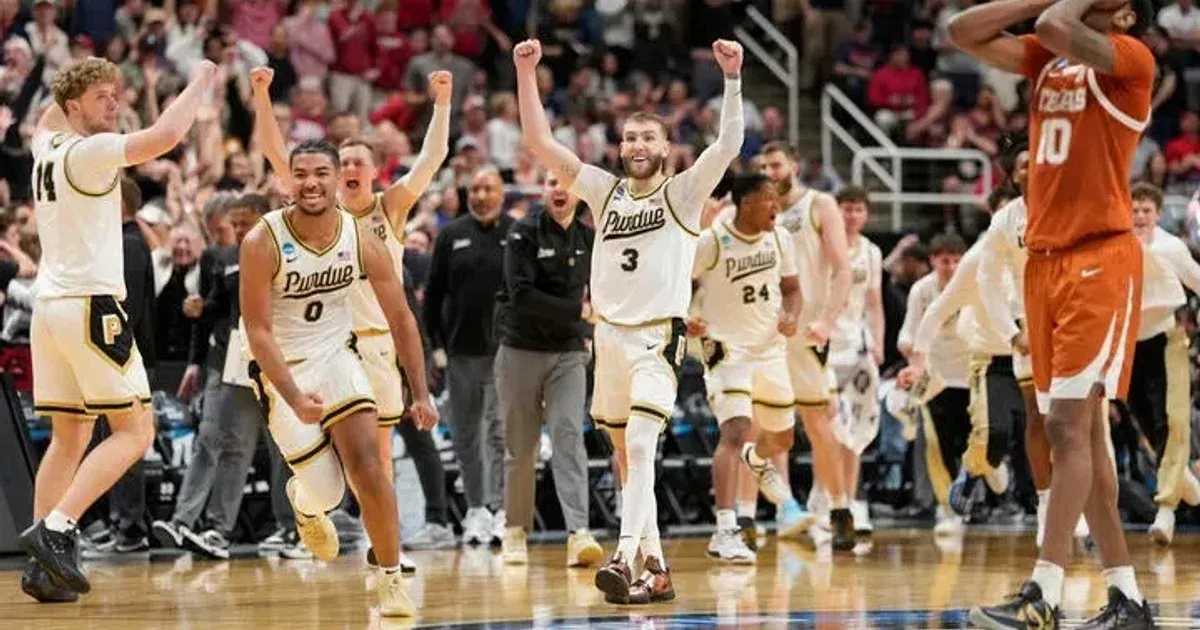
Trey Kaufman-Renn lifted Purdue past Texas with a last-second tip-in that turned a tense Sweet 16 game into another defining March moment. By March 27, 2026, the finish had become the defining clip from the regional. The Boilermakers won 79-77 after Braden Smith drove into the lane and missed a close shot that Kaufman-Renn followed perfectly. His touch came with 0.7 seconds left, leaving Texas without enough time to answer.
The finish matched the rhythm of a game that never fully settled. Purdue had size, experience and a late lead. Texas had shot-making, injury toughness and enough defensive grit to keep dragging the game back into reach. The Longhorns forced the final possession to matter, but they could not finish the last rebound.
For Purdue, the win reinforced the value of senior timing. Kaufman-Renn did not need the play called for him to decide the game. He read the miss, found space and beat Texas defenders to the ball at the only moment that mattered.
Purdue Survives Texas Pressure in Final Minute
Braden Smith gave Purdue direction throughout the closing stretch. His late drives forced Texas to collapse, and that pressure created the final second-chance look. Even when his last shot missed, the attack put the ball close enough to the rim for Kaufman-Renn to finish the play. Texas had tied the game shortly before the final possession, turning the last sequence into a test of composure. Purdue called timeout and trusted its primary creator. The design produced penetration, and the rebound produced the winner. The Boilermakers did not dominate every phase, but they were cleaner when the game became physical. They found enough paint touches, protected the ball late and used their frontcourt presence to punish Texas for being a step slow on the final bounce.
Texas Guards Played Through Serious Injuries
Texas kept the game alive because its guards refused to disappear. Tramon Mark scored with confidence even after a painful second-half landing limited his movement. His shot-making kept Purdue from stretching the lead and forced the Boilermakers to defend deep into the clock. Jordan Pope also played through a foot injury that would have sidelined many players. His minutes gave Texas spacing and another ballhandler, even though the injury clearly affected his lateral quickness. The Longhorns needed every piece of guard production to stay close.
"I couldn't break it any more, so there wasn't much of a high-risk for the actual injury," Pope said.
The injury context matters because Texas had little margin for error. Every defensive rotation became harder as the game slowed and Purdue continued attacking the lane. By the final possession, one missed box-out carried the weight of the entire night.
Late Foul Strategy Shaped the Ending
Purdue's late decisions showed how thin the tactical line can be in tournament basketball. Fouling while ahead by three can prevent a tying shot, but it also extends the game and forces clean execution at the free-throw line. Texas used those chances to stay within one possession.
The Longhorns then created the pressure needed to tie the game, setting up the final Purdue possession. That sequence reflected Texas' best trait: persistence. The team had survived injuries, foul pressure and Purdue's interior size long enough to make one defensive rebound the deciding play. Kaufman-Renn's tip-in will be remembered as instinct, but it also came from Purdue's repeated commitment to the paint. The Boilermakers kept asking Texas to finish possessions physically. On the last play, Texas could not do it.
Elite Eight Berth Rewards Purdue Experience
The victory sends Purdue back to the Elite Eight and keeps alive a season built around experienced decision-making. Tournament games often punish teams that rely only on structure. Purdue survived because its veterans knew how to create a second chance when the first option failed. Texas leaves with a painful ending but not an empty performance. The Longhorns showed enough toughness to push a higher seed to the final second. Their run ended on a rebound, not a collapse. For Purdue, the lesson is sharper. The Boilermakers advanced, but the next round will demand more consistent control. A last-second tip-in is a celebration and a warning at the same time: in March, survival is success, but survival also reveals what still needs fixing.
The final possession also showed why tournament experience is hard to measure before a crisis arrives. Purdue did not need a perfect play; it needed enough spacing, enough calm and one player willing to chase the miss. Texas defended the first action well enough to win many games, but March often turns on the second action. That detail will follow both teams. Purdue can point to resilience and late execution, while Texas will replay the box-out and the injured minutes that made the finish so difficult. The scoreboard records a two-point game, but the emotional gap between an Elite Eight berth and an abrupt exit is far wider.