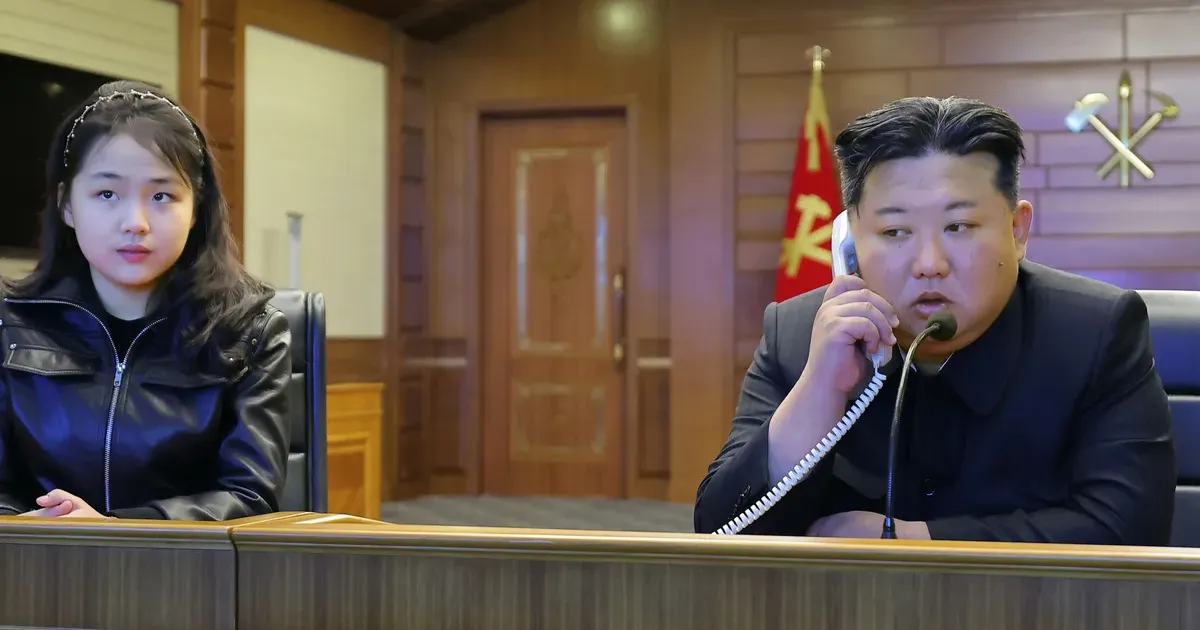
Kim Jong Un’s daughter has become part of North Korea’s missile-stage choreography, giving succession questions a sharper image. The imagery circulated on March 12, 2026
Missile Tests Become Family Theater
Pyongyang's damp March air carried the smell of cordite as Kim Jong Un leaned over a metal workbench, his daughter standing inches away from the cold steel of a newly manufactured handgun. Moving with a practiced familiarity that belies her estimated thirteen years of age, the girl known to the world as Kim Ju-ae watched as her father examined the grip and sights of a weapon destined for the front lines. Korean Central News Agency reports from suggest this was more than a routine inspection. Father and daughter reportedly tested the pistols together, a symbolic gesture of continuity for a regime that increasingly ties its survival to a hereditary bloodline armed with advanced ballistics and small arms alike. Military observers in Seoul and Washington have noted a sharp increase in the frequency of these public appearances. Ju-ae is no longer merely a curious bystander or a prop for soft-power propaganda. Instead, she has become a permanent fixture in the nation's most aggressive military displays. Recent intelligence assessments from South Korea indicate that the North Korean leader is accelerating the process of designating her as his official successor. Such a move would break decades of patriarchal tradition in the Hermit Kingdom, yet the optics provided by state media suggest the groundwork is being laid with meticulous care. The staging placed the succession question directly beside missile deterrence.
Succession Signals Stay Deliberately Ambiguous
Ju-ae's presence at a munitions factory marks a shift from her earlier appearances at missile parades. By placing her in a setting where she handles hardware directly, Kim Jong Un communicates that his heir is being groomed not just as a figurehead, but as a commander. This young girl now regularly appears in settings that were once the exclusive domain of senior generals and party elites. Her wardrobe, often a dark, formal coat reminiscent of her father's signature style, further emphasizes her role as the 'respected daughter' and future guardian of the Kim family legacy. Succession in North Korea remains an opaque process, but the patterns are hard to ignore. While the munitions factory visit focused on the personal and the tactical, a much larger display of force occurred only twenty-four hours earlier. Kim Jong Un and his daughter were photographed in a command center on Tuesday, watching a high-definition video feed of cruise missile launches. These weapons were fired from the Choe Hyon, a destroyer that has been in active service for exactly one year. The missiles reportedly traveled across the sky before striking target islands off the nation's west coast, proving the growing reach of Pyongyang's naval strike capabilities.
The Optics Are Meant for Foreign Audiences
KCNA reported that the launches were intended to familiarize naval crews with the technical aspects of firing their newest ship-borne systems. Kim Jong Un stressed the necessity of maintaining a strategy of deterrence that is both powerful and reliable. Ju-ae sat by his side throughout the briefing, her eyes fixed on the screens as the missiles found their marks. This military theater coincided with joint military exercises between the United States and South Korea, drills that Pyongyang routinely characterizes as a dress rehearsal for an invasion. This display of naval strength is a direct rebuttal to those allied maneuvers. Military analysts suggest the Choe Hyon is a significant upgrade in North Korean maritime technology. Most of the fleet consists of aging vessels from the Soviet era, but this newer class of destroyer indicates a focus on modernizing the navy to include precision-guided cruise missiles. These weapons fly at lower altitudes than ballistic missiles, making them harder for regional radar systems to track and intercept.
By testing them under the watchful eyes of his daughter, Kim Jong Un is tying the future of the nation's defense to her eventual leadership.
Pyongyang Is Selling Continuity
The math doesn't add up for those hoping for a diplomatic thaw. Kim Yo-jong, the leader's powerful sister, remains a key player in this unfolding drama. While Ju-ae represents the future, Yo-jong serves as the aggressive voice of the present. On the same day the cruise missiles were launched, she issued a blistering warning regarding the ongoing US-South Korean drills.
Her rhetoric was characteristically sharp, describing the exercises as a sign of the deep-seated repulsion the North feels toward its neighbors. Such a dynamic creates a dual-track propaganda machine: the sister handles the daily diplomatic and verbal warfare, while the daughter is showcased as the long-term embodiment of the state's military resolve. Images released by state media showed the father-daughter duo in a conference room, isolated from the world but in total control of the destructive power at their fingertips. No senior officials were visible in the immediate vicinity during several of these shots, highlighting the central role of the family unit over the traditional party apparatus.
Intelligence officials in the West are debating whether this elevation of Ju-ae is causing friction among the military brass, but so far, the public image remains one of total unity.
A Child in the Frame Is a Strategic Message
Kim Jong Un placed his daughter prominently in missile test imagery. The staging raised questions about succession, elite loyalty and regime continuity. North Korea uses weapons displays for domestic legitimacy and foreign deterrence. The daughter's role remains ambiguous, but the symbolism is too deliberate to dismiss.
This does not formally confirm succession. It signals possibility and continuity while North Korea keeps the final decision opaque. Weapons imagery ties the family line to national security, military loyalty and regime strength, which is exactly why the staging matters.