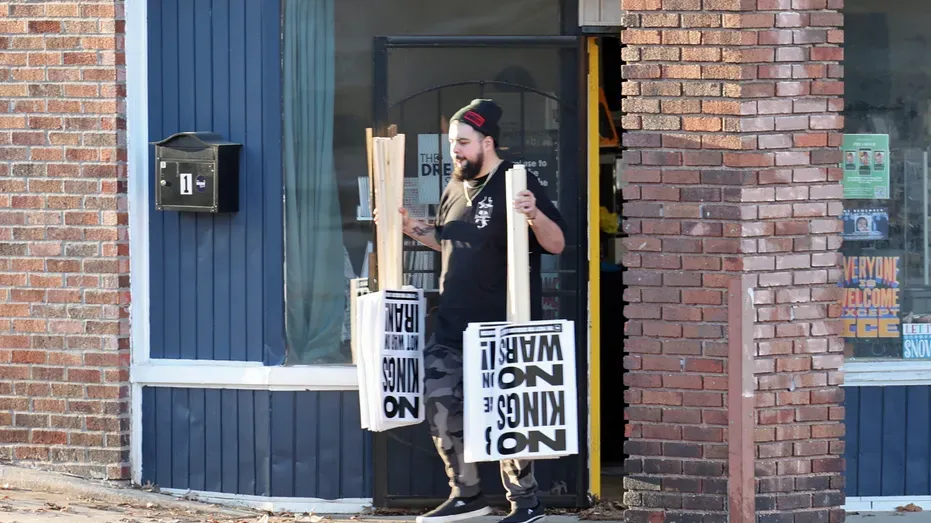
The No Kings protests gave the Trump administration a nationwide display of organized opposition and gave both parties a new argument about political legitimacy. On March 28, 2026, rallies were reported across thousands of U.S. cities and towns, with flagship events drawing attention from national outlets and local authorities. The demonstrations mixed anger over executive power, fear about democratic norms and a highly coordinated organizing operation.
The scale is the first important fact. Organizers and media reports described one of the broadest protest days of Trump’s second term, with events ranging from large metropolitan marches to smaller town gatherings. That geographic spread matters because it prevents the White House from dismissing the movement as a single-city phenomenon. The protests were designed to look national, and in media terms they achieved that goal. The second fact is the fight over who stands behind the movement. Mainstream coverage emphasized turnout, slogans and opposition to Trump. Conservative reporting focused on the advocacy network, donor infrastructure and participation by socialist groups. Both angles are part of the story. A protest can be authentically attended and also professionally organized.
That distinction is essential for understanding the political effect. If the rallies are treated only as donor-driven theater, the genuine anger of participants disappears. If they are treated only as spontaneous outrage, the sophisticated infrastructure that made the day possible is ignored.
National Turnout Gives No Kings Political Weight
Large protest days do not automatically change policy, but they can change the atmosphere around a presidency. The No Kings slogan is built to frame Trump as a threat to republican norms rather than merely as a partisan opponent. That gives the movement a simple message that can travel across states, age groups and issue-specific coalitions.
Photos and live reports from multiple cities showed crowds using similar branding and language. That consistency helped the movement project unity. It also gave critics an opening to argue that the protests were not spontaneous civic expression but centrally shaped activism. The truth is likely less tidy. National organizations can provide templates, while local anger supplies the bodies. For Democrats and allied groups, the rallies offer proof that anti-Trump energy remains mobilizable. For Republicans, the same images can be used to warn of elite-funded resistance and radical influence. That dual use is why protest politics often hardens both sides at once.
The immediate question is whether the turnout can survive beyond a single coordinated day. Protest movements often peak visually before they build institutional leverage. The No Kings network will need follow-up actions, legal strategy and electoral pressure if it wants to become more than a powerful weekend image.
Funding Claims Shape the Backlash
Reports about a network of roughly 500 groups with large combined revenues became a major conservative counter-narrative. Fox News and other critics highlighted donors, umbrella organizations and the presence of left-wing groups to argue that the demonstrations were part of a professionalized opposition industry. Those claims should be read as political framing, but they cannot be ignored because the infrastructure behind modern protest is real.
Organizations such as Indivisible have built durable systems for permits, messaging, volunteer coordination and rapid mobilization. That does not make every participant a paid activist. It does mean that national protest waves require logistics: signs, routes, legal observers, media strategy, security coordination and digital promotion. The more effective the protest, the more visible that machinery becomes. The most sensitive allegations involve radical or socialist groups participating in flagship events. Their presence can influence imagery and rhetoric, but it does not necessarily define the whole movement. A careful reading separates verified participation from attempts to paint every marcher with the most controversial association available.
St. Paul Shows the Mechanics of a Modern Protest
The Minnesota State Capitol event illustrated how national branding becomes a local action. Organizers prepared signs, coordinated volunteers and promoted a clear message before crowds arrived. Local law enforcement monitored the event, while national media treated it as one node in a much larger map. That is how modern protest works: decentralized enough to spread, coordinated enough to look coherent.
The movement’s message also benefited from timing. Trump’s second-term agenda has produced intense reaction from civil-rights groups, labor organizations, immigrant advocates and progressive activists. “No Kings” provides a broad umbrella under which many grievances can gather without requiring every participant to share the same policy priority.
The risk for organizers is message dilution. A slogan that welcomes everyone can also become vague. If the movement wants influence beyond turnout, it will need to convert anti-authoritarian language into specific pressure on courts, Congress, state governments and public opinion. That requires priorities, and priorities can fracture broad coalitions. The same umbrella that makes a rally large can make a legislative agenda harder to define.
Protest Wave Organizing Pressure
The protests test more than Trump’s popularity. They test whether mass demonstrations still have leverage in a fragmented media environment. Supporters see civic resistance; opponents see choreographed spectacle. Each side consumes a different version of the same street scene.
That does not make the rallies meaningless. Visible dissent can sustain morale, recruit new activists and show elected officials that anger is organized. It can also provoke backlash if the movement appears disconnected from ordinary voters or too dependent on professional advocacy networks. The balance between authenticity and infrastructure will define how No Kings is understood after the images fade. The most honest conclusion is that the movement is both real and organized. People came out because they wanted to, and organizations helped them do it at scale. The White House can dismiss the organizers, but it cannot ignore the turnout. The organizers can celebrate the turnout, but they cannot pretend the funding and coalition questions are irrelevant. That tension is now part of the movement’s identity. It will shape how the next protest is covered before the first sign is printed, because both sides now understand the optics and the counter-message. The movement’s next challenge is therefore organizational maturity. It must show that the coalition can absorb scrutiny without narrowing into a defensive argument about donors and labels. If it cannot, opponents will make the funding story larger than the protest demands themselves. That is the strategic vulnerability of a broad protest brand: the easier it is to join, the harder it is to define who speaks for it. The next stage will show whether No Kings is a durable civic network or a highly successful mobilization day. That answer will matter more than the first weekend’s crowd count or the next round of partisan cable coverage around the movement.