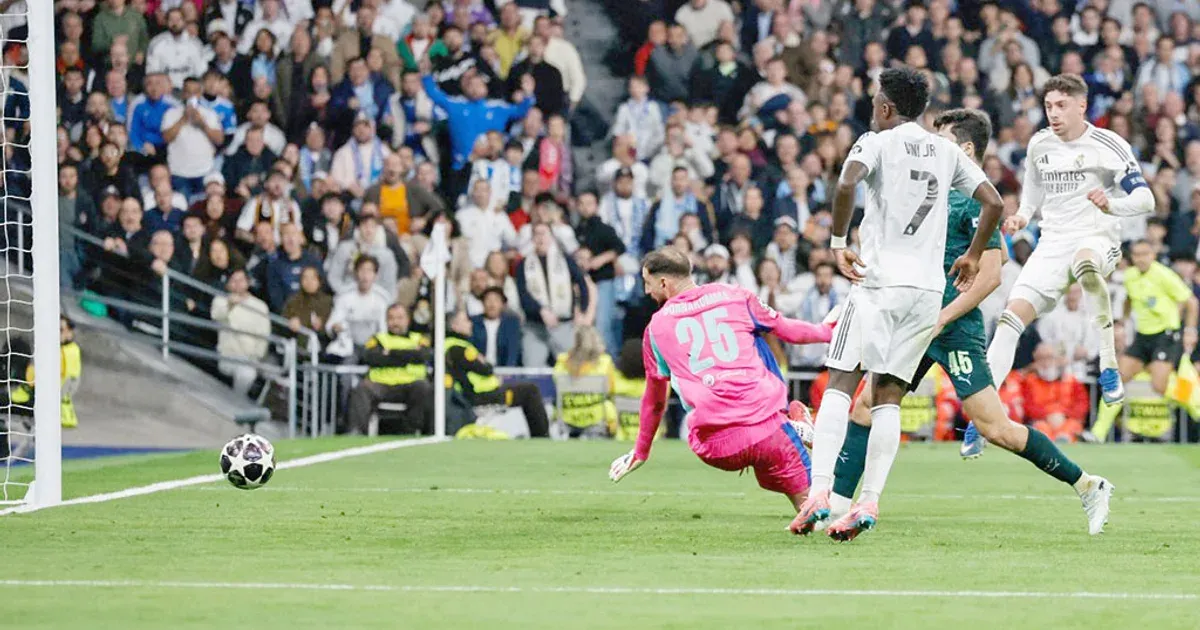
Kvaratskhelia’s double in Paris left Chelsea staring at a European defeat shaped by speed, pressure and poor control.
Nightmare in Paris for Rosenior
Paris felt like a fortress on Wednesday night as the defending European champions reminded the world why they still hold the crown. On March 12, 2026, the result changed the tone of the tie and left Chelsea with almost no European margin for error. Chelsea arrived at the Parc des Princes with hope and a tactical blueprint designed to frustrate, yet they left with their Champions League ambitions in tatters. Chelsea collapsed under PSG's late pressure, eventually succumbing to a 5-2 defeat that leaves their continental season hanging by a thread. While the London club showed flashes of brilliance by twice clawing back level, the final twenty minutes revealed a gulf in class that no amount of optimism could bridge. Pressure mounted early when the hosts asserted dominance through superior ball retention and a terrifyingly high defensive line. Paris Saint-Germain looked every bit the title holders, moving the ball with a telepathic rhythm that left Chelsea midfielders chasing shadows for long stretches of the first half. Fans in the stands witnessed a spectacle of technical proficiency that Chelsea struggled to match despite their energetic start. Success for the visitors depended on defensive discipline, but that discipline evaporated during a chaotic closing spell. Jørgensen will see that misplaced pass in his nightmares for years.
Liam Rosenior watched from the touchline as his side collapsed under the pressure of relentless French pressure, eventually succumbing to a 5-2 defeat that leaves their continental season hanging by a thread.
Filip Jørgensen became the unintended protagonist of the evening when a single lapse in judgment turned a competitive contest into a rout. Chelsea had impressed many observers by pegging PSG back twice, showing a resilience that suggested Rosenior had prepared them for the biggest stage. But the philosophy of playing out from the back, so central to the modern game, proved to be their undoing. Jørgensen attempted a risky short ball to a marked defender, only for the PSG press to pounce with lethal efficiency. This specific failure of execution gifted the European champions an advantage they never looked likely to relinquish.
Khvicha Kvaratskhelia stepped into the spotlight to ensure the mistake was punished to the fullest extent. The Georgian international demonstrated why he remains one of the most feared attackers in world football, netting two late goals that effectively killed the tie as a contest. His movement between the lines and clinical finishing stood in sharp contrast to Chelsea's increasingly desperate defending. Kvaratskhelia seemed to find another gear when the game entered its final phase, leaving Chelsea's backline flat-footed and exhausted. His second goal was a strike of such individual brilliance that even the travelling supporters could only watch in stunned silence.
Chelsea simply ran out of answers.
Liam Rosenior refused to publicly condemn his goalkeeper, opting instead to protect a player who was clearly distraught. The manager stayed firm in his belief that his system remains the correct path for the club's development. Critics will argue that such tactical rigidness is a luxury Chelsea cannot afford in knockout football. It is one thing to play expansive football in the Premier League, but another entirely to attempt it against the most efficient pressing machine in Europe. The decision not to hook Jørgensen or shift to a more pragmatic style late in the game will likely haunt Rosenior in the coming weeks. While some reports suggested a switch to a more conservative five-at-the-back formation was planned, the changes never materialized on the pitch.
Parisian depth played a massive role in the final scoreline as fresh legs overwhelmed a tiring Chelsea squad. Luis Enrique utilized his bench perfectly, introducing quality that most teams would kill for in their starting eleven. Lee Kang-in entered the fray in the second half, adding a layer of creativity and energy that Chelsea's weary defenders could not handle. The South Korean international linked up seamlessly with Kvaratskhelia and the rest of the PSG attack, stretching the pitch and creating the gaps that led to the late flurry of goals. This 5-2 scoreline reflects not just a difference in starting talent, but a disparity in the resources available to both managers.
Statistics from the match tell a grim story for the Londoners, who despite having 45% of the possession, failed to create meaningful chances once PSG took the lead for the third time. The holders scored three goals in the final twenty minutes, a surge that spoke to their physical conditioning and mental toughness. Chelsea's defense, which had looked solid for over an hour, looked porous and disorganized under the lights of the Parc des Princes. Every time the visitors tried to push forward for a third equalizer, they were hit on the break by a team that specializes in exploiting space.
Looking ahead to the second leg at Stamford Bridge, Chelsea faces a mountain that few teams in history have successfully climbed. Overcoming a three-goal deficit against the defending champions requires more than luck; it requires a tactical overhaul that Rosenior has yet to prove he can execute. PSG will arrive in London with the confidence of a team that knows how to manage a lead. The French side has shown time and again that they can absorb pressure and strike with clinical precision when the opponent overextends. Unless Chelsea can find a way to stop the supply line to Kvaratskhelia and protect their own goalkeeper from his own instincts, the return leg may be a mere formality.
History suggests that miracles happen in the Champions League, yet this PSG side feels different. They possess a maturity and a ruthlessness that was often missing in previous iterations of the club. Under their current leadership, the French giants have transformed from a collection of stars into a cohesive unit that understands the nuances of knockout competition. Chelsea is still a project in transition, a group of young players trying to find an identity under a manager who is still learning the ropes at this level. The gap between a project and a finished product was never more evident than it was tonight in the French capital.
Why Chelsea Need More Than Hope
Chelsea's problem is now both tactical and psychological. Kvaratskhelia's double did more than decide a match; it exposed how quickly the tie can move away from a side that loses control in transition.
The response has to be measured. Chelsea need cleaner ball security, sharper defensive cover and enough attacking patience to avoid chasing the second leg into another open game.