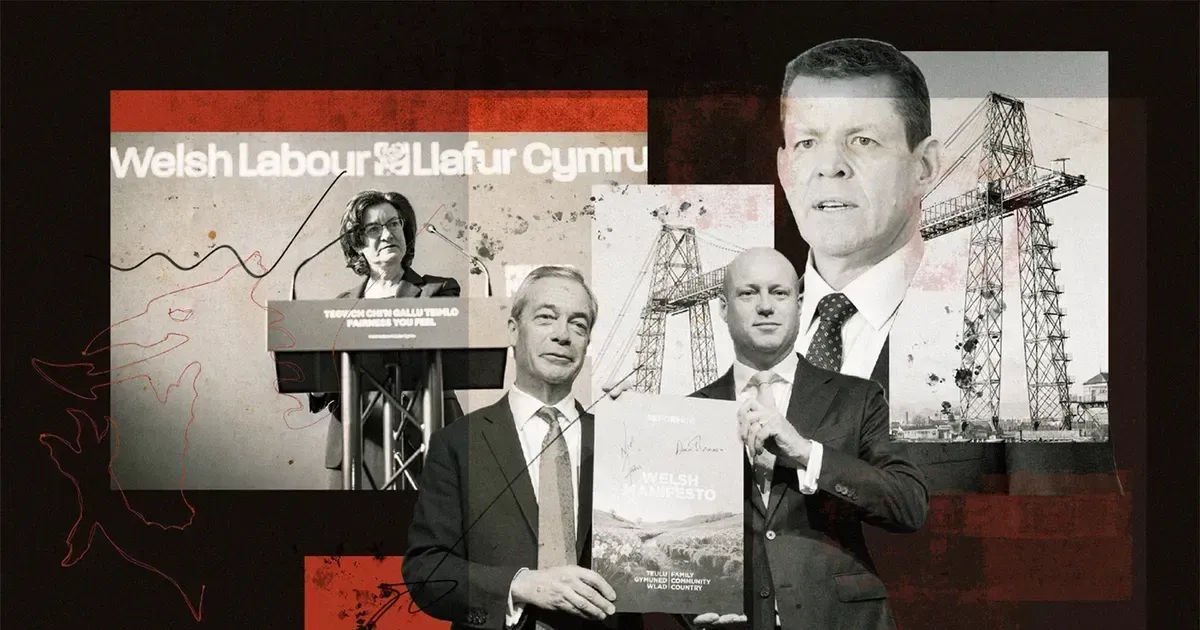
Welsh Labour's old stronghold did not just wobble in 2026. It broke. What had looked like a dangerous polling story before the Senedd election became a historic defeat after voters ended more than a century of Labour dominance in Wales and forced the party into a harsher argument about what it still represents.
The result was confirmed after the May 7, 2026, Senedd election, when Plaid Cymru emerged as the largest party and Welsh Labour fell far behind the position it once treated as natural. For Eluned Morgan and the wider Labour organization, the problem is no longer whether a collapse might happen. It is how to explain one that has already changed Welsh politics.
That distinction matters. Before the vote, Labour could frame the danger as a polling shock, a bad campaign cycle or a temporary protest. After the result, the party has to confront a deeper loss of political authority. Wales had been treated for decades as Labour's emotional reserve: the place where working-class loyalty, public-service politics and party history still seemed to hold together. That reserve is no longer secure, and the result has made that visible to every party trying to redraw the Welsh map.
Collapse Turns Polling Fear Into Fact
The most damaging part of the result is not only the seat count. It is the psychological change that follows a defeat in territory long treated as safe. Welsh Labour's historic collapse tells voters, rivals and party activists that old inevitability has gone. Once a party loses that aura, every future election becomes more expensive, more local and more volatile.
Plaid Cymru's rise gave voters a governing alternative rooted in Welsh identity and public-service criticism. Reform UK also turned discontent into momentum, showing that some former Labour voters were not moving in one direction but splitting across very different kinds of protest. That fragmentation makes recovery harder. Labour cannot answer it with one speech, one policy offer or one appeal to tradition.
Eluned Morgan's campaign had tried to project renewal in places such as Newport, where Labour's old coalition once felt natural. The challenge was always larger than one launch event. Voters were weighing NHS pressure, transport frustration, local economic insecurity and disillusionment with Westminster politics at the same time. A party that has governed for so long cannot campaign only as an alternative to someone else.
Newport Shows Why the Map Changed
Newport matters because it is not an abstract symbol. It is the kind of place where Labour's old Welsh coalition was built from industrial memory, public-sector expectations and families who expected the party to speak plainly about wages, housing and services. When that kind of place becomes uncertain, the problem is structural rather than cosmetic.
The Welsh NHS, schools, transport and local economies all shaped the mood around the election. National arguments set the weather, but constituency-level frustration usually decides whether a long-serving party survives. Labour's difficulty was that voters could blame Cardiff for devolved services while also punishing Westminster politics through the same ballot. That overlap made every answer sound partial.
The new Senedd system also made the break more visible. A more proportional election can convert diffuse discontent into representation more efficiently than an older map built around Labour habit. That gave Plaid Cymru and Reform UK a clearer route to turn anti-Labour feeling into seats, while Conservatives and smaller parties competed for voters who wanted change but not necessarily the same kind of change.
Wales Leaves Labour No Easy Reading
The result should worry Labour beyond Cardiff because it exposes the weakness of inherited loyalty. Plaid Cymru's Senedd breakthrough did not happen in a vacuum. It followed years of pressure over public services, cost of living, political fatigue and a sense that the Welsh Labour brand had become less distinct from the UK party's problems. That is the lesson Labour cannot soften. A party can survive a difficult election if voters still believe it understands the places it claims to represent. It cannot rely on history when daily experience points in another direction. The Welsh result suggests that old Labour areas now need persuasion, not assumption.
For Plaid Cymru, the challenge shifts from protest and insurgency to responsibility. Winning the argument against Labour is not the same as governing through public-service pressure, budget strain and rising expectations. Reform UK faces a different test: turning protest strength into durable Welsh organization rather than treating discontent as a one-cycle surge.
For Labour, the immediate task is more brutal. The party has to rebuild local credibility while accepting that its old dominance is over. That requires more than a new slogan or a change in campaign tone. It means explaining what Welsh Labour exists to do when voters have already proved they can imagine Wales without it in charge.
If Labour treats the result as a temporary punishment, it will misread the warning. The collapse in Wales was not just a bad night for a governing party. It was a signal that the strongest political identities can thin out when services feel strained, living costs stay high and rivals offer voters a believable way to break old habits.