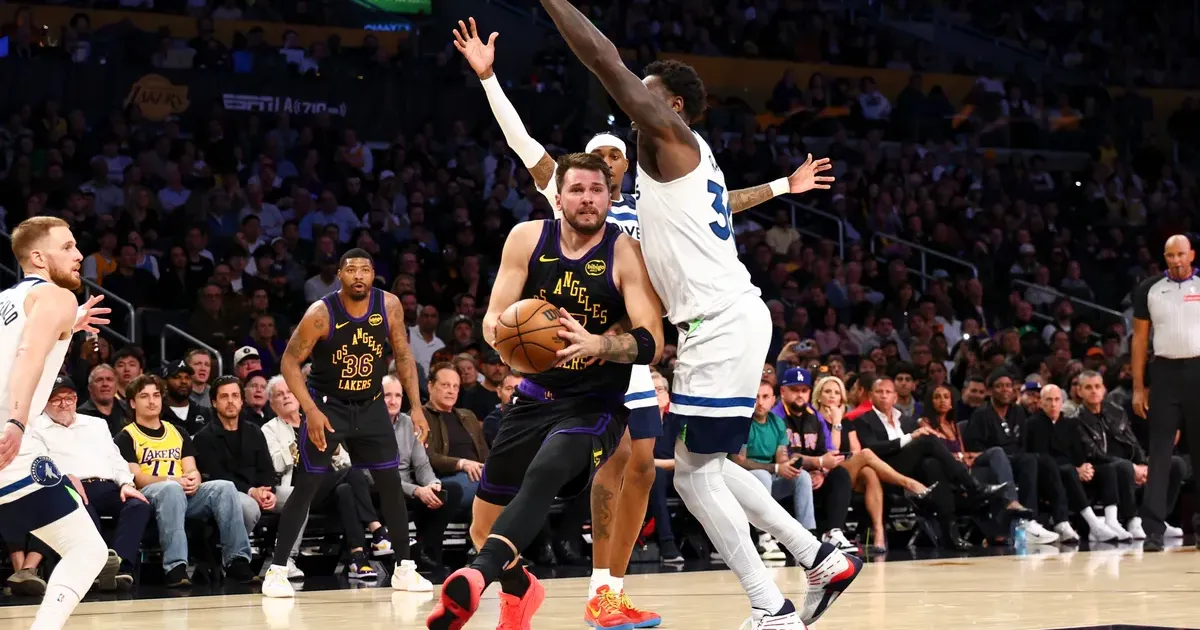
The Lakers' hold on fourth place has tightened the pressure just above the Western Conference play-in line. The standings shifted on March 11, 2026.
Lakers Rise as Warriors Fade
The Lakers' surge marked the point when the balance of power in California basketball finally snapped. Los Angeles now sits comfortably in fourth place within the Western Conference, a position that seemed impossible just two months ago. Their ascent contrasts sharply with the debris field left behind by the Golden State Warriors, whose late-season collapse reached a fever pitch this week. Financial analysts and basketball purists alike are scrutinizing the divergent paths of these two franchises as the postseason looms. The math doesn't add up for Golden State anymore. Losing to the Utah Jazz and Chicago Bulls in consecutive games stripped away the safety net that once protected the Warriors from the dreaded play-in tournament.
The Lakers kept climbing while Golden State's margin for error kept shrinking, sharpening the contrast between two franchises moving in opposite directions.
Those opponents were supposed to be the easy portion of a grueling March schedule. Instead, the Warriors allowed sub-.500 teams to dictate the tempo and exploit a defense that looks increasingly geriatric. This slide means Stephen Curry and company must now win games against the top-seeded Denver Nuggets and Oklahoma City Thunder just to keep their heads above water. Success in those matchups is the only way to avoid a win-or-go-home scenario in April. Management in San Francisco remains tight-lipped about the implications of a play-in exit. Sources close to the front office suggest that failing to secure a top-six seed will trigger a massive restructuring of the roster this summer.
The luxury tax bill for this aging core is no longer justifiable if the output is a tenth-place finish. Fans at the Chase Center watched in silence as the Bulls hit transition three after transition three, highlighting a lack of lateral quickness that has plagued the team all winter. Still, the coaching staff maintains a public veneer of confidence that rarely matches the on-court reality. Down the coast, the atmosphere in Los Angeles is electric. The Lakers have won eight of their last ten games, leapfrogging the Phoenix Suns and the New Orleans Pelicans to grab home-court advantage for the first round. Chemistry is the word of the day in the locker room.
Player movements off the ball have become fluid, and the defensive rotations are finally synchronized under a scheme that prioritizes rim protection. It looks like a completely different team than the one that struggled to stay relevant in December. Luck played a minor role, but health played a major one. Anthony Davis is currently enjoying his most consistent season in years, anchoring a defense that leads the league in blocked shots since the All-Star break. His presence allows the perimeter defenders to be more aggressive, knowing a seven-foot eraser is waiting behind them. When Davis stays on the floor, the Lakers possess a championship-caliber ceiling that few teams in the West can match.
This version of the roster finally maximizes the spacing required for their aging superstars to operate efficiently in the half-court. Comparison between the two teams reveals a harsh truth about roster construction. While the Lakers successfully integrated younger, athletic wings to support their veterans, the Warriors doubled down on a core that has simply run out of gas. Scouts from rival Western Conference teams have noted that Golden State no longer strikes fear into opponents during the third quarter, a period they used to dominate with historical efficiency.
Why California Dominance Looks Fragile
Why do we continue to indulge the collective delusion that the Golden State Warriors are still a threat? The narrative that a veteran core can simply flip a switch when the calendar turns to April is a comforting lie sold to season ticket holders and cable subscribers. Reality is much colder. Golden State is a failing enterprise, a collection of expensive memories masquerading as a basketball team. Their losses to the Jazz and Bulls were not flukes but symptoms of a systemic decline that no amount of championship pedigree can cure. They are slow, they are small, and they are finished.
Contrast this with the Lakers, who have successfully conned the league into believing they are a rejuvenated powerhouse. While their ascent to fourth place is impressive on paper, it relies on the fragile health of players who have historically spent more time in physical therapy than on the hardwood. The NBA media loves a comeback story, but this surge feels like a house of cards built on a swamp. We are seeing a clash of two different types of obsolescence. One team is dying of old age, while the other is one twisted ankle away from total collapse. If this is the best the Western Conference has to offer, the trophy is already headed back to the East.
Stop waiting for a vintage performance that isn't coming. The era of California dominance is over, regardless of what the current standings say.