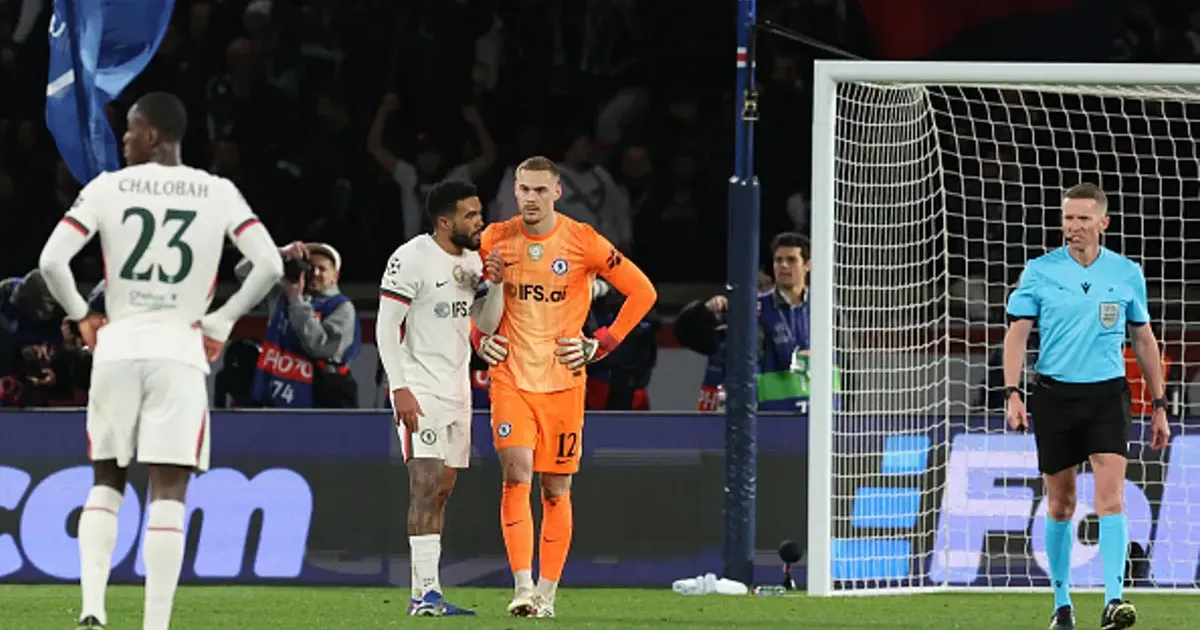
Liam Rosenior’s defense of Filip Jørgensen is an attempt to protect both a goalkeeper and a dressing room after Paris. The defense came on March 12, 2026
Rosenior Protects His Goalkeeper
Rain lashed the Parc des Princes turf on Wednesday night as Filip Jørgensen's gloved hands failed him once again. Chelsea's Champions League ambitions suffered a bruising blow in a 5-2 defeat to Paris Saint-Germain, a scoreline that reflected individual incompetence rather than tactical inferiority. Five goals conceded in a single European evening forced the spotlight onto the 23-year-old Danish goalkeeper, whose inability to handle routine strikes has become a recurring theme in West London. Fans traveled across the Channel hoping for a resilient defensive display, but they witnessed a series of technical blunders that effectively handed the French champions a comfortable victory. Liam Rosenior stood in the technical area with his head bowed for much of the second half. Chelsea's manager, appointed to bring structural stability to a chaotic squad, now faces a crisis of confidence regarding his primary shot-stopper. Jørgensen arrived at Stamford Bridge with a reputation for modern distribution, yet his fundamental goalkeeping duties have remained questionable throughout the 2025-2026 campaign. Critics point to the third goal as the defining moment of the collapse after the rout left Jørgensen exposed to criticism that could define the week. A speculative long-range effort from Vitinha slipped through Jørgensen's fingers, trickling over the line while the keeper lay prone in frustration. This refusal to concede ground on Jørgensen might define Rosenior's career at the Bridge. Speaking to reporters in the humid press room after the final whistle, Rosenior remained steadfast in his support of the young Dane. Errors happen in football, Rosenior stated while staring directly at the cameras. He argued that Jørgensen provides a tactical advantage in build-up play that outweighs the occasional lapse in concentration. Such a defense has done little to quiet the growing dissent within the Chelsea faithful. Most supporters see a pattern of fragility that has cost the club valuable points in both the Premier League and continental competition. Rosenior's loyalty is viewed by some as an admirable trait, while others see it as a dangerous stubbornness that could derail the entire season.
Jamie Carragher offered a blunt assessment of the situation during the Sky Sports post-match broadcast.
A Rout Changes the Conversation
Chelsea will never compete with the elite teams in Europe until they solve the goalkeeping problem, Carragher claimed. He compared Chelsea's current predicament to the early years of Jurgen Klopp's Liverpool, where high-octane attacking play was constantly undermined by errors from Simon Mignolet and Loris Karius. The former England defender noted that while Chelsea has spent over a billion pounds on talent across the pitch, the most important defensive position remains a glaring weakness. Success at the highest level requires a keeper who saves points, not one who gifts them to the opposition.
Stats from the current season support Carragher's harsh critique. Jørgensen currently ranks in the bottom third of the Premier League for post-shot expected goals minus goals allowed. Statistics indicate that he is conceding roughly one goal every four games that a standard top-flight keeper would be expected to save. Chelsea's scouting department targeted Jørgensen for his ability to act as an auxiliary playmaker, but the physical demands of English and elite European football seem to have exposed his lack of reach and command of the penalty area.
His hesitation on crosses and slow reaction times have turned a once-formidable Chelsea defense into a unit that plays with visible anxiety. Chelsea's recruitment strategy under the Clearlake ownership group remains under intense scrutiny. Years of high-profile signings have resulted in a bloated squad where certain positions are overstocked while others lack basic competence. The goalkeeping department has seen a revolving door of talent including Kepa Arrizabalaga, Robert Sanchez, and Djordje Petrovic, none of whom managed to secure the long-term confidence of the board or the various coaching staffs.
Jørgensen was supposed to be the definitive answer to this decade-long search. Instead, he has become the latest symbol of a transfer policy that prioritizes potential and data metrics over proven reliability in high-stakes environments. Winning trophies requires a foundation of certainty. Internal discussions at Cobham are reportedly becoming more urgent.
Sources close to the club suggest that some senior members of the defensive line have expressed private concerns about the lack of communication coming from the man between the sticks.
Public Backing Only Goes So Far
Liam Rosenior defended Filip Jørgensen after a heavy PSG defeat. The response was aimed at protecting a goalkeeper under obvious scrutiny. Managers defend goalkeepers because confidence can collapse faster than form. Still, public support only matters if the next match gives the player a cleaner night.
A rout does not always belong to one player, but the goalkeeper is usually the first face attached to the scoreline.