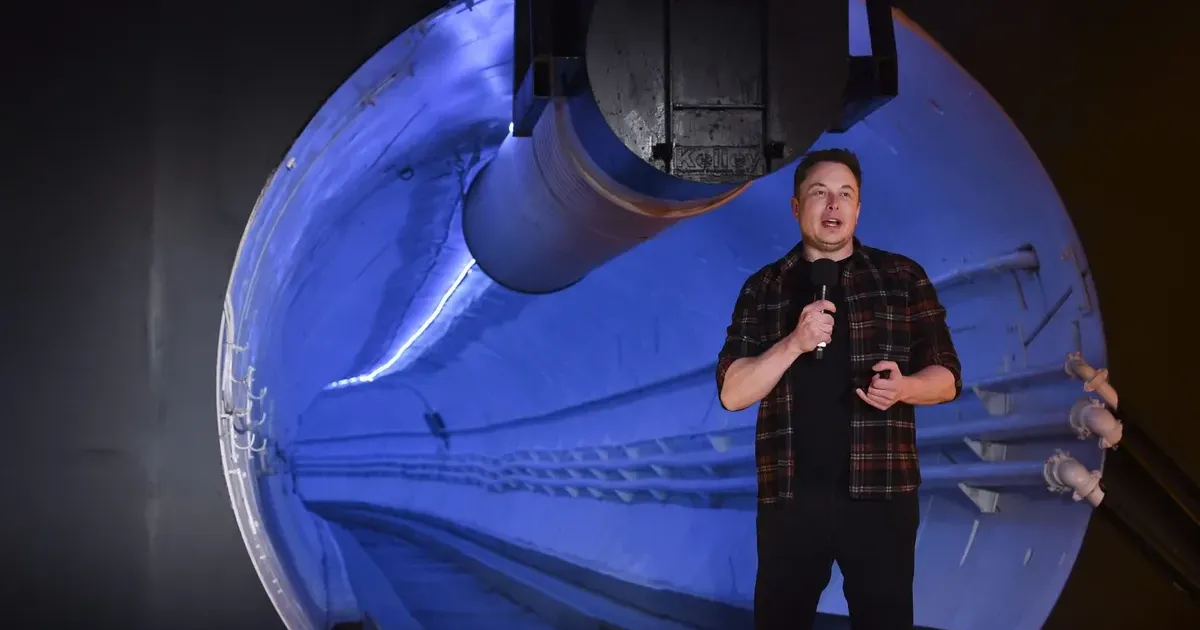
Baltimore Mayor Brandon Scott and city officials launched a legal offensive against xAI that derailed a high-profile stadium tunnel project. The reversals show how infrastructure branding can collapse when local costs become visible. The update came on March 28, 2026. Elon Musk and his infrastructure business, the Boring Company, had initially proposed a subterranean transit loop around M&T Bank Stadium to ease congestion for football fans. This sudden collapse of negotiations marks a departure from Maryland's previous enthusiasm for the billionaire's ventures. Within nine hours of the project pitch, city leaders filed a lawsuit alleging that xAI allowed nonconsensual intimate imagery and child sexual abuse material to spread on its platform.
City Solicitor Ebony Thompson emphasized the need to protect residents from deceptive practices involving generative artificial intelligence. Mayor Scott stated clearly that he would not have approved the proposal. Ravens executives withdrew their application for the tunnel once discussions with local leaders concluded. Previous administrations in Maryland courted Musk with open arms a decade ago, but the current political climate has turned his businesses into targets for litigation and public scrutiny.
Baltimore Ravens Withdraw From Stadium Tunnel Proposal
Plans for the Raven Loop involved a one-mile long tunnel, twelve feet in diameter, designed to transport fans beneath the streets surrounding the stadium. Baltimore officials received the pitch as one of more than 480 similar requests submitted to the Boring Company for local infrastructure improvements. M&T Bank Stadium currently seats 70,000 people and covers 1.6 million square feet. Fans usually rely on surface parking and city light rail to reach the venue during the NFL season. Moving these crowds underground was intended to ease gridlock, yet the mayor and city council prioritized the legal action against Musk's AI entity over the free infrastructure project. Ebony Thompson issued a formal statement regarding the lawsuit on Wednesday. She clarified that the city seeks to hold technology providers accountable for the content generated by their systems. Baltimore residents had reportedly encountered harmful material through xAI chatbots, leading to the swift filing in city courts. The mayor's office supported the decision by the Ravens to walk away from the deal. Press secretary officials declined further requests for detailed commentary on the specific evidence cited in the filing.
"The City filed this action against xAI to protect residents from deceptive and harmful practices involving generative AI tools," City Solicitor Ebony Thompson said.
Baltimore leaders now maintain a cautious distance from any new enterprise associated with the tech mogul.
Nashville Residents Oppose Musk Transportation Initiatives
Vanderbilt University researchers recently discovered a similar pattern of resistance in Tennessee. Nashville residents initially expressed moderate concern about a 20-mile tunnel network connecting Nashville International Airport to the downtown district. Survey data showed 35% of respondents opposed the plan when researchers described it in generic terms. Opposition jumped to 51% once the survey explicitly identified Musk as the project lead. Researchers concluded that partisan sentiment now dictates how citizens view private business initiatives led by the former federal official. Political baggage from his previous role in federal administration appears to be the primary driver of this shift. Survey participants in Nashville cited his involvement in government cost-cutting measures as a reason for their distrust. The Boring Company announced its plans for the Music City Loop in July, targeting the high-traffic area of lower Broadway. While the project promised to use Tesla vehicles and trained drivers to bypass highway traffic, public support remains split along ideological lines. Nashville residents are increasingly skeptical of large-scale projects that lack broad municipal consensus.
Boring Company officials did not immediately respond to inquiries regarding the Vanderbilt survey results or the Baltimore litigation. The company continues to seek expansion in several US cities, though the success of these pitches depends heavily on local political goodwill. Legal experts suggest the Baltimore lawsuit is a serious hurdle for Musk's ability to bundle his various business interests. If one company faces ethical or legal challenges, the others may lose the trust of municipal partners. The city solicitor's office in Baltimore is seeking damages and a permanent injunction against certain features of the xAI platform.
Federal Workforce Reductions Influence Public Opinion
Federal employment data highlights the source of some public resentment toward Musk's corporate family. During his tenure leading the Department of Government Efficiency, Musk oversaw the removal of 300,000 federal workers. This reduction brought the federal workforce to its lowest level in over a decade. He also participated in the dismantling of USAID, which saw 80% of its programs cut or absorbed into the State Department. These aggressive cost-cutting measures earned him a reputation as a volatile figure among public-sector employees and their supporters.
Musk's companies remain active in the pursuit of new contracts, but the era of easy approval has likely ended.
Tunnel Brand Liability
Can a private citizen outgrow the goodwill of the nation that enabled his rise? The current predicament facing the Boring Company suggests that the shield of technical innovation has finally cracked under the weight of political polarization. For years, Musk was granted a form of municipal immunity, allowed to bypass the standard bureaucratic skepticism that greets most infrastructure developers. That era ended the moment he stepped into the ideological fray of federal governance. By transforming his personal brand into a partisan weapon, he has fundamentally altered the risk profile for every city council and mayor in the country. Baltimore's decision to sue xAI while simultaneously rejecting a free tunnel project is a calculated act of institutional defiance. It suggests that the social and legal costs of association now outweigh the utility of the hardware he provides. Nashville’s survey data confirms this isn’t an isolated incident among coastal elites but a broader trend in the American heartland. When a majority of a city's residents oppose a project simply because of the man behind it, the engineering specifications become irrelevant.
The Boring Company's future depends on whether it can decouple its identity from its founder, or if it will be dragged down by the legal and political battles he continues to invite. Pragmatism has been replaced by tribalism, and in that environment, even a free tunnel is too expensive for most cities to accept.