Mamdani Condemns Tuberville Remarks
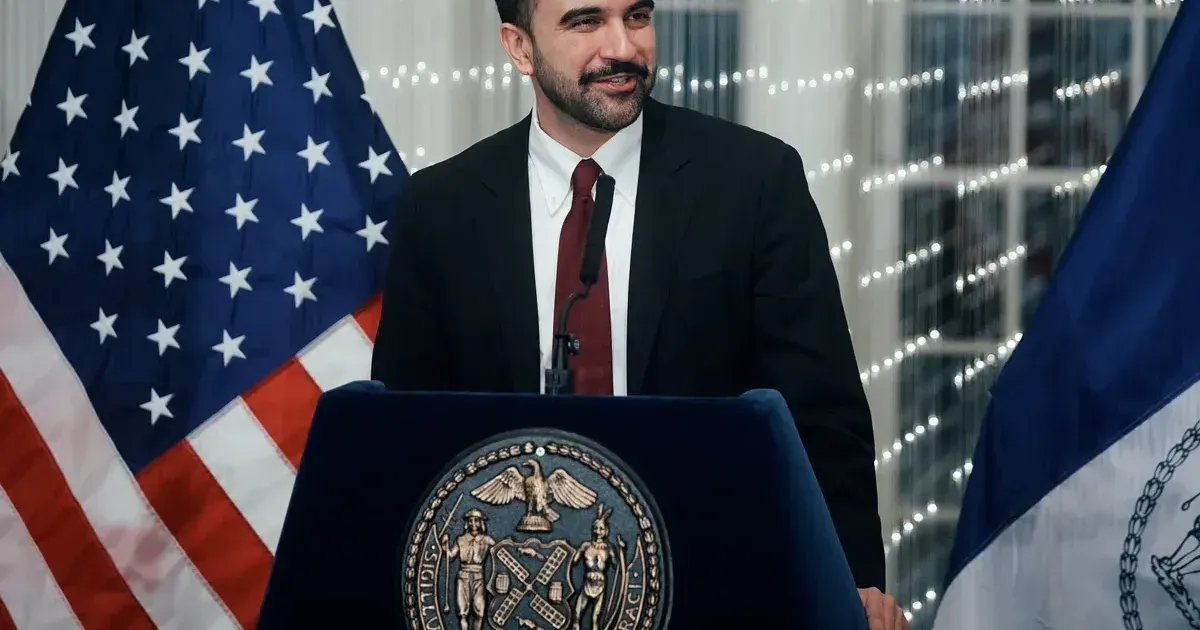
Gracie Mansion served as the backdrop for a collision of international rhetoric and local optics. Mayor Mamdani used a public iftar dinner, the evening meal for breaking the Ramadan fast, to launch a verbal broadside against Senator Tommy Tuberville. On March 13, 2026, the iftar remarks turned a local campaign moment into a wider argument over bigotry. Addressing a crowd of community leaders and faith practitioners, Mamdani labeled the senator's recent social media activity as an exercise in hatred. The mayor described Tuberville's anti-Muslim posts as bigotry, signaling a hardening of the rhetorical boundaries between New York City Hall and federal lawmakers from the Deep South. This political friction creates a difficult path for an administration already managing a complex web of cultural sensitivities.
Tuberville's digital output has long drawn fire from civil rights groups. The senator's recent posts allegedly characterized certain religious practices as incompatible with American values, a claim Mamdani met with direct opposition during the meal. The mayor insisted that such language does not just reflect personal opinion but acts as a catalyst for real-world hostility. Critics of the senator point to a pattern of statements that target minority groups, often framed through the lens of national security or cultural preservation. Mamdani's decision to utilize a religious gathering for a political denunciation suggests a strategic effort to consolidate his base among the city's growing Muslim electorate.
How does a local leader balance the demands of city governance with the desire to act as a national moral arbiter? City officials present at the dinner remained largely silent on the specifics of the senator's posts. They instead focused on the mayor's call for unity and the rejection of divisive narratives. Records indicate that hate crimes targeting religious minorities in the five boroughs have seen fluctuating numbers over the last fiscal year.
Mamdani argued that high-profile rhetoric from Washington directly influences the safety of streets in Queens and Brooklyn. The evidence behind these sociological claims remains a point of contention among urban policy researchers. Rama Duwaji, the First Lady of New York City, now finds her own artistic and political associations under the microscope. Reports from the New York Post detailed her role in illustrating an essay for Susan Abulhawa, a prominent anti-Israel activist.
Iftar Speech Becomes a Political Test
Abulhawa has faced intense criticism from organizations like the Anti-Defamation League, which cites her use of inflammatory language. The activist's previous descriptions of certain political and ethnic groups included the term Jewish supremacist vampires, a phrase that triggered immediate backlash from Jewish community leaders in New York. This artistic collaboration places the mayor's office in a defensive posture just as it attempts to claim the high ground on issues of bigotry. Abulhawa's work often focuses on the Palestinian struggle, but her methods have alienated many who might otherwise support the cause.
The Anti-Defamation League maintains a file on her rhetoric, categorizing several of her public statements as antisemitic. Duwaji's decision to provide visual accompaniment for Abulhawa's prose suggests a level of professional alignment that transcends casual acquaintance. Supporters of the First Lady argue that her art should be judged independently of the author's most controversial statements. Detractors argue that a figure in her position cannot separate aesthetic choices from the political weight they carry.
Silence has been the primary response from the First Lady's press office regarding the Abulhawa connection. Mamdani's administration now faces a paradox of its own making. The mayor's condemnation of Tuberville rests on the principle that words have consequences and that leaders must reject dehumanizing language. Simultaneously, the First Lady's association with a writer who uses provocative imagery creates a perception of selective outrage. This environment allows political opponents to question the consistency of the city's stance on hate speech. While Mamdani attacks a Republican senator for anti-Muslim sentiment, his own household is linked to a figure accused of using antisemitic tropes. Jewish community leaders expressed private concern about the timing of these revelations. Several members of the City Council noted that the juxtaposition of the mayor's Iftar speech and the First Lady's essay project complicates ongoing efforts to build interfaith coalitions.
Muslim Voters Hear a Broader Signal
New York City remains home to the largest Jewish population outside of Israel and a rapidly expanding Muslim community. Political stability in the city often depends on the mayor's ability to handle these two groups without appearing to favor one over the other. The current controversy threatens to disrupt that delicate equilibrium. Political capital in New York is a finite resource.
Susan Abulhawa is no stranger to the center of the storm. Her novels and essays frequently challenge the legitimacy of the Israeli state, often using language that critics describe as crossing the line from political critique into ethnic hostility. The Anti-Defamation League's documentation of her work includes instances where she allegedly denied historical events or used tropes reminiscent of older, more dangerous eras of European antisemitism. For Rama Duwaji to lend her talents to such a figure suggests a specific ideological comfort level.
It also prompts scrutiny about the vetting process for the First Lady's public-facing projects. Senator Tuberville's staff has not issued a formal rebuttal to Mayor Mamdani's comments as of Friday morning. Sources close to the senator suggest he views the mayor's attacks as an attempt to distract from local failures in crime and housing. The ideological divide between a New York City progressive and a southern conservative senator provides a convenient foil for both parties.
Each uses the other to signal values to their respective constituents. The losers in this exchange are often the citizens who seek a political discourse focused on policy rather than personality. The setting mattered because an iftar speech is not just another campaign stop. It places the remarks inside a community gathering where questions of belonging, representation and public respect carry immediate weight. Mamdani’s response also reflected a broader Democratic debate over how directly candidates should confront anti-Muslim rhetoric when it appears in national politics.