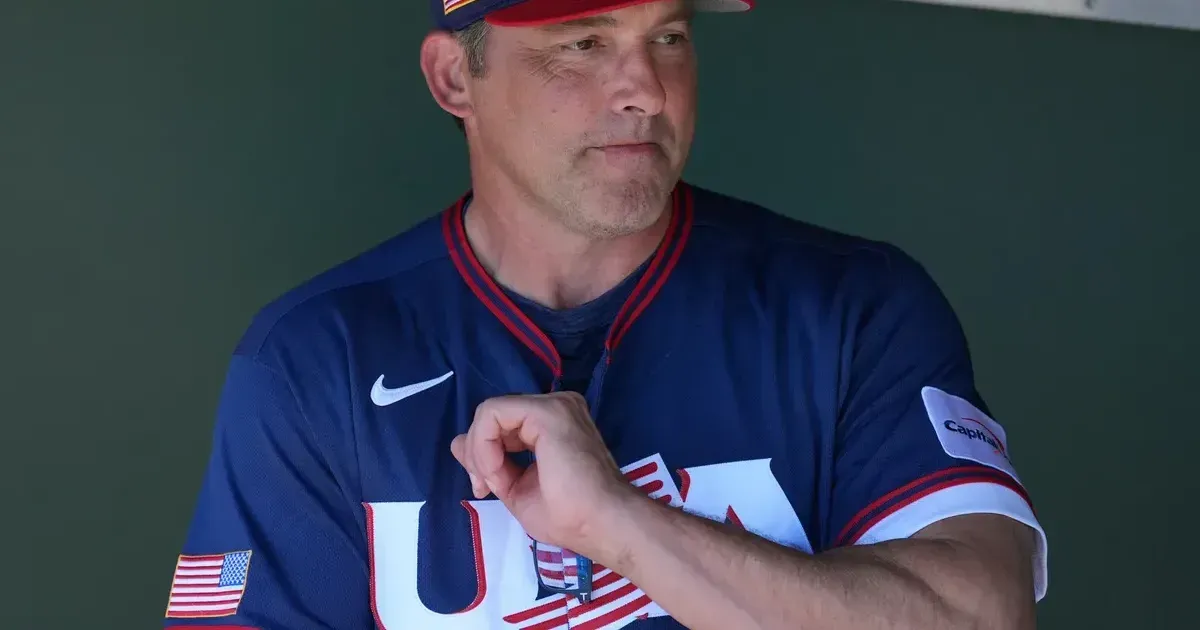
DeRosa Faces the Tiebreaker Fallout
Miami's humidity hung heavy over LoanDepot Park as Mark DeRosa faced a firing squad of reporters. He looked like a man who had spent the last six hours staring at a spreadsheet and losing the battle against algebra.
On March 12, 2026, the criticism centered on whether Team USA understood the tiebreaker picture before other results rescued its path. His voice, usually steady from years of broadcasting, carried a defensive edge that betrayed the late-night calculations keeping Team USA’s tournament hopes alive. DeRosa had just walked back a series of public statements regarding his team’s standing in the World Baseball Classic. Critics labeled his understanding of the complex tie-breaker rules as amateurish.
He insisted he knew the score. Yet, the reality of the situation suggested a manager out of his depth with the tournament’s mathematical scenarios.
Ohtani Restriction Shows Club Power
Team USA found itself on the brink of an embarrassing early exit until an unlikely ally intervened. Italy provided the miracle the Americans needed.
By defeating their opponent in a parallel bracket game, the Italians effectively handed DeRosa a life raft he had nearly paddled away from. The manager was quick to offer his gratitude, though his apology felt more like a concession of exhaustion than a genuine admission of tactical failure. American baseball fans expect dominance, not a reliance on European upsets to survive the group stage.
This tournament has always struggled with its complicated run-differential formulas. Fans find these tie-breakers opaque.
Team USA Needs Cleaner Management
DeRosa's blunder only highlighted how little the domestic coaching staff seemed to prioritize the administrative nuances of international play. Major League managers rarely have to worry about run quotients or head-to-head records involving three different nations.
In the standard 162-game season, winning is the only metric that matters. International play introduces a different beast entirely. Across the bracket, another controversy brewed regarding the world’s most famous player.
Shohei Ohtani, the Los Angeles Dodgers’ billion-dollar asset, will not take the mound for Japan in this iteration of the classic. His contract with Los Angeles explicitly forbids pitching duties during the spring tournament. Japan must defend its title with its primary weapon half-sheathed. Negotiating these release clauses remains a headache for national team organizers. Major League Baseball clubs view the World Baseball Classic with a mixture of marketing enthusiasm and medical dread. Ohtani’s arm is the most valuable property in sports. Risking a ligament strain in March is a non-starter for the Dodgers front office. Dodgers executives prioritized their $700 million investment over the global growth of the game. Fans in Tokyo expressed frustration, as they hoped to see Ohtani repeat his legendary 2023 closing performance against Mike Trout. That iconic moment remains the high-water mark for the tournament. Without Ohtani on the mound, the Japanese rotation lacks the intimidation factor that defined their previous championship run. Managers in the Japanese camp have remained polite in public, but the restriction clearly limits their tactical flexibility. They are forced to rely on younger, less experienced arms while their greatest pitcher watches from the designated hitter spot. Financial reality dictates the rosters of the World Baseball Classic more than national pride ever could. Teams like the Dominican Republic and Venezuela also face similar restrictions on their top-tier starters. Pitch count limits and mandatory rest days turn the tournament into a puzzle of bullpen management. DeRosa's struggle with the tiebreaker rules was an internal failure, but Ohtani’s restriction is an external one imposed by the economics of the sport. DeRosa’s tenure has been characterized by high-profile talent and low-level execution. He was hired for his charisma and his ability to connect with star players, not necessarily for his tactical brilliance in tournament formats. His recent interview debacle, where he gave a definitively wrong answer about Team USA’s elimination status, has led to calls for a more experienced bench coach to take the reins. Some analysts suggest that USA Baseball should look toward retired MLB managers who are used to the grind of high-stakes decision-making. DeRosa’s insistence that he actually knew the rules, despite his public contradictions, has not helped his standing with a skeptical fan base. International media, particularly outlets from Korea and Japan, have scrutinized DeRosa’s errors with a level of detail that American outlets often ignore. They use the term "case of numbers" to describe the myriad of ways a team can advance. These outlets pointed out that the American staff seemed unaware that a specific run-count in the final innings against Mexico could have proved fatal. Only the Italian victory saved DeRosa from a legacy of being the man who forgot to check the tiebreakers. Success in the next round will require more than home runs. It will require a coaching staff that understands the rulebook as well as they understand the batting order. If the United States hopes to reclaim the gold, the gap between their talent and their preparation must close. The roster is filled with All-Stars who are used to winning by sheer force of will. International ball does not always reward the best roster. It rewards the team that makes the fewest mistakes within the specific constraints of the tournament. Right now, Team USA looks like a giant that is stumbling over its own shoelaces. DeRosa has the talent to win it all, but his credibility is currently thinner than the margin by which his team advanced. This failure to grasp the technicalities of the game suggests a deeper cultural issue within American baseball leadership.