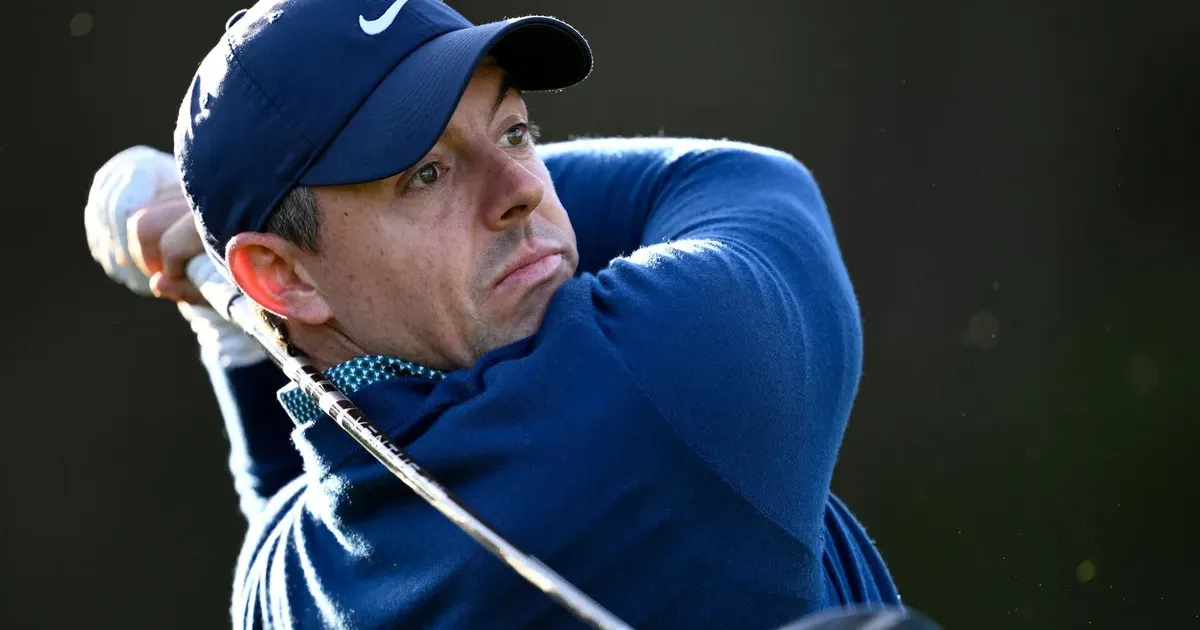
Augusta National Golf Club officials prepared for a tournament where betting markets show strong skepticism toward perennial favorites Rory McIlroy and Bryson DeChambeau. Analysts monitoring the early money movements and performance metrics suggest that the traditional hierarchy of the professional game is facing a rigorous challenge from sophisticated predictive modeling. The April 4, 2026 betting shift reflected concern about course fit at Augusta. David Bearman, a top figure at SportsLine, recently finalized his assessment of the field and identified specific reasons to avoid backing the Northern Irishman this year. His data indicates that the emotional and technical burden of the career Grand Slam continues to depress value for bettors seeking a reliable return on investment.
McIlroy remains one of the most talented drivers of the golf ball in the world, yet his struggles with wedge play and putting consistency on undulating greens have historically hampered his Sunday efforts in Georgia. Betting circles often inflate his price due to his name recognition and the strong narrative of his quest for a green jacket. Bearman’s analysis focuses on cold statistics rather than sentiment, suggesting that current odds do not accurately reflect the high probability of a mid-tournament collapse. The expert has advised his followers to look toward lower-tier players who offer better statistical fits for the current course setup.
Statistical Models Sour on McIlroy's Career Grand Slam
Analytical frameworks used by professional handicappers often prioritize recent strokes gained data over historical prestige. David Bearman points to a specific decline in McIlroy’s efficiency within 125 yards, a distance that remains critical for scoring on Augusta’s par-five holes. Scoring on the four par-fives is essential for any player hoping to break 280 for the week. Players who fail to capitalize on these opportunities find themselves forced to take excessive risks on difficult par-fours like the eleventh or eighteenth. McIlroy has averaged 4.6 on par-fives during his last twelve rounds at this venue.
Winning at Augusta requires a specific psychological fortitude that many experts believe has eroded for the veteran star. Every missed opportunity since his 2011 collapse has added another layer of pressure to his performance. Betting markets often overlook the mental fatigue associated with a decade of close calls and media scrutiny. Bearman emphasizes that the risk-to-reward ratio for a McIlroy victory is one of the least favorable in the entire field. The odds offered by major sportsbooks typically sit near 10-1 or 12-1, prices that many professionals consider unplayable given his recent form.
Golf expert Sia Nejad revealed that his model specifically highlights the volatility of power hitters who cannot adapt to the increasing firmness of the greens at Augusta National this season. Critics of the current betting landscape argue that public money keeps favorites artificially short. Casual fans tend to place wagers on players they recognize, regardless of current technical deficiencies. This phenomenon creates an opportunity for sharp bettors to find value elsewhere in the bracket. Bearman’s model specifically identifies a group of mid-range players with odds between 40-1 and 60-1 who possess superior short-game metrics compared to the top of the board. The gap between elite reputation and actual performance has widened sharply over the last twenty-four months.
DeChambeau Power Game Faces Skepticism at Augusta
Sia Nejad, another influential golf insider, has voiced similar concerns regarding the prospects of Bryson DeChambeau. While the 2024 U.S. Open champion possesses unmatched ball speed, the layout at Augusta National has undergone subtle modifications to reduce the advantage of raw distance. Targeted tree planting and the lengthening of several tee boxes have forced players to prioritize accuracy and ball flight control over sheer force. Nejad’s research suggests that DeChambeau’s aggressive strategy often leads to catastrophic errors in the pine straw surrounding the fairways. A single errant drive on a hole like the thirteenth can result in a triple bogey that effectively ends a tournament run.
Putting remains the main obstacle for the former SMU standout. Augusta’s greens require a level of touch and imaginative green-reading that often clashes with a purely scientific or mechanical approach. Nejad has noted that DeChambeau’s reliance on vector-based putting systems sometimes fails to account for the subtle, local knowledge required on these specific surfaces. The speed of the greens on April 4, 2026, was measured at 13 on the Stimpmeter, a figure that usually increases as the tournament progresses toward the weekend. High-velocity players often struggle to adjust their touch when the surfaces become glass-like in the afternoon sun.
Weather can still change the betting picture quickly at Augusta, especially if wind turns approach shots and lag putting into the main separator.
Masters Odds Expose Augusta Uncertainty
The Masters market is signaling doubt rather than certainty. McIlroy and DeChambeau still have paths to contend, but Augusta tends to punish the exact short-game and putting flaws that models are highlighting.