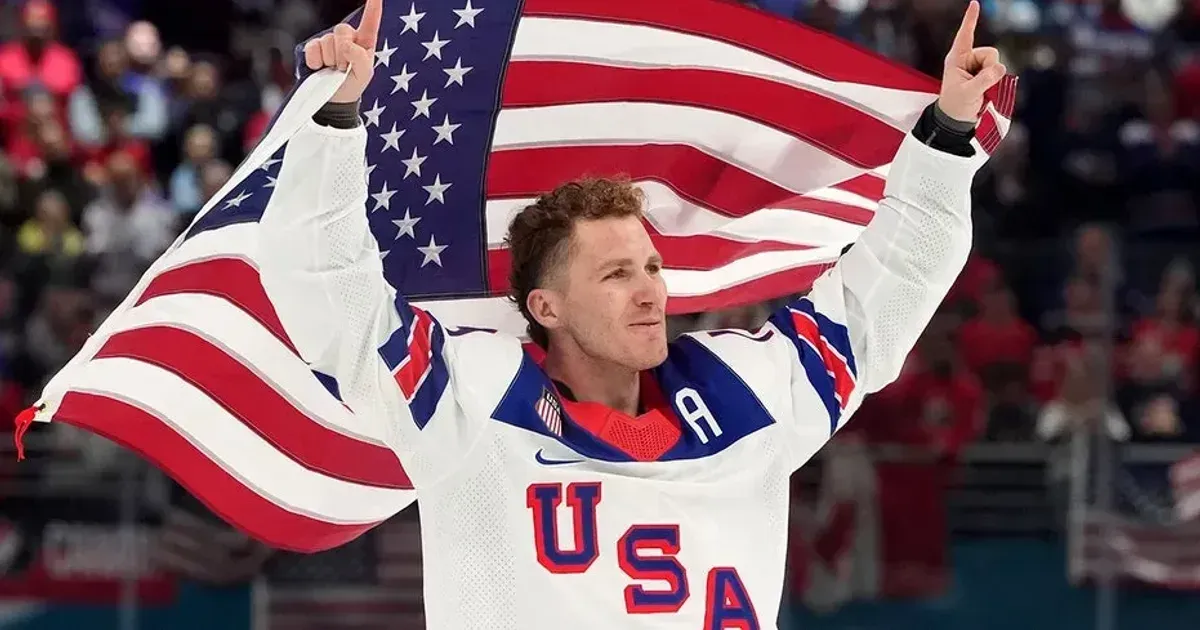
Tkachuk Defends the Invitation
Matthew Tkachuk leaned back into the chair on the set of Hang Out with Sean Hannity, his face still bearing the faint marks of a grueling Olympic tournament. Recent days brought both the highest honors of his career and a relentless wave of social media scrutiny. Team USA had just secured a stunning overtime victory against Canada to claim the gold medal, a feat that usually unites a nation in celebration. Yet, the decision by Tkachuk and his teammates to fly to Washington to attend the State of the Union address as guests of President Donald Trump sparked a fierce debate over the intersection of athletics and executive power.
On March 12, 2026, the White House visit kept Team USA's celebration inside a political argument. Tkachuk remained unmoved by the outcry, describing the invitation as a recognition of their hard work on the ice. Critics pointed to the optics of the locker room celebration where the invitation was first extended. Some observers argued that the team allowed itself to become a political prop during a highly charged election cycle.
Tkachuk dismissed these concerns with the practiced ease of a veteran captain. He told Hannity that the group earned the right to have the greatest celebration possible. He noted that when the president asks to see you in the locker room, the only logical response is an immediate yes. For Tkachuk, the visit was about representing USA Hockey and the American people rather than endorsing a specific political platform.
He insisted that the team would have accepted the invitation regardless of who occupied the Oval Office. Gold medals often come with political baggage in a divided era. Florida Panthers fans are already familiar with Tkachuk's frequent appearances in the nation's capital. He has visited the White House multiple times during Trump's second term to celebrate Stanley Cup victories.
Athletes and Political Optics
These recurring visits have solidified a unique bond between the South Florida hockey scene and the current administration. While some teammates cited scheduling conflicts or the proximity of the NHL playoffs as reasons for their absence, Tkachuk positioned himself as the face of the contingent that made the trip. He viewed the opportunity to attend the State of the Union as a rare honor that few athletes ever experience. He focused on the prestige of the event rather than the partisan rhetoric that typically defines such evenings.
Trump moved the conversation from the rink to the pitch during a separate press briefing, addressing the upcoming 2026 World Cup. His comments regarding Iran's participation introduced a new layer of complexity to the summer tournament. He stated that he does not believe it is appropriate for the Iranian national team to compete on American soil. Security concerns formed the backbone of his argument.
He suggested that the safety of the players themselves could be at risk if they were allowed to play in the United States. Such a move would be a significant departure from FIFA's standard operating procedures, which generally prohibit host nations from barring qualified teams based on political disputes. International soccer officials now face a diplomatic minefield as the tournament approaches. Iran has long been a resilient competitor in the AFC, and their qualification for the 2026 event was a point of pride for their supporters.
Trump's rhetoric puts FIFA in a difficult position, as the organization prides itself on keeping politics out of the game. If the United States moves to deny visas to Iranian players or coaching staff, it could trigger a massive legal battle within the world of sports governance. Previous tournaments have seen similar tensions, but the direct involvement of a host nation's president in questioning a specific team's right to play is rare in modern history. Sports serves as the ultimate megaphone for executive power.
Why the Debate Lingered
Foreign policy experts suggest that the administration may be using the World Cup as leverage in broader negotiations. By framing the exclusion of Iran as a matter of player safety and national security, the White House avoids a direct admission of political discrimination. This stance forces FIFA to choose between its own regulations and the demands of its most powerful host. The 2026 tournament is intended to be a showcase of North American cooperation, with matches spread across the US, Mexico, and Canada.
Any attempt to bar a specific nation could alienate international partners and cast a shadow over the entire event. It remains unclear if the State Department will formalize these suggestions into an official ban. Hockey players have historically maintained a more reserved political profile compared to their counterparts in the NBA or WNBA. This cultural difference was on full display during Tkachuk's interview.
He spoke about the sport of hockey as a unifying force that transcends the daily grind of Washington politics. His focus remained on the locker room bond and the shared sacrifice of the Olympic journey. This approach appeals to a segment of the fan base that prefers sports to remain a sanctuary from the news cycle. Still, the act of appearing at the State of the Union makes that sanctuary difficult to maintain.
Tkachuk's defense of the visit suggests a belief that the presidency itself carries a weight that supersedes the individual holding the office. National pride often serves as a shield against partisan criticism. Tkachuk highlighted the honor of representing Americans on the world stage, a sentiment that resonated with Hannity's audience.