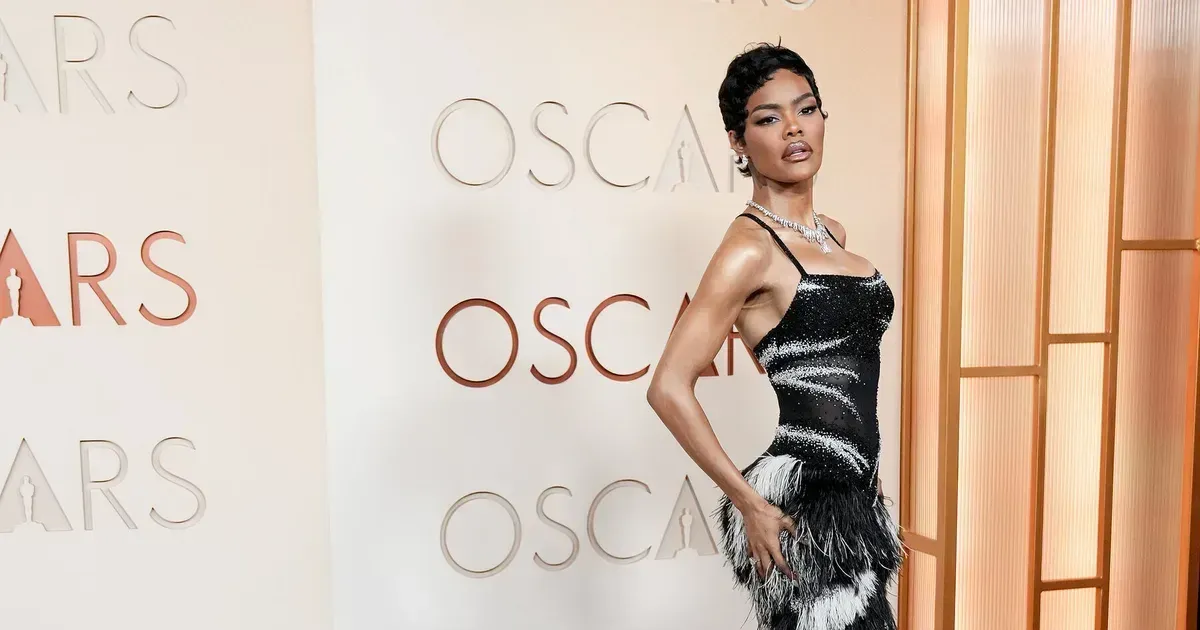
Michael B. Jordan arrived for the 98th Academy Awards wearing a custom Louis Vuitton tuxedo that led a return to structured, high-contrast formalwear. His presence anchored an evening defined by architectural silhouettes and a move away from the relaxed tailoring of previous seasons. Photographers noted the meticulous fit of the wool-silk blend suit, which featured peak lapels and a subtle sheen under the high-intensity floodlights. The red carpet functioned as a high-stakes display of brand dominance and personal branding. Michael B. Jordan commanded the early arrivals, setting a tone of modern austerity that balanced traditional masculine tropes with avant-garde details. His choice of Louis Vuitton mirrored a broader trend of actors seeking custom exclusivity over off-the-rack availability. Fashion critics on-site observed that the ensemble avoided common pitfalls of oversized silhouettes, opting instead for a precise, tailored finish that highlighted his athletic frame. Meanwhile, Teyana Taylor brought a saturation of color to the proceedings that stood in sharp opposition to the monochromatic palettes favored by many of her peers.
Michael B. Jordan Sets Red Carpet Tone
Luxury houses have retreated from the masses. Michael B. Jordan and his Louis Vuitton look signaled this shift toward highly specific, one-of-a-kind garments designed for the lens. The night was not solely about the men. Chanel provided the wardrobe for leading actress nominee Jessie Buckley, whose appearance in the Hamnet adaptation made her a central figure of the ceremony. Buckley wore a black gown that incorporated the signature tweed elements of the house, updated for the 2026 aesthetic. Chanel sought to bridge its historical legacy with Buckley's modern, somewhat edgy public persona. The inclusion of bumblebee brooches appeared as a recurring motif among several high-profile attendees.
Luxury Houses Compete at the Oscars
Deep rubies and intense amethysts replaced the safe neutrals of yesteryear. Teyana Taylor leading this movement allowed other stars to experiment with similarly bold choices. Teyana Taylor handled the carpet with a confidence that turned her sapphire ensemble into a case study in color theory. The dress used a heavy silk faille that maintained its structure despite the heat of the California afternoon. Other attendees like Li Jun Li followed suit with architectural designs from Gaurav Gupta that played with light and shadow. Many actors used small lapel additions to signal their stance on global conflicts and environmental issues. Teyana Taylor focused her presentation on the artistry of her gown, but others used their platform to remind the audience of the world beyond the velvet ropes. This strategy aimed to humanize the participants during a night of extreme artifice. The balance of the evening tilted between tradition and subversion. Hudson Williams opted for Balenciaga, a house known for challenging the very definition of red carpet attire. Williams wore an ensemble that bordered on the utilitarian, incorporating elements of streetwear into a formal context. Kate Hudson stuck to the reliable elegance of Giorgio Armani Privé. Her look was a masterwork of understated luxury, proving that some veterans prefer the safety of established silhouettes over the risks of experimentation. Jessie Buckley remained the personification of the current Chanel philosophy. Her Oscars look was designed to be both recognizable and revolutionary. The traditionalists in the audience appreciated the nod to the classic suit jackets that made the brand a global powerhouse. The red carpet remains a battlefield of selected identity. Michael B. Jordan and his Louis Vuitton team clearly understood that a successful Oscars appearance requires not only a good suit. It requires a story. Every interview mattered because the look needed a narrative as much as a silhouette.
LACMA hosted the annual Vanity Fair after-party, but the atmosphere differed from previous years. Fewer influencers and more Academy members filled the space. Michael B. Jordan made the transition from the Dolby to the after-party without a costume change, a move that emphasized the versatility of his Louis Vuitton look. Others, like Barbie Ferreira, used the party as an opportunity to debut collaborations with mainstream brands like GapStudio.
Exclusivity has become the new currency of the Hollywood social circuit. Teyana Taylor arrived late, her jewel tones still vibrant under the artificial lighting of the LACMA pavilions. Louis Vuitton and Chanel were the most represented houses at the event, proving that the major conglomerates still hold the keys to the most prestigious rooms in the world. The smaller guest count allowed for more direct interaction between nominees and the power players of the industry.
Teyana Taylor and Michael B. Jordan eventually crossed paths in the VIP lounge, creating a moment of high-fashion teamwork that was captured by the few photographers allowed inside. Their respective looks, one an exploration of color and the other a study in structure, represented the two poles of 2026 style. Chanel and Louis Vuitton both claimed victory for the night, having secured the most airtime and the most social media engagement. The 98th Academy Awards concluded with the realization that in the game of red carpet fashion, the winners are often decided before the first award is even handed out.
Formalwear Became the Night's First Contest
Does the reduction of the Vanity Fair guest list signal a return to Hollywood's golden era, or is it a desperate attempt to manufacture scarcity in an age of digital ubiquity? We are seeing an industry that is terrified of its own accessibility. By retreating into the fortress of LACMA and slashing invites, the elite are trying to claw back the prestige that was diluted by a decade of influencer-heavy red carpets. But the irony is visible.
While the guest lists shrink, the fashion grows louder and more architectural, as if these stars are trying to occupy more physical space to compensate for their dwindling cultural monopoly. Michael B. Jordan and Teyana Taylor are not just wearing clothes; they are wearing armor against the irrelevance that threatens any celebrity who is not constantly selected by a team of ten.
The move toward custom luxury like Louis Vuitton and Chanel is not an artistic choice so much as it is a financial one, ensuring that the distance between the stage and the sidewalk remains unbridgeable for the common observer. True style cannot be bought by a magazine editor's whim or a designer's favor, yet Hollywood continues to bet its entire reputation on the hope that we cannot tell the difference.