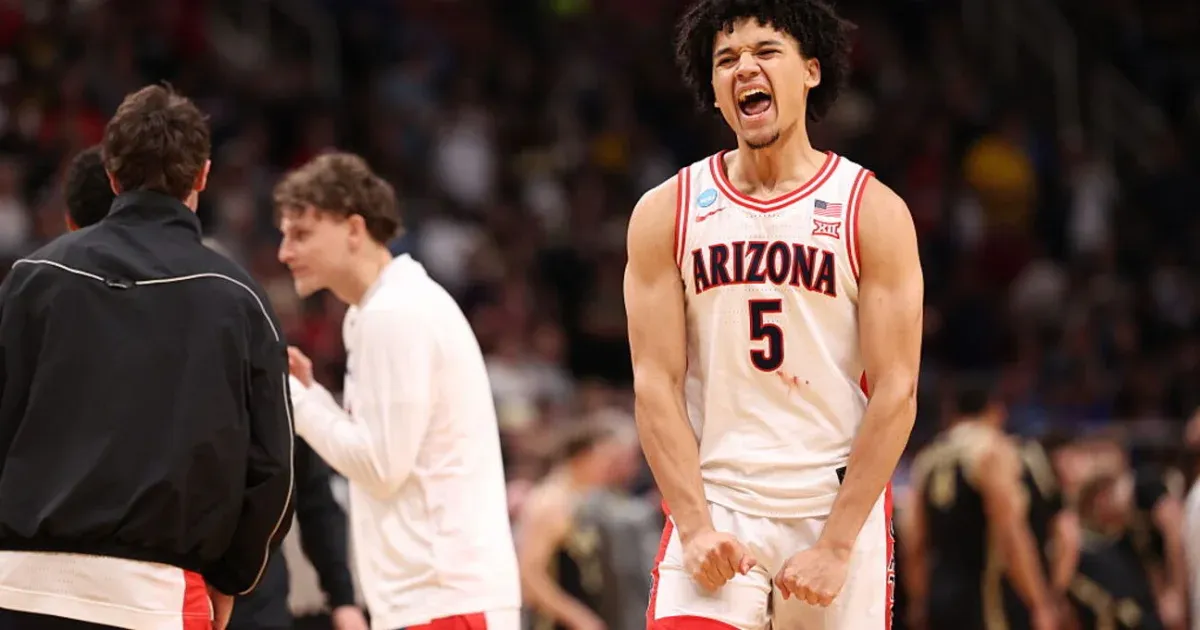
April 4, 2026, marks the convergence of elite collegiate talent and digital transformation as Michigan and Arizona prepare to decide the fate of the national championship bracket. San Antonio is the physical epicenter for an event that now exists primarily within the ether of high-speed data packets. Arizona enters the Alamodome with the statistical advantage of a top-tier defense, yet Michigan has spent the last three weeks dismantling similar architectures with surgical precision. The Wolverines rely on a backcourt rotation that has not seen a double-digit deficit since the early rounds of the tournament.
Rolling Stone reports that these two No. 1 seeds clash tonight for a spot in the 2026 NCAA men’s basketball championship game. Tension between the programs has built steadily since a recruiting overlap three years ago, adding a layer of professional friction to a collegiate stage. Michigan coach Juwan Howard has maintained a strict media silence in the hours leading up to tip-off. His counterpart at Arizona, Tommy Lloyd, opted for a public shoot-around to project a sense of tactical transparency. Neither side appears willing to yield the perimeter, where the game is likely to be won or lost.
Illinois and UConn provide the preamble to this heavyweight bout, occupying the earlier slot in the Saturday doubleheader. The Fighting Illini reached this stage by exhausting opponents with a transition game that forces track-meet conditions. UConn counters with a half-court efficiency that has historically stifled teams reliant on momentum. Analysts from multiple networks indicate that the winner of this first contest will carry a meaningful fatigue disadvantage into Monday night. The Huskies are seeking to cement a modern dynasty, while Illinois is chasing its first title in program history.
Arizona and Michigan Battle for National Dominance
Arizona relies on a frontcourt that averages 14 offensive rebounds per game, a metric that could neutralize Michigan’s preference for fast-break opportunities. The Wildcats have used a high-low post system that creates constant foul pressure on opposing centers. Michigan center Tarris Reed Jr. must avoid early whistles to keep the Wolverines' defensive shell intact. Scouts suggest that if Reed sits for more than ten minutes in the first half, Arizona will likely secure a double-digit lead by intermission. Consistency in the paint is the primary requirement for a Michigan upset.
Wolverine guards have countered size with speed throughout the month of March. Jaelin Llewellyn has become the primary facilitator, averaging eight assists over his last four appearances. His ability to penetrate the Arizona zone will dictate whether Michigan shooters find open looks from the corners. Arizona defenders have shown a tendency to over-rotate when ball movement exceeds three passes. Exploiting this defensive lapse is the core of the Michigan scouting report. Success depends on the execution of a high-screen offense that has been refined specifically for this matchup.
The Fighting Illini and the Huskies face off tonight for the first championship berth.
National interest in the Arizona roster centers on their international recruiting pipeline, which has produced three starters this season. This recruitment strategy has drawn scrutiny from traditionalists who prefer domestic developmental models. Arizona officials have defended their global approach, citing the increased sophistication of European and African youth academies. Results on the court validate the methodology. No team in the current field possesses the lateral quickness of the Arizona starting five.
UConn and Illinois Define Defensive Elite
UConn head coach Dan Hurley has built a roster that emphasizes physical imposition over aesthetic basketball. The Huskies lead the nation in blocked shots per possession, a statistic that looms over the Illinois game plan. Illinois guards must find ways to score in the mid-range to avoid the rim protectors waiting in the lane. Terrence Shannon Jr. carries the scoring burden for the Illini, but his efficiency drops when forced into contested layups. The tactical battle between Hurley and Illinois coach Brad Underwood will likely be decided in the final four minutes of the second half.
Underwood has voiced concerns regarding the officiating consistency during the tournament. He noted in a recent press briefing that the physicality allowed in the Big Ten does not always translate to the officiating crews selected for the Final Four. Illinois needs a whistle that allows for hand-checking to slow down the UConn perimeter attack. If the game is called tightly, the Huskies will likely parade to the free-throw line. Free-throw accuracy has been a rare weakness for UConn this season, shooting just 71% as a team.
San Antonio police have increased patrols around the River Walk area in anticipation of over 70,000 fans arriving for the weekend. Local businesses report record-breaking reservations, with hotel prices tripling since the bracket was finalized. The economic impact on the city is projected to exceed $900 million by the time a champion is crowned. Most of this revenue stems from corporate hospitality packages and high-end tourism rather than student travel. The modern Final Four is an elite corporate retreat as much as a sporting event.
Streaming Platforms Disrupt Traditional Sports Media
Broadcasters are navigating a media environment where cable television no longer holds a monopoly on live sports. The Hollywood Reporter confirmed that fans can livestream the pair of college basketball games on Saturday, April 4, through a variety of digital outlets. Paramount+ and Max have secured secondary rights that allow them to bypass traditional affiliate agreements. This shift has forced advertisers to rethink how they reach the 18-to-34 demographic. Legacy networks see their viewership numbers stagnate while mobile app engagement continues to climb.
Subscriptions for sports-specific streaming tiers have surged by 22% in the last fiscal quarter. Fans are increasingly frustrated with the complexity of black-out rules and regional sports network collapses. The NCAA has responded by simplifying the digital path to the Final Four. Viewers now expect a one-click solution to access the games on their tablets or smart TVs. Traditional cable boxes are becoming artifacts in a world defined by fiber-optic speed. The tournament remains a testing ground for new broadcast technologies, including augmented reality overlays.
Market analysts suggest that the next round of media rights negotiations will see a total pivot toward tech giants like Amazon or Apple. These companies possess the infrastructure to handle millions of simultaneous 4K streams without latency issues. The current deal with CBS and Turner Sports is entering its final years, creating a sense of urgency for traditional media executives. They must prove that linear television can still provide a collective viewing experience that streaming cannot replicate. Evidence suggests that the collective experience is migrating to social media feeds in real-time.
The Elite Tribune Strategic Analysis
The NCAA has effectively auctioned off the communal spirit of American sports to the highest bidder, and the 2026 Final Four is the final receipt. By migrating these games to a fragmented array of streaming platforms, the organization is trading long-term cultural relevance for immediate cash injections. The evidence shows the slow death of the universal sports moment. When a grandmother in rural Michigan needs a tech support team just to watch her home team play on April 4, 2026, the system has failed its most loyal constituents. This is not progress; it is an eviction of the working class from the digital stadium.
University administrators will point to the revenue generated by these contracts as a necessity for the NIL era, but this argument is hollow. The money does not trickle down to the chemistry lab or the history department. It circulates within a closed loop of coaching salaries, luxury facilities, and legal fees. Arizona and Michigan are merely the high-performance vehicles used to justify these excessive fees. Players are fleeting; the media contracts are permanent. What is unfolding is the professionalization of amateurism in its most cynical form.
Ultimately, the quality of the basketball is becoming secondary to the quality of the stream. The NCAA is no longer a sports governing body. It is a content licensing agency that happens to oversee a few basketball games. If the organization does not pivot back toward accessibility, it will find itself presiding over an empty digital arena. The glitz of San Antonio cannot mask that the barrier to entry for the average fan is higher than it has ever been. The trajectory is unsustainable for a sport that built its mythos on being the everyman's game. Greed has a way of silencing the loudest crowds.