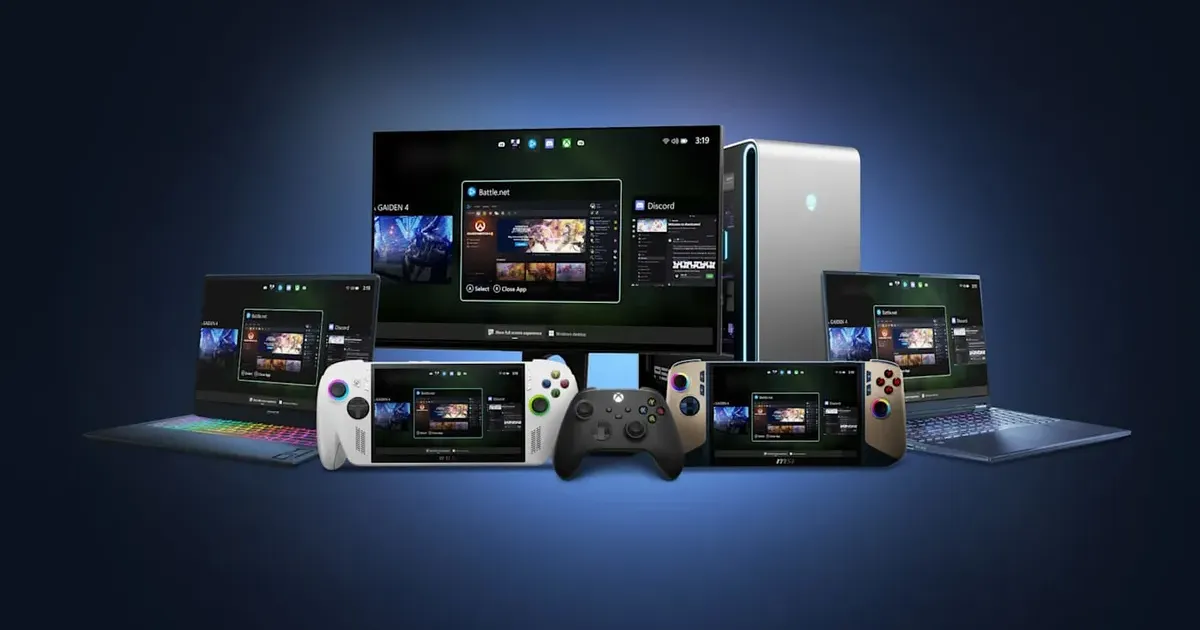
Microsoft's Windows 11 gaming push aims to move PC gaming from a separate desktop experience into an Xbox-centered interface. The Windows gaming shift surfaced on March 11, 2026.
Windows Gets a Console Layer
Microsoft executives took the stage at the Game Developers Conference today to reveal a software strategy that effectively erases the distinction between a desktop computer and a home console. Starting in April, the company will push an update to every Windows 11 device that includes a dedicated, full-screen environment officially branded as Xbox Mode. Microsoft previously tested this interface under the cumbersome name of Full Screen Experience, but the rebranding indicates a much more aggressive integration of its gaming ecosystem into the standard consumer PC. Engineers originally designed the interface for handheld devices like the ROG Ally, where managing a standard Windows desktop with thumbsticks proved nearly impossible. Microsoft framed platform control as a convenience feature.
The April rollout expands that utility to laptops, desktops, and tablets, allowing users to bypass the traditional Start menu entirely in favor of a controller-optimized dashboard. Players can browse their personal libraries, launch titles, and manage social features through a UI that mimics the existing Xbox Series X experience. Steam has maintained a dominant lead in this space for fifteen years through its Big Picture Mode, yet Microsoft now believes it can offer a superior native alternative by weaving the experience directly into the kernel of the operating system. Microsoft is betting on convenience. Developers attending GDC expressed significant interest in a secondary announcement regarding Advanced Shader Delivery, or ASD.
This technology first appeared as a specialized tool for gaming handhelds but will now be available to every developer publishing on the Xbox store for Windows. Shader compilation has plagued PC gaming for years, often leading to frame-rate hitches and micro-stuttering while a system processes visual data in the middle of gameplay. Microsoft claims that ASD allows for pre-compilation, meaning the hardware handles the heavy lifting before the user ever presses start. Jason Ronald, Xbox Vice President of Next Generation, explained that the system will work in tandem with DirectStorage to streamline how data moves from an SSD to the graphics processor.
Shader Delivery Targets PC Stutter
While Valve has found success with pre-cached shaders on the Steam Deck, Microsoft intends to scale this solution across the diverse hardware ecosystem of Windows 11. Success here would remove one of the most persistent advantages consoles hold over PCs: the guarantee of a smooth, stutter-free performance out of the box. Reliability has always been the Achilles' heel of Windows gaming, but Ronald insists that the combination of ASD and Xbox Mode will finally provide a console-like stability to the desktop. Asha Sharma, the recently appointed Xbox CEO, confirmed during her keynote that these software updates are merely the groundwork for a broader hardware shift. Project Helix, the codename for the next-generation Xbox hardware, is scheduled to enter alpha testing in 2027.
Sharma revealed that Helix will be the first Microsoft machine capable of playing both native console games and standard PC titles without translation layers. This strategy effectively turns the Xbox into a specialized Windows PC, while Xbox Mode turns the Windows PC into a virtual Xbox. Jason Ronald further noted that the upcoming system will utilize AMD's next-generation architecture. This technical foundation mirrors what Sony is expected to use for the PlayStation 6, creating a situation where the two primary console competitors are essentially fighting over different software implementations of the same silicon. Microsoft appears to be abandoning the idea of a proprietary closed system in favor of a universal gaming platform.
Such a move acknowledges that the traditional console market has hit a plateau, necessitating a bridge to the much larger PC audience. Consoles are dying, and Microsoft knows it. Valve has enjoyed a near-monopoly on the PC gaming interface for over a decade, but the arrival of a native Xbox Mode threatens that supremacy. While Steam Big Picture Mode requires the user to launch an app, Xbox Mode will be a core component of the Windows 11 environment.
Project Helix Blurs the Hardware Line
Users can toggle between the desktop and the gaming UI with a single button press on a controller. Its integration includes a revamped task switcher that allows people to jump between a high-end game and a web browser or productivity app without the typical performance lag associated with alt-tabbing on Windows. Sony finds itself in a precarious position as well. While the PlayStation 5 Pro continues to sell well, Microsoft is successfully building a software moat that spans across hardware manufacturers. If a consumer can get the Xbox experience on a Lenovo laptop, an ASUS handheld, or a custom-built desktop, the incentive to buy a standalone plastic box from Sony diminishes.
The transition towards software-defined gaming reflects a world where the brand is the service, not the hardware sitting under the television. Skeptics might wonder if desktop users actually want a console interface on their work machines. Microsoft addresses this by making the feature optional, though the April update will prompt users to enable it if a controller is detected during startup. The company is prioritizing select markets initially to monitor server load and stability before a global rollout. Early data from the Insider Preview program suggests that younger users, who grew up with mobile and console interfaces, prefer the simplified layout over the traditional folder-and-icon structure of Windows.
Microsoft is essentially trying to have it both ways. It wants to keep the corporate world tethered to Windows for productivity while capturing the gaming market through a more accessible UI.
Why Convenience Could Become Control
Could the PC as we know it be undergoing a slow, painful transformation into a locked-down appliance? Microsoft is currently selling the Xbox Mode rollout as a benefit to gamers, but the underlying ambition is far more cynical. By blurring the lines between Windows 11 and the Xbox ecosystem, the company is preparing to exert the same level of control over PC software that it enjoys on consoles. Such a shift is not about convenience or solving shader stutters; it is about the eventual enclosure of the Windows commons. If every PC becomes an Xbox, Microsoft gains the power to tax every transaction and gatekeep every piece of software through its own store.
The tech giant is leveraging the frustrations of PC gaming, specifically the technical hurdles like shader compilation, to coax users into a walled garden. We should be wary of any company that offers to solve a problem by demanding total control over the environment. While Valve's SteamOS provides a glimpse of a specialized future, Microsoft's integration is a direct assault on the open nature of the personal computer. Project Helix is the final nail in the coffin for the traditional console, and it might just be the coffin for the open PC as well.