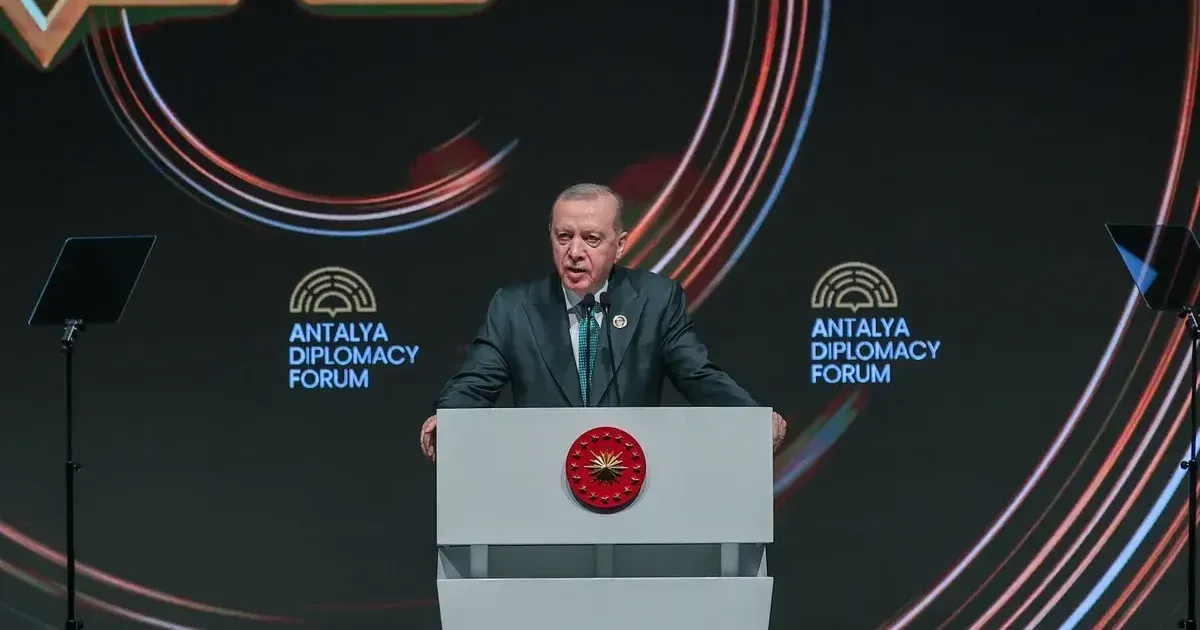
Middle powers are no longer treating American volatility as a temporary diplomatic inconvenience. Turkey's restricted Ankara session framed it as a structural planning problem for states that still need Washington's security support but want more autonomy. The discussion turned alliance management into a survival strategy. On April 20, 2026, that strategy became the central theme of the talks.
The presence of high-level representatives from across the Global South suggests a coordinated effort to reduce risks associated with American policy shifts. National security interests now dictate a more diversified approach to international relations. Security pacts that once felt ironclad appear brittle under the pressure of transactional diplomacy practiced by the United States in recent cycles. Ankara has sought to bridge the gap between East and West, yet the constant fluctuation in American directives complicates long-term planning. Bureaucrats within the Turkish Foreign Ministry indicated that relying on a single security guarantor is no longer a viable strategy for sovereign states seeking regional stability.
Economic dependence creates a specific vulnerability that middle powers are desperate to address. Sanctions and trade tariffs have become the primary tools of American statecraft, often deployed with little warning to allies or adversaries alike. This shift toward financial coercion has forced nations to look for alternatives to the dollar-dominated global payment system. Trade volume between Turkey and its regional neighbors has increased as a direct response to the threat of secondary sanctions from Washington. Regional powers are now prioritizing economic resilience over traditional trade liberalization. $2.4 trillion in global trade flows is currently subject to some form of American restrictive measures.
Ankara Hosts the Risk Conversation
Diplomats at the Turkish summit spent substantial time dissecting the internal political mechanics of the United States to predict future policy swings. The consensus suggests that domestic polarization in Washington has made American foreign policy a hostage to internal electoral cycles. This internal instability prevents the U.S. from maintaining the consistency required for stable international leadership. Turkey, acting as a mediator, has invited experts to analyze how to maintain functional ties without compromising national autonomy. The objective is to create a buffer against sudden shifts in the White House or Congress.
An analyst involved in the Ankara deliberations stated that the central problem for global diplomacy is how to deal effectively with a power that is essential, coercive and unpredictable at the same time.
Strategic hedging is the new standard for middle powers like Brazil, India, and Indonesia. These nations refuse to pick sides in a bipolar or unipolar world, instead opting for a multi-vector approach that maximizes their own leverage. Ankara has mastered this technique by maintaining NATO membership while deepening ties with the Shanghai Cooperation Organisation. Defensive capabilities are being developed domestically to reduce reliance on American hardware that often comes with restrictive end-user agreements. The Turkish defense industry has reported a record surge in export contracts to other middle powers seeking similar independence.
Consistency is the one quality middle powers value most, and it is the one quality Washington currently lacks.
Financial Weaponization Forces Diplomatic Shift
Capital markets are increasingly sensitive to the whims of American Treasury Department announcements. Sudden freezes on sovereign assets have sent a chill through central banks across the globe. Turkey has responded by repatriating gold reserves and seeking swap lines with non-Western partners to stabilize the lira.
Security Dependence Gets Repriced
Financial sovereignty is no longer an abstract concept but a critical component of national defense. The weaponization of the SWIFT system has accelerated the development of parallel financial architectures. Most middle powers view these alternatives as insurance policies rather than direct replacements for the existing order. Resource security drives much of the new diplomatic calculus in Ankara and beyond. Energy imports and supply-chain integrity are too important to be left to the mercy of shifting American maritime priorities.
Localized security arrangements are replacing broad, U.S.-led coalitions in several key regions. This localization allows middle powers to manage their own immediate surroundings without waiting for a signal from Washington. Turkish naval presence in the Eastern Mediterranean reflects this desire for localized control. The goal is to ensure that regional disputes do not become collateral damage in American global competitions.
Strategic Autonomy Gains Ground in Ankara
The pursuit of strategic autonomy has moved from a fringe idea to the centerpiece of Turkish foreign policy.
Economic Exposure Drives Diversification
The evolution is mirrored in other capitals where the cost of alignment with the U.S. has begun to outweigh the benefits. Officials in Ankara point to the withdrawal from various international treaties as evidence of a declining American commitment to multilateralism. When the primary designer of the rules-based order begins to ignore the rules, other players feel compelled to look out for their own interests. It does not mean a total break with Washington, but rather a more cautious and conditional partnership. Institutional memory in the Turkish diplomatic corps suggests that the era of blind trust is over.
Coercion often leads to counter-coalitions instead of compliance. Recent history in the Middle East shows that American pressure can inadvertently drive rivals into each other's arms. Turkey has navigated these waters by maintaining dialogue with all parties, even those under heavy U.S. pressure. The ability to talk to everyone gives Ankara a unique form of leverage that Washington cannot easily replicate. Influence in the modern era is defined by connectivity instead of just raw military might.
The Turkish government continues to invest heavily in diplomatic infrastructure across Africa and Central Asia. Regional stability now depends on the ability of middle powers to act as stabilizers when a superpower goes rogue.
Transatlantic Friction Redefines Global Alliances
Traditional allies in Europe are also watching the Ankara summit with keen interest. The friction between European capitals and Washington over trade and defense spending has created a shared sense of urgency. Turkey finds itself in a position to lead a broader conversation about the future of the NATO alliance in a post-unipolar world.
Autonomy Becomes Practical Policy
If the U.S. continues to prioritize its own narrow interests over collective security, the alliance may transform into a European-led organization with American participation. The restructuring would have been unthinkable a decade ago but is now a topic of serious debate. Current projections suggest a steady increase in independent European defense initiatives. Power is shifting from the center to the periphery as middle powers gain economic and military weight. The diffusion of influence makes it harder for any single nation to dictate terms to the rest of the world.
Ankara is leveraging its geographic position to become an essential hub for energy and transit. By controlling key chokepoints and trade routes, Turkey ensures that it remains relevant regardless of who sits in the Oval Office. The diplomatic strategy is one of permanence in a world of variables. Success is measured by the number of options available to the state at any given moment.
Strategic Context for Middle Powers
Middle powers are no longer the subservient vassals of the Cold War era.
The gathering in Ankara proves that the world has moved beyond the simple binary of compliance or confrontation. Turkey and its peers are engaged in a sophisticated game of geopolitical arbitrage, taking advantage of American inconsistency to carve out spheres of influence that were previously off-limits. It is not a temporary reaction to a specific administration but a structural adjustment to the reality of a superpower in decline. The United States has traded its moral authority for a toolkit of coercion, and the rest of the world has taken notice. Ankara is simply the first to say out loud what everyone else is thinking in private.