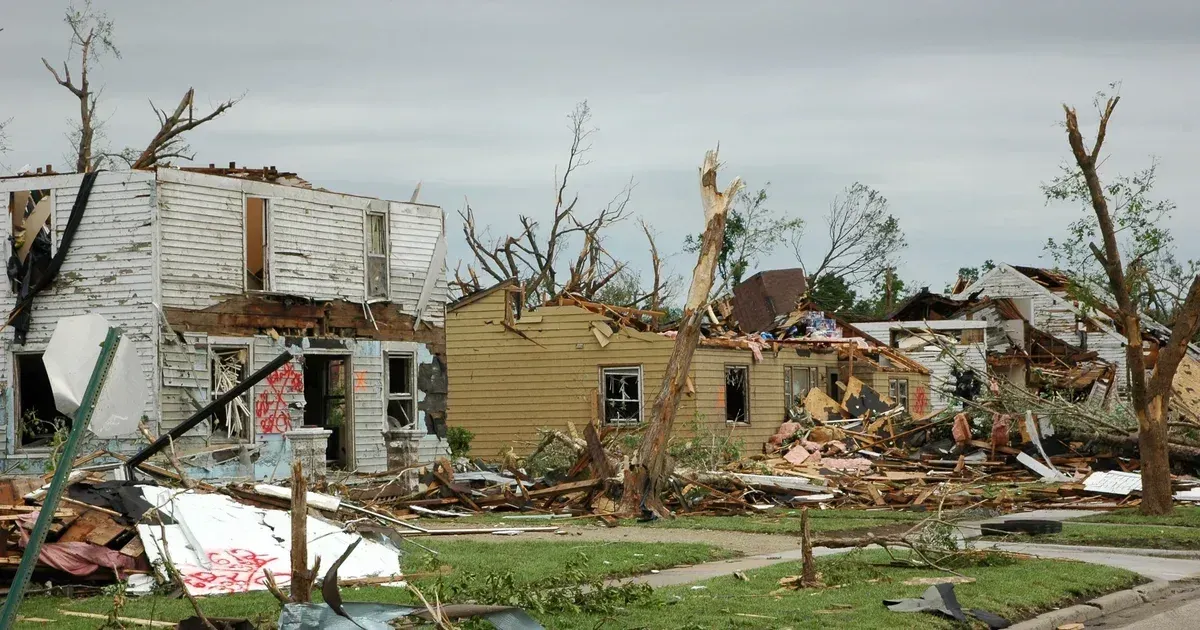
On April 19, 2026, a desperate search began for survivors as emergency responders in the Midwest navigated landscapes transformed by a violent atmospheric surge. More than three dozen tornadoes carved paths through residential and industrial zones, leaving at least seven states struggling with catastrophic infrastructure failures. Sam Brock of NBC News reported that major destruction spans across the heartland, where funnel clouds reduced centuries-old structures to splinters within seconds. Meteorological data confirms that a high-pressure system collided with warm, moist air from the Gulf of Mexico to trigger the event.
Residents in small towns from Illinois to Kentucky described hearing sounds like freight trains before their roofs were stripped away. Search and rescue operations continue in areas where communication towers collapsed during the height of the storm.
Andrew Kozak of CBS News indicated that the threat persists for millions of citizens as the storm front migrates toward the East Coast. Jonah Kaplan observed that multiple funnel clouds whipped across the terrain on Friday, catching many residents in the direct path of the rotating winds. Early assessments from the National Weather Service suggest the outbreak is one of the most concentrated events of the decade. Total damage costs are expected to exceed $1 billion as insurance adjusters begin their initial site visits.
Emergency Teams Assess Damage in Seven States
State troopers in Indiana and Illinois blocked highway access on Saturday morning to allow utility crews to repair downed power lines. Tennessee officials reported severe damage to local school districts, where heavy debris now litters athletic fields and parking lots. Local hospitals in the most affected corridors are operating on backup generators to treat hundreds of patients with storm-related injuries. Governors in four states issued emergency declarations to unlock state funds for immediate cleanup efforts. Heavy machinery has arrived in rural communities to clear roads blocked by uprooted oak trees and twisted metal siding. Federal agencies have deployed drones to map the extent of the wreckage in regions where ground travel is still impossible.
Volunteers gathered at community centers to distribute bottled water and blankets to families who lost their homes. Relief organizations noted that the speed of the tornado formation gave families only minutes to reach basement shelters. Small businesses in town squares found their storefronts shattered and inventory ruined by the accompanying hail. Many neighborhoods remain without running water as municipal pumps lost power during the peak of the turbulence. Engineering teams are currently inspecting bridges and overpasses for structural weaknesses caused by the intense pressure of the vortexes. Local law enforcement has implemented curfews to prevent looting in evacuated residential zones.
Meteorologists Track Storm Front From Tennessee to New York
Andrew Kozak confirmed the atmospheric instability is moving toward the Northeast, placing millions of people under a heightened risk of severe weather. Meteorologists at regional hubs have issued watches and warnings that extend from the Tennessee Valley up to New York. The system continues to show signs of rotation, suggesting that the threat of additional tornadoes has not yet dissipated. Cold air pushing from the Great Lakes is expected to intensify the wind shear in the coming hours. Cities along the Interstate 95 corridor are preparing for high-velocity straight-line winds and potential flooding. Radar images show a vast line of supercells stretching for hundreds of miles across the Eastern Seaboard.
"Millions are under the threat of severe weather on Saturday, with a tornado risk from Tennessee to New York," noted forecaster Andrew Kozak during a live update.
Airlines cancelled hundreds of flights at major hubs in Philadelphia and New York as a precaution against the advancing squall line. Public transportation authorities warned commuters to expect delays if the storm system impacts rail tracks and signaling equipment. Residents in high-rise buildings received alerts to stay away from windows as the front approaches. Emergency management directors in Maryland and Pennsylvania activated their operations centers to coordinate a multi-state response if the cells produce more funnels. The intensity of the storm has forced the cancellation of outdoor events and sporting fixtures across the region. Forecast models suggest the system will push out to sea late Sunday night.
Economic Toll of Midwest Storm Damage Increases
Supply-chain experts warn that the destruction of warehouses in the Midwest will cause shipping delays for several weeks. Major logistics firms reported that several distribution centers suffered direct hits, damaging fleet vehicles and sorting machinery. Agriculture officials expressed concern over the impact on newly planted crops in the Ohio River Valley. Grain elevators and silos in rural Indiana were toppled, spilling thousands of bushels of corn and soybeans onto the mud. The loss of equipment and infrastructure presents a long-term challenge for family-owned farms already facing tight margins. Local economies that rely on manufacturing are bracing for temporary factory closures while repairs take place.
Insurance industry analysts expect a surge in claims for both residential and commercial properties. Actuaries are recalculating risk models as these multi-state outbreaks become more frequent during the spring months. Construction firms are seeing an immediate spike in demand for roofing materials and plywood, leading to localized shortages. Homeowners without thorough storm coverage face the prospect of paying for repairs out of pocket. State tax revenues may decline in the short term as retail activity stalls in the devastated districts. The cost of rebuilding will likely stress local municipal budgets already strained by previous weather events.
Federal Agencies Coordinate Response to Tornado Outbreak
FEMA administrators arrived in the region on Saturday afternoon to oversee the distribution of federal aid. Logistics teams are set to establish mobile recovery centers where residents can apply for low-interest loans. The agency is also coordinating with the Department of Energy to prioritize the restoration of the power grid in critical areas. National Guard units have been mobilized to assist with debris removal and search operations in the most isolated counties. Coordination between state and federal authorities is essential to manage the influx of supplies and personnel. Satellite imagery is being used to prioritize the delivery of aid to the hardest-hit communities.
Communication networks in the disaster zone are slowly coming back online as temporary cell towers are erected. Tech companies have dispatched mobile Wi-Fi units to help residents contact family members and file insurance claims. Water treatment plants are undergoing testing to ensure the safety of the municipal supply after heavy runoff. Debris management plans are being finalized to dispose of the thousands of tons of ruined material safely. Environmental agencies are monitoring for chemical leaks from damaged industrial sites. Local authorities are urging residents to stay off the roads to allow emergency vehicles unimpeded access to disaster sites.
Disaster Recovery Strain
Relying on aging siren systems and wood-frame housing in a warming corridor is a recipe for predictable carnage. Dismissing the increased frequency of these multi-state outbreaks as mere seasonal variance ignores the reality of a shifting climate geography. The current federal response model, while strong in the immediate aftermath, focuses too heavily on reactive cleanup rather than proactive structural reinforcement. Heartland building codes are antiquated, reflecting a 20th-century understanding of wind speeds that no longer applies to the modern supercell. The country is essentially subsidizing catastrophe by allowing the rebuilding of vulnerable towns without mandatory, reinforced storm shelters for every household.
State governments must stop begging for federal disaster relief after the fact and start penalizing developers who ignore storm-resilient architecture. The insurance industry will eventually solve this problem by making certain counties uninsurable, which will trigger a mass migration that our urban centers are not prepared to handle. History shows this pattern repeats every spring with increasing intensity and geographic spread. Unless authorities mandate the burial of power lines and the hardening of the grid, regional economies will continue to grind to a halt every time the jet stream dips.
This is not a matter of unforeseen tragedy but a failure of civil engineering and political will. The wreckage in the Midwest should be the final piece of evidence needed to overhaul our national infrastructure strategy. The country must either build for the wind or prepare to be blown away.