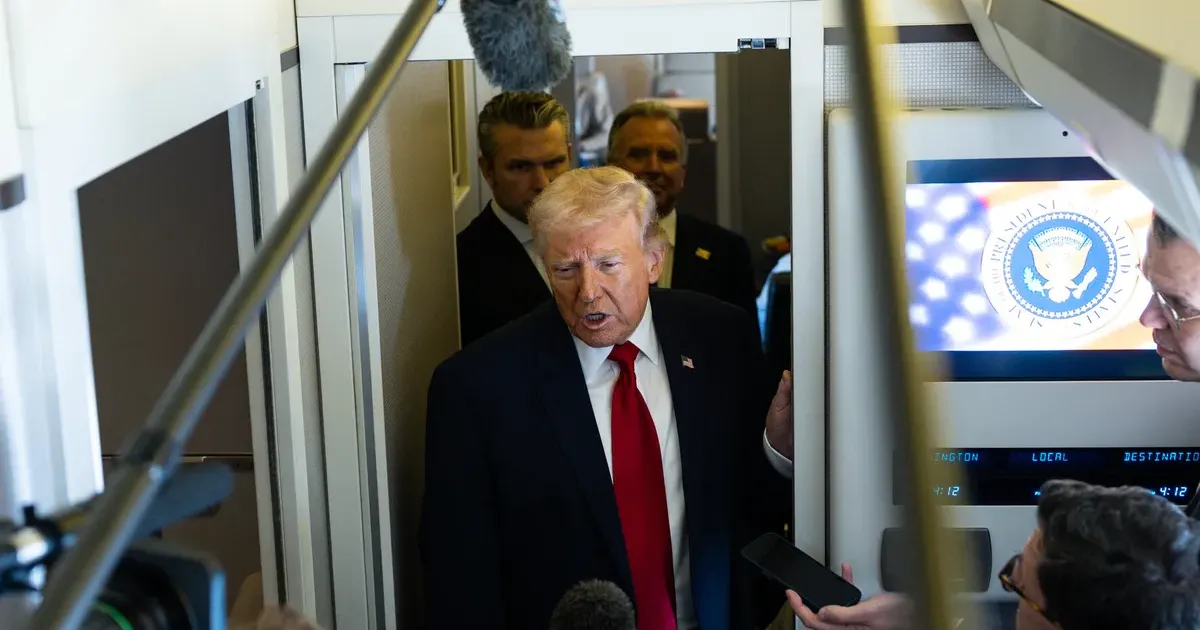
Confusion Clouds Strategic Objectives in Washington
Washington pulses with a frantic energy rarely seen since the early 2000s. March 10, 2026, marks the eleventh day of a military campaign that began with precision strikes but now threatens to swallow the region. Press Secretary Karoline Leavitt faced a barrage of questions at the White House today, offering a circular logic that left many analysts searching for a concrete exit strategy. Reporters pressed for a specific timeline, yet the administration refused to tether itself to a calendar. Instead, Leavitt insisted the conflict would conclude only when President Trump determines his military objectives have been met.
Confusion has become the primary export of the West Wing.
President Trump himself has contributed to the atmospheric uncertainty through a series of conflicting public statements. One day he suggests a quick, decisive surgical strike that will see troops home by summer. The next, he warns of a sustained pressure campaign designed to reshape the Middle East for a generation. This ambiguity serves a political purpose by keeping adversaries guessing, but it simultaneously leaves the American public and global markets in a state of perpetual whiplash. The New York Times highlights how these contradictory signals have created a vacuum where clear policy should exist.
p>Defense officials speaking on the condition of anonymity suggest the military objectives remain a moving target. Some Pentagon planners believe the goal is the total degradation of the Iranian drone and missile infrastructure. Others within the National Security Council argue for a more aggressive posture aimed at forced regime concessions regarding nuclear enrichment. Because these goals are not clearly codified, the definition of success remains elastic. Karoline Leavitt’s refusal to provide a metric for victory suggests the administration is bracing for a duration that could far exceed the initial estimates provided to Congress.Public Sentiment Fractures Along Familiar Fault Lines
Across the American heartland, the initial rally-around-the-flag effect is already showing signs of fatigue. BBC correspondents traveling through the Midwest and the Rust Belt report a populace deeply divided over the necessity of this intervention. Small-town residents who supported the America First platform are now grappling with the reality of another overseas entanglement. Some voters express a grim necessity, believing the Iranian threat had become too large to ignore. Others feel a sense of betrayal, wondering why billions of dollars are flowing toward the Persian Gulf while domestic infrastructure and inflation remain pressing concerns.
Victory lacks a definition.
One man in Ohio told reporters he did not know why the United States was doing it. His sentiment echoes a growing chorus of skepticism that transcends traditional party lines. Younger voters who grew up in the shadow of the wars in Iraq and Afghanistan are particularly wary of the current rhetoric. They see a familiar pattern of escalating commitments without a clear exit ramp. Still, a significant portion of the electorate remains supportive, viewing the President as a strong leader who is finally taking the fight to a long-term adversary.
Economic Volatility and Global Market Impact
Markets have reacted to the lack of clarity with predictable turbulence. Oil prices jumped to heights not seen in years, as traders fear a prolonged disruption of the Strait of Hormuz. Bloomberg data suggests that every day of military operations adds a layer of risk to the global supply chain, yet the White House maintains that the economic cost is a price worth paying for long-term security. Defense contractors have seen their stock prices climb, but the broader manufacturing sector is reeling from the cost of energy. Gold and other safe-haven assets are attracting investors who no longer trust the administration’s optimistic projections.
This uncertainty has forced the hand of several European allies who are now distancing themselves from the American position. While the United Kingdom remains a staunch partner, other NATO members have expressed private concerns that the US is sliding into a quagmire. They worry that without a defined end state, the conflict will naturally expand into a regional conflagration. Diplomats in Brussels are reportedly frustrated by the lack of communication from Washington, as they are often left to interpret the President’s tweets as the only source of official policy.
National security experts point out that a war without a timeline is a war without a budget. The initial funding requests sent to Capitol Hill were based on a thirty-day window of high-intensity operations. Since the eleventh day has already arrived without a significant change in the Iranian posture, those initial estimates appear laughably inadequate. Congressional leaders are now bracing for a massive supplemental spending bill that will likely trigger a fierce debate over the nation’s fiscal priorities. Conservative deficit hawks find themselves in an awkward position, caught between their loyalty to the President and their commitment to fiscal restraint.
The Elite Tribune Perspective
Rome did not fall because its borders were weak, but because its appetite for expansion exceeded its capacity to govern. The current military campaign against Iran is not a strategic necessity, but a vanity project masquerading as national defense. By refusing to define military objectives, the Trump administration has effectively written a blank check for a conflict that has no logical conclusion. This strategy is a reckless departure from the very isolationist principles that brought this movement to power. The American people were promised an end to forever wars, yet they are being led into a desert trap by a White House that confuses volatility with strength.
History provides no examples of successful military interventions that lacked a clear political goal. You cannot bomb a nation into submission and expect a stable democracy to sprout from the ruins. The arrogance of the current administration is breathtaking, as they seem to believe that the sheer force of American personality can override the complexities of Middle Eastern geopolitics. If the President cannot tell the public what victory looks like, he has no right to ask for their children or their tax dollars. We are watching a slow-motion disaster where the only winners are the manufacturers of the missiles being fired into the night.