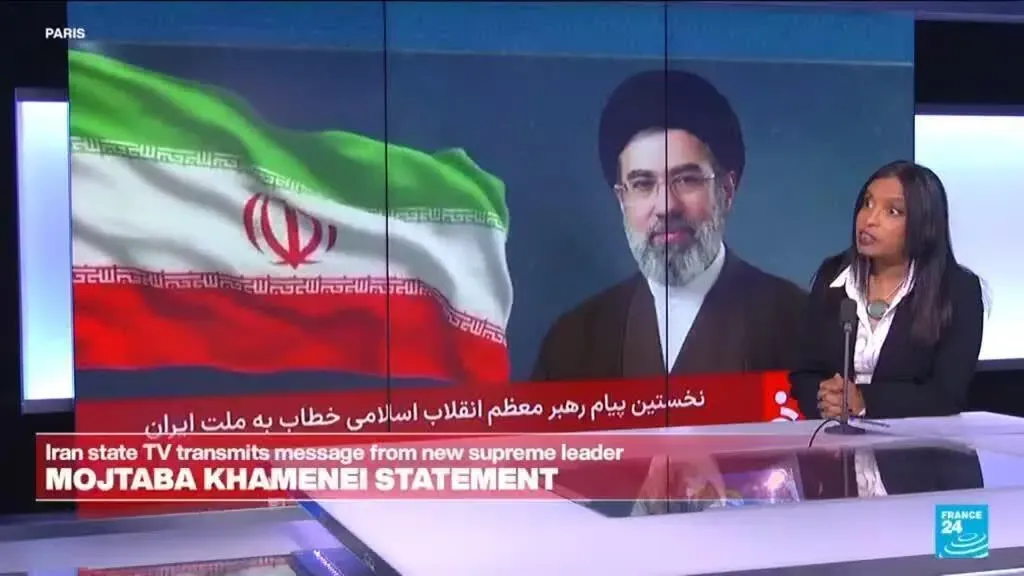
Tehran entered a new phase of confrontation after Mojtaba Khamenei used his first statement to threaten further action against U.S. bases. The message, dated March 12, 2026, placed the Strait of Hormuz at the center of the new leadership test. Mojtaba Khamenei stepped into the light of absolute power today, casting away decades of clerical shadow to deliver a mandate of global confrontation. His first official communique since assuming the title of Supreme Leader discarded the traditional period of mourning for his father. Instead, he demanded the immediate closure of the Strait of Hormuz, the arterial chokepoint through which one-fifth of the world’s oil supply flows daily. This decision targets the jugular of the global energy market during a time of extreme volatility.
Crude prices surged 14% on the news.
Traders in London and New York scrambled as the reality of a shuttered Persian Gulf set in. Khamenei’s order forces a direct confrontation with the United States Navy. Military analysts at France 24 noted the precision of the timing, aimed at testing the resolve of a White House already stretched by multiple regional crises. The Revolutionary Guard began deploying mine-laying vessels near the Musandam Peninsula within minutes of the broadcast. Because of these maneuvers, insurance premiums for commercial tankers have reached prohibitive levels, effectively freezing sea-bound trade from the region.
A Fortune Built on Oil and Exile
Bloomberg’s latest forensic audit reveals that the new leader is far from a modest ascetic. Investigators estimate Mojtaba Khamenei controls a personal fortune exceeding $100 billion. Sources indicate much of this wealth was syphoned from state oil revenues over two decades and laundered through shell companies into Western assets. This accumulation of wealth sits in bitter contrast to the economic decay facing the Iranian public. While his citizens stand in bread lines, the Supreme Leader oversees a portfolio of immense scale and complexity.
London’s luxury real estate market holds a significant portion of these holdings. High-end hotels across Europe and sprawling residential projects in Dubai serve as the quiet anchors of the Khamenei portfolio. Al Jazeera reports that the Supreme Leader intends to use these financial levers to bypass Western sanctions. He views his private capital as a war chest for the long-term survival of the clerical establishment. Money destined for infrastructure or medicine apparently paved the way for the family’s secret commercial empire, stretching from Mayfair to the Persian Gulf coast.
Threats to Regional Stability
Khamenei did not limit his aggression to the seas. He issued a stern ultimatum to Gulf Arab nations, calling on them to shut down all American military bases on their soil immediately. Nations like Qatar, Bahrain, and the United Arab Emirates now find themselves in a precarious diplomatic vice. Washington maintains thousands of personnel and advanced strike craft in these territories. Khamenei’s message, broadcast via state media and verified by The Independent, warned of severe consequences for any neighbor that continues to host the enemies of Islam. The message specifically promised to avenge martyrs.
Such rhetoric suggests a return to the most radical impulses of the 1979 revolution. Analysts suggest that Mojtaba feels a need to prove his ideological purity to the hardliners within the Revolutionary Guard who facilitated his rise. His predecessor maintained a degree of strategic patience, but the son appears eager to accelerate the timeline for regional dominance. By targeting US assets in neighboring states, he is attempting to break the security architecture that has defined the Middle East for half a century.
Strategic Paralysis at the Strait
Closing the Strait of Hormuz represents an extreme option in the world of energy logistics. It is a narrow passage where the smallest miscalculation can ignite a global conflict. Lloyd’s of London suspended insurance coverage for tankers operating in the region. Most major shipping firms have already ordered their fleets to drop anchor or divert around the Cape of Good Hope. This strategy increases the cost of every barrel of oil by roughly $15 in transit fees alone. Global supply chains, already fragile, face a disruption that could trigger a deep recession in the West.
The Iranian navy is currently shadowing several commercial vessels near the Omani border.
Leela Jacinto of France 24 explained that the optics of the closure are as important as the military reality. Khamenei wants to show the world that Tehran holds the valve to the global economy. If he can maintain the blockade for even a week, the pressure on Western governments to negotiate will become immense. Still, the risk of a kinetic response from the US Fifth Fleet remains high. Any attempt to clear the mines by force would likely lead to a full-scale naval engagement.
Hormuz Escalation Risk
Khamenei’s threats against US bases included specific mentions of new attacks if American forces do not depart. The Independent reported that Iranian state media highlighted recent ballistic missile tests as a preview of what might follow. Military commanders in the Pentagon are reviewing defensive postures at Al-Udeid and Bahraini headquarters. A direct strike on these facilities would constitute an act of war, a threshold the previous leadership often approached but rarely crossed. Evidence suggests Mojtaba is less risk-averse than his father, viewing direct confrontation as a tool for domestic legitimacy.
The clerical establishment in Qom has unified behind this combative stance. And while some internal factions worry about the economic impact of a total blockade, the Revolutionary Guard remains the dominant force in policy decisions. Every statement released today indicates that Iran has moved into a more volatile era. The international community is left to decide whether to meet this aggression with diplomacy or a combined military show of force.