Mojtaba Khamenei Raises the Stakes
Tehran reached a definitive crossroads on Thursday night as Mojtaba Khamenei, the newly installed supreme leader of the Islamic Republic, delivered his first major address to the nation. While Western analysts spent decades speculating on the intricacies of the clerical succession, the reality of the post-Ali Khamenei era has arrived with a focused aggression toward foreign adversaries. On March 13, 2026, the pledge hardened the political language around Iran’s confrontation with Washington and Israel. Mojtaba thanked Hezbollah in Lebanon, various pro-Iranian militias in Iraq, and the Houthi movement in Yemen for their unwavering support in what he termed a coordinated defense of the faith. His rhetoric moved beyond the traditional theological condemnations often heard from the pulpit, focusing instead on a pragmatic military coalition designed to expel Western influence from the Persian Gulf.
This transition of power appears to have solved Iran's succession problem by prioritizing ideological purity and tactical continuity over the reformist impulses that occasionally flickered in the mid-2020s. Intelligence agencies in Jerusalem and Washington now face a leader who has spent years consolidating control over the Revolutionary Guard's financial and intelligence apparatus. Houthi leadership in Yemen responded to the speech by declaring their fingers are on the trigger, signaling a readiness to expand the current theater of conflict. These rebels, formally known as Ansar Allah, have evolved from a provincial religious movement into a potent regional actor capable of disrupting the global economy.
Zaydism, a branch of Shia Islam followed by roughly one-third of the Yemeni population, serves as the ideological foundation for their resistance. Since the 2014 overthrow of the Saudi-backed government in Sana’a, the group has integrated itself into the Iranian-led Axis of Resistance alongside Hamas and Hezbollah. Donald Trump designated the Houthis as a foreign terrorist organization at the start of his second term, which reversed a previous administration's attempt to enable humanitarian aid through diplomatic de-escalation.
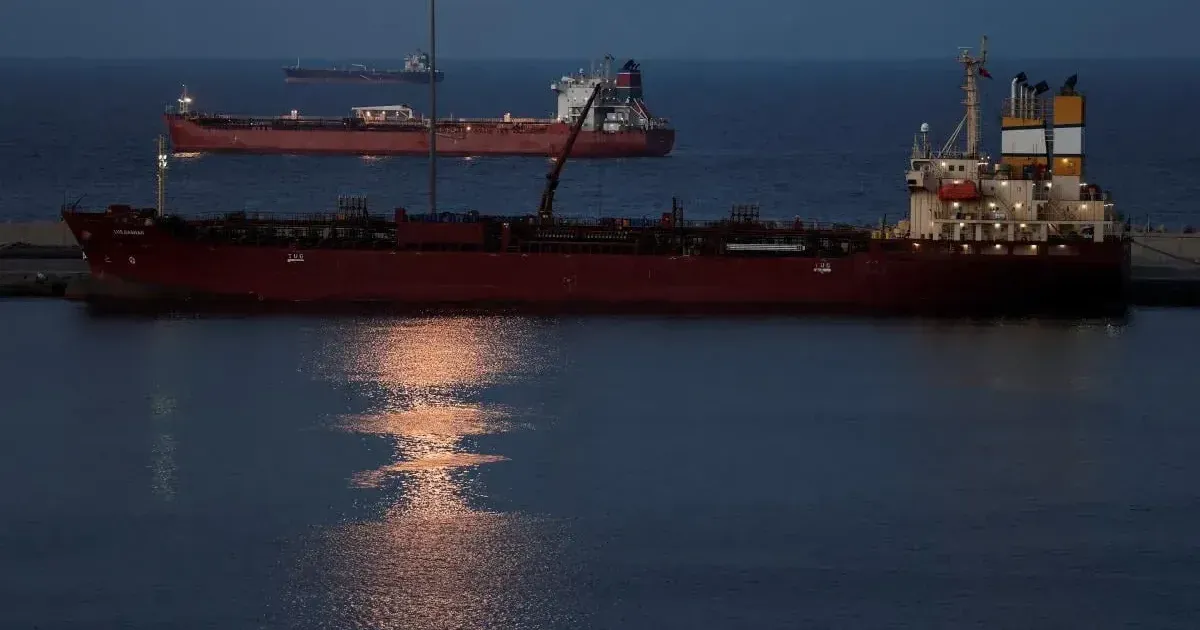
The current American strategy relies on punitive airstrikes, yet the Houthis have shown a historical resilience to conventional bombardment. Are the shipping lanes of the Red Sea and the Gulf of Aden prepared for a multi-front maritime insurgency? Naval planners in the Pentagon are currently grappling with the reality of the Hormuz minefield, a geographical bottleneck where Iran holds the tactical advantage.
The strait represents one of the world's most vulnerable economic arteries, through which a significant portion of global petroleum passes daily. Iranian military doctrine focuses on asymmetric denial rather than traditional fleet-on-fleet engagement, utilizing thousands of low-cost naval mines and fast-attack boats to neutralize American technological superiority. A single sunken tanker or a confirmed mine sighting in the narrowest part of the channel could drive insurance premiums to prohibitive levels, effectively halting commercial traffic.
Succession Politics Meets War Rhetoric
While the United States maintains a massive lead in tonnage and radar capability, the confined space of the Gulf restricts the movement of carrier strike groups. Experts at Foreign Affairs suggest that Washington currently possesses no good options for clearing these waters without incurring significant casualties or risking a full-scale regional war. Maritime security in 2026 increasingly favors the saboteur over the protector.
Signalgate remains a persistent political liability for the White House as it attempts to manage this escalating crisis. The scandal involves a series of clandestine airstrikes ordered by the Trump administration in 2025 after the Houthis downed a US aircraft. Critics in Congress have questioned the legality and the long-term effectiveness of those strikes, which some argue only served to radicalize the Houthi base further and cement their alliance with Tehran.
During the initial phase of the second Trump term, the president vowed to completely annihilate the group, but military reality has proven more complex than campaign rhetoric. The persistent nature of the Houthi threat suggests that airstrikes alone cannot dismantle a movement that is deeply embedded in the rugged terrain of northern Yemen. Domestic opposition to another protracted Middle Eastern conflict continues to grow as the 2026 midterms approach.
Israeli intelligence services view the rise of Mojtaba Khamenei as a hardening of the Iranian stance, particularly regarding the nuclear program and regional proxy wars. Hezbollah has already increased the frequency of its rocket volleys into northern Israel, while militias in Iraq have targeted American logistical hubs with sophisticated loitering munitions. The coordination between these groups appears more synchronized than during the era of Qasem Soleimani, suggesting a centralized command structure overseen directly by Mojtaba’s inner circle.
Beyond the immediate military threat, the Axis of Resistance is utilizing a sophisticated media campaign to exploit regional grievances and portray the United States as a declining imperial power. Saudi Arabia has remained conspicuously silent in the days following the Tehran succession, likely weighing the risks of a renewed conflict with the Houthis against the benefits of their fragile normalization with Iran. How long can Riyadh maintain its neutrality if the Strait of Hormuz becomes a combat zone?
Regional Capitals Watch Tehran
The cost of inaction is high, but the cost of intervention may be higher. Global energy markets are already reacting to the tension, with Brent crude prices fluctuating wildly as news of Khamenei's speech reached trading floors in London and New York. Economic models predict that a total closure of the Strait of Hormuz could push oil prices beyond two hundred dollars per barrel, a scenario that would trigger a global recession.
Such an economic shock would likely force the hand of European powers that have previously sought a diplomatic middle ground with Tehran. The Houthis have demonstrated they can hit moving targets with ballistic missiles and drones, a capability they likely refined through Iranian technical assistance and training. Washington must decide if the protection of these shipping lanes is worth the risk of a direct naval engagement with Iranian forces.
Pentagon officials have yet to release updated casualty estimates for a sustained conflict in the Gulf. The pledge matters because it blends family succession politics with external war language. Mojtaba Khamenei is not only a political figure; he is also a symbol of continuity for parts of the Iranian power structure. Regional governments are watching whether the rhetoric becomes operational direction. A speech can be dismissed as posture until allied militias, missile units or security agencies begin acting as if it is policy.