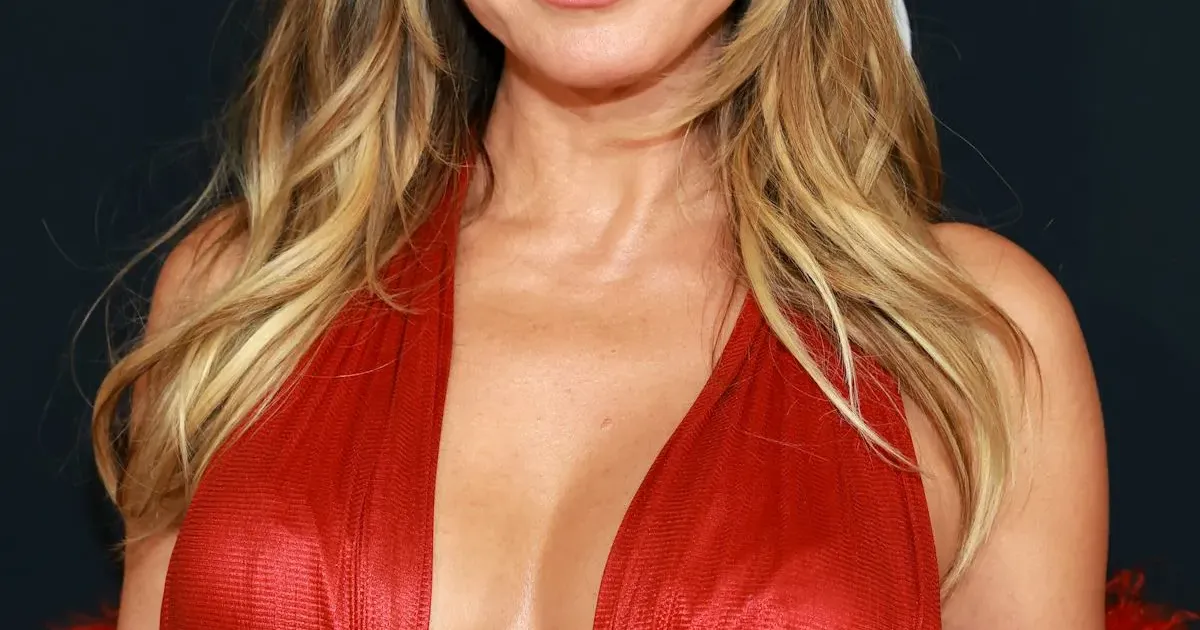
Paris runways made naked dressing one of the clearest signals of the Fall/Winter 2026 season. The trend became unavoidable on March 11, 2026
Klum Turns Siriano Feathers Into Promotion
Heidi Klum strode through SoHo on March 10, asserting her position as a central figure in the current fashion cycle. Her appearance in a black mini-dress from Christian Siriano's Fall 2026 collection served as a pre-emptive strike for the upcoming season of Project Runway. The ensemble featured an asymmetric sheer skirt and a plunging neckline, but the most aggressive detail involved white pom-pom feathers that swallowed her hands. Such bold choices define Klum's recent career phase, where she balances commercial hosting duties with high-concept street style. Her collaboration with Siriano, who returns as a mentor for the show's twenty-second season, underscores a professional synergy that has sustained the franchise for years. Fans witnessed this pairing on Instagram, where Klum shared behind-the-scenes footage of the two filming in New York. Project Runway Season 22 arrives with a familiar roster of judges, including Nina Garcia and Law Roach. Klum's decision to wear Siriano's latest work before it hits retail shelves highlights the transactional nature of celebrity styling in 2026. The sheer, feathered look she debuted in Manhattan reflects a broader industry obsession with avian aesthetics. Feathers have appeared across multiple runways this year, yet Klum's interpretation leans into a sheer-meets-plush contrast that feels distinctively modern. Her accessory choices remained restrained, featuring black sunglasses and ankle-strap Louboutin pumps, ensuring the feathered sleeves remained the primary focus. Klum's German projects continue to mirror her American output. On March 11, she released promotional material for Germany's Next Top Model, showcasing a head-to-toe leather outfit while interacting with members of the boy band Elevat.
Paris Makes Transparency Permanent
This shift toward tougher, more structural materials contrasts with her delicate SoHo appearance, suggesting a calculated versatility meant to keep her audience engaged across two continents. But while Klum focuses on televised competition, the runways of Europe are pushing the boundaries of visibility even further. Paris Fashion Week cemented the longevity of the naked dressing trend. Designers across the spectrum rejected the traditional modesty of autumn and winter collections in favor of total transparency. Saint Laurent continued its trajectory of provocative minimalism by introducing a glossier, waxed lace. Paris made exposure feel less like a stunt than a business model.
Stefano Gallici at Ann Demeulemeester chose a different path, blending rock star aesthetics with romanticism through distressed slip dresses and lace accents. These collections suggest that the industry has moved past the initial shock value of sheer fabrics, treating them instead as a standard material for cold-weather layering. Pierpaolo Piccioli at Balenciaga focused on bodily autonomy, pairing a deep brown sheer dress with heavy leather opera gloves. The juxtaposition provided a luxe, armored feel to an otherwise exposed look. Chloé, under the direction of Chemena Kamali, took a more rustic approach.
Her prairie chic aesthetic involved pairing thick, fuzzy trousers with sheer tops, a combination that addresses the practical concerns of winter while maintaining the season's commitment to transparency. Gabriela Hearst offered a more ethereal interpretation, utilizing lace-trimmed capes and matching slip dresses that felt more like fairy tales than fashion statements. The math doesn't add up for those who expected a return to heavy wools.
Red-Carpet Shock Becomes an Algorithm
Saint Laurent's evolution from chiffon in 2024 to nylon in early 2026, and now to waxed lace, demonstrates a relentless pursuit of new textures within the sheer category. This season, however, the focus turned toward the nipple as a focal point of the design rather than an incidental detail. Fashion critics have observed that the ubiquity of these looks at Paris Fashion Week confirms that naked dressing is no longer a fringe movement or a seasonal gimmick. It has become an institutionalized element of the luxury market.
From Björk to the Modern Red Carpet
Historical context provides a lens through which to view these contemporary risks.
Red carpets once reacted with genuine astonishment to outfits like Björk's swan dress or Céline Dion's backward white tuxedo at the Oscars. Those moments were outliers, disruptions in a sea of safe, predictable glamour. Today, the disruption is the curriculum. When Heidi Klum wears a dress that obscures her hands in feathers or Saint Laurent sends models down the runway in waxed lace, they are engaging with a legacy of controversy that has been repurposed for the digital age. Controversy used to be accidental or at least felt organic.
Now, the industry manufactures it with clinical precision. Björk's 2001 appearance was a personal artistic statement that many found baffling.
Why Naked Dressing Now Feels Corporate
When did the avant-garde become so predictably profitable? The current obsession with transparency and feathers feels less like a revolution and more like a corporate mandate for visibility in a crowded feed. We are watching the commodification of what used to be genuine subversion. Björk's swan was a weird, wonderful mistake that the industry hated until it loved. Today, every sheer bodice and feathered sleeve is pre-approved by a committee of stylists and brand managers who know exactly how many clicks a nipple will generate.
That isn't bravery. It's an algorithm in a waxed lace dress. By turning the human body into a permanent billboard for transparency, designers have ironically made us more bored than ever. The shock has worn off, leaving only the cold reality of a business that needs to sell sheer fabric at silk prices. If everyone is naked on the runway, the most radical thing a designer could do is send out a model in a well-tailored, opaque wool coat.
But that doesn't trend, and in 2026, if it doesn't trend, it doesn't exist. Fashion has traded its soul for a high-resolution image of a sheer skirt, and we are all poorer for it.